Team5 · July 10, 2026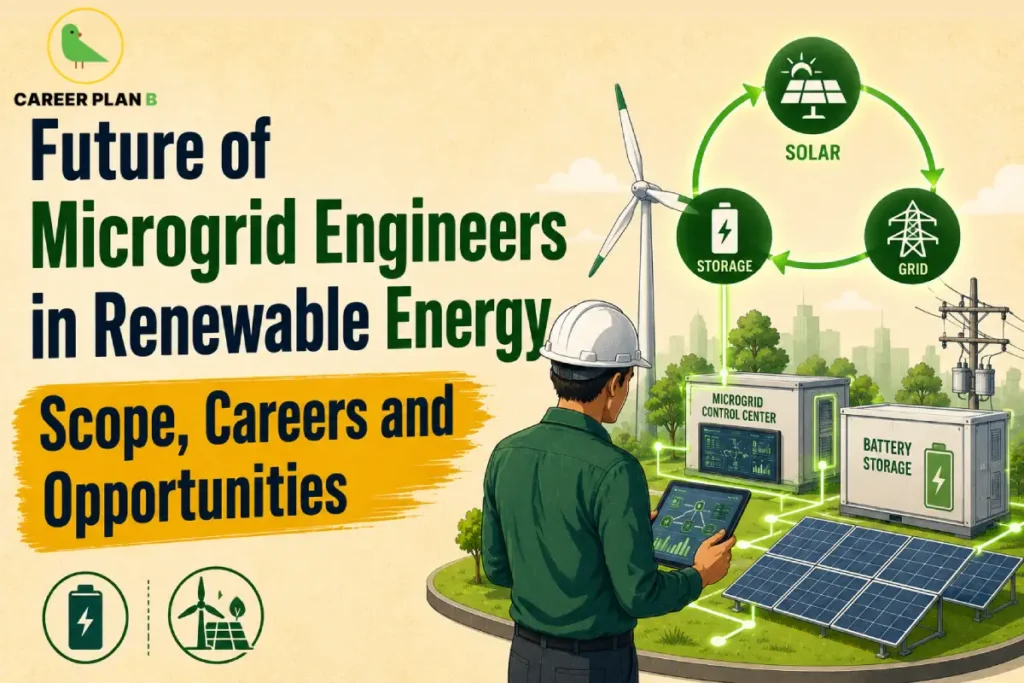
Introduction
India has over 6 lakh villages spread across its vast geography, many of which still experience unreliable electricity supply, frequent outages, or complete energy poverty. At the same time, India’s cities are demanding more resilient, cleaner, and smarter energy systems that do not collapse during grid failures. The solution to both challenges is increasingly the same microgrids. And the professionals designing, building, and managing these systems are microgrid engineers.
The future of microgrid engineers in renewable energy is being written right now, as India accelerates its push toward decentralised clean energy through programmes like the PM Kusum Scheme and the National Solar Mission under the Ministry of New and Renewable Energy (MNRE). With global microgrid investments projected to grow exponentially through 2030, this is one of the most exciting and future-proof career paths available to engineering graduates in India today.
This blog covers everything you need to know from what microgrid engineers do to how you can build a successful career in this field.
What Is a Microgrid and Why Does It Matter?
A microgrid is a small-scale, localised energy system that can generate, store, and distribute electricity independently, either connected to the main grid or operating completely off-grid. Unlike a traditional centralised power grid that sends electricity over long distances from large power plants, a microgrid brings energy generation closer to where it is actually consumed.
A typical microgrid includes:
- Solar PV panels or wind turbines for local energy generation
- Battery energy storage systems (BESS) for storing excess power
- Diesel or biogas generators as backup sources
- Smart control systems to manage energy flow automatically
- Grid interconnection interface for connecting to or disconnecting from the main grid
Microgrids are critical for rural electrification, remote industrial sites, defence installations, hospital campuses, and urban energy resilience, making the microgrid engineer career in India one of the most impactful roles in the energy sector.
What Does a Microgrid Engineer Do?
A microgrid engineer designs, deploys, and manages the complete lifecycle of microgrid energy systems. They work at the intersection of renewable energy, power electronics, control systems, and energy storage, combining multiple engineering disciplines into one highly specialised role.
Their core responsibilities include:
- Conducting feasibility studies and energy load assessments for microgrid projects
- Designing solar PV, wind, and hybrid energy generation systems
- Sizing battery storage systems for optimal energy availability and cost
- Programming and configuring microgrid control systems and energy management software
- Managing grid interconnection, protection systems, and islanding controls
- Overseeing installation, commissioning, and ongoing operations and maintenance
- Ensuring compliance with MNRE guidelines and grid codes
Unlike a general renewable energy engineer who may focus on a single technology, a microgrid engineer manages the entire off-grid and hybrid energy engineer India value chain from site assessment to system operation.
Future of Microgrid Engineers in Renewable Energy Why the Outlook Is Strong
India’s Rural Electrification and Energy Access Goals
Despite significant progress, millions of Indian households still lack reliable electricity. The Rural Electrification Corporation (REC) and MNRE continue to fund decentralised renewable energy projects for villages and remote communities where extending the main grid is either too costly or technically impractical. Microgrids are the primary solution, and every project needs qualified microgrid engineers.
PM Kusum Scheme and MNRE-Driven Deployment
The PM Kusum Scheme aims to solarise 35 lakh agricultural pumps and install 10,000 MW of decentralised solar capacity across rural India. Many of these installations are microgrid-based, directly creating microgrid technology jobs in India for design, installation, and operations professionals.
Urban Microgrids for Smart City Energy Resilience
India’s Smart Cities Mission is increasingly incorporating microgrid infrastructure into smart city planning for hospitals, data centres, public buildings, and transit hubs that cannot afford power interruptions. This urban microgrid segment is a rapidly growing source of distributed energy systems engineering opportunities in India.
Global Microgrid Market Growth
The global microgrid market is projected to grow at a compound annual growth rate of over 14% through 2030. Indian microgrid engineers with design and project management experience are increasingly sought after in markets across Southeast Asia, Africa, the Middle East, and South Asia, making international career prospects a significant additional advantage.
Key Job Roles in Microgrid Engineer Career in India
The renewable energy microgrid career path includes a range of specialised roles:
- Microgrid Design Engineer Designs system architecture, component sizing, and energy yield models
- Energy Storage Systems Engineer: Specialises in battery chemistry, BMS, and storage integration
- Microgrid Control Systems Engineer Programs energy management systems and protection controls
- Rural Electrification Project Engineer Manages deployment of microgrids in off-grid communities
- Hybrid Energy Systems Specialist Designs solar-wind-diesel hybrid systems for remote sites
- Microgrid Commissioning and O&M Engineer: Oversees system startup, testing, and long-term operations
Each of these roles contributes directly to the future of microgrid engineers in renewable energy, and all are projected to see strong demand growth through 2030.
What Skills Does a Microgrid Engineer Need?
Core Technical Skills:
- Solar PV system design using PVsyst and HOMER Pro
- Battery energy storage sizing and BMS configuration
- Power electronics inverters, converters, and charge controllers
- Microgrid control systems and SCADA integration
- MATLAB and ETAP for power system simulation and analysis
- Grid interconnection standards and protection relay programming
- Knowledge of MNRE guidelines and BIS standards
Emerging Skills for the Future:
- AI-driven microgrid energy management and predictive analytics
- Vehicle-to-grid (V2G) integration for EV-enabled microgrids
- Blockchain-based peer-to-peer energy trading within microgrid communities
- Solid-state battery technology for next-generation energy storage
Soft Skills:
- Systems-level thinking across multiple energy technologies
- Project management for rural and remote site deployments
- Community engagement, especially for rural electrification projects
- Cross-sector collaboration with civil, ICT, and policy teams
How to Build a Renewable Energy Microgrid Career Path in India
Step 1: Choose PCM in Class 12
Physics, chemistry, and mathematics are the essential foundations for engineering entrance exams and all microgrid design courses in India.
Step 2: Clear Engineering Entrance Exams
- JEE Main for NITs, IIITs, and centrally funded institutes
- JEE Advanced for IITs
- State-level exams like MHT-CET, WBJEE, and KCET
Step 3: Pursue the Right B.Tech Branch
Best branches for a microgrid engineer career in India:
- B.Tech in Electrical Engineering
- B.Tech in Energy Science and Engineering
- B.Tech in Electronics and Communication Engineering
- B.Tech in Renewable Energy Engineering
Step 4: Gain Hands-On Project Experience
Apply for internships at organisations like SECI (Solar Energy Corporation of India), EESL (Energy Efficiency Services Limited), or NTPC Limited to get direct exposure to solar and microgrid projects. Rural electrification internships with MNRE-funded organisations offer particularly valuable real-world experience.
Step 5: Crack GATE for PSU Jobs or M.Tech
A strong GATE score in Electrical Engineering (EE) opens doors to PSU recruitment and M.Tech specialisations in Renewable Energy, Power Systems, and Energy Storage at IITs and NITs, all of which are directly aligned with the renewable energy microgrid career path.
Step 6: Earn Microgrid and Energy Storage Certifications
- BEE Certified Energy Manager and Auditor: beeindia.gov.in
- HOMER Pro Training: Industry-standard microgrid design software certification
- NPTEL courses in Solar Energy, Energy Storage, and Microgrid Technology
- MNRE-recognised solar PV design programmes
- IIT Bombay and IIT Madras short-term programmes in distributed energy systems
Have Any Doubts?
Microgrid Design Courses in India What to Pursue
Undergraduate:
- B.Tech in Electrical Engineering with energy system electives
- B.Tech in Energy Science and Engineering offered at IIT Bombay and IIT Delhi
Postgraduate:
- M.Tech in Power Systems and Energy Storage
- M.Tech in Renewable Energy Engineering
- M.Tech in Smart Grid and Microgrid Technology
Short-Term and Online:
- NPTEL Solar Energy, Energy Storage, and Microgrid courses
- HOMER Pro online training for microgrid design software
- BEE certification programmes
- MNRE-affiliated training centres for solar and hybrid system design
Top Companies and Organisations Hiring Microgrid Engineers
Public Sector Units and Government Bodies:
- Solar Energy Corporation of India (SECI) Microgrid and solar project development
- NTPC Limited Renewable and microgrid energy projects
- NHPC Limited Hybrid hydro-solar microgrid systems
- Energy Efficiency Services Limited (EESL) Smart metering and distributed energy
- Rural Electrification Corporation (REC) Funding and deploying rural microgrid projects
- MNRE Policy and programme implementation
Private Sector:
- Tata Power Solar Utility and community microgrid projects
- Adani Green Energy Large-scale solar and hybrid systems
- Fourth Partner Energy Rooftop and distributed solar microgrids
- Husk Power Systems Rural biomass and solar microgrid pioneer in India
- Siemens India, ABB India, Schneider Electric Microgrid automation and control systems
These organisations represent the strongest pipeline of microgrid technology jobs in India, and with India’s decentralised energy push accelerating through 2030, demand for qualified microgrid engineers is set to grow significantly.
Microgrid Engineer Salary in India
| Experience Level | Average Annual Salary |
|---|---|
| Entry-Level (0–2 Years) | ₹4 – ₹7.5 LPA |
| Mid-Level (3–7 Years) | ₹8 – ₹16 LPA |
| Senior-Level (8+ Years) | ₹18 – ₹30+ LPA |
| PSU (via GATE – SECI / NTPC / NHPC) | ₹9 – ₹18 LPA + Additional Benefits & Perks |
Engineers with specialised expertise in battery storage systems, HOMER Pro design, or AI-driven microgrid management command a significant salary premium. The microgrid engineer salary in India also rises sharply for professionals managing large rural electrification or urban resilience projects. International postings, particularly in Africa, Southeast Asia, and the Middle East, where off-grid energy demand is growing rapidly, offer considerably higher packages for experienced off-grid and hybrid energy engineer professionals in India.
How Career Plan B Helps
Navigating the renewable energy microgrid career path can feel complex with multiple technologies, certifications, and rapidly evolving roles to understand before you even begin. Career Plan B simplifies this entire journey. Through personalised career counselling tailored to engineering aspirants, Career Plan B helps you identify whether microgrid engineering aligns with your technical strengths and professional goals. Psycheintel-based career assessment tests reveal your natural aptitude, whether it leans toward design, control systems, project management, or rural energy deployment. With structured career roadmapping, Career Plan B guides you through choosing the right B.Tech branch, identifying the best microgrid design courses in India, preparing for GATE, and planning your entry into top PSUs and private renewable energy companies. Whether you are a Class 12 student or a B.Tech graduate exploring your options, Career Plan B gives your microgrid engineer career in India a clear, confident direction.
For Latest Information
Frequently Asked Questions (FAQs)
- Is microgrid engineering a good career in India?
Absolutely. With India’s PM Kusum Scheme, Smart Cities Mission, and 500 GW renewable energy target all driving demand for decentralised energy systems, the future of microgrid engineers in renewable energy is one of the strongest in the engineering sector. Demand is growing consistently across rural electrification, urban resilience, and industrial energy projects.
- Which B.Tech branch is best for microgrid engineering?
Electrical engineering is the most directly aligned branch. Energy Science and Engineering offered at IITs is also an excellent option. ECE graduates can enter the field through control systems and embedded energy management roles, making all three valid starting points for microgrid technology jobs in India.
- Is GATE required for microgrid engineer jobs in India?
GATE is not mandatory for private sector roles but is essential for PSU recruitment at organisations like SECI, NTPC, NHPC, and EESL. It also enables M.Tech specialisations in Renewable Energy and Power Systems at IITs and NITs, both of which are directly relevant to the distributed energy systems engineer India career path.
- What is the difference between a microgrid and a smart grid?
A smart grid is a large-scale, digitally enhanced version of the national power grid using sensors, data, and automation to improve efficiency and reliability across the entire transmission and distribution network. A microgrid is a smaller, localised energy system that can operate independently. Microgrids can be integrated with smart grids but are distinct in scale and function.
- Can electrical engineers work in microgrid projects?
Yes, and they are among the most sought-after professionals in this space. Electrical engineers bring core competencies in power systems, energy storage, and grid interconnection that are directly applicable to off-grid and hybrid energy engineer roles in India across rural electrification and urban microgrid projects.
Conclusion
India’s energy future is not just about large power plants and national grids; it is equally about the thousands of microgrids being built in villages, hospitals, military bases, and smart city campuses across the country. The future of microgrid engineers in renewable energy is defined by this decentralised energy revolution, and engineers who build skills in microgrid design, energy storage, and control systems will find themselves at the forefront of India’s most critical infrastructure challenge.
To recap: choose the right B.Tech branch, clear JEE and GATE, build expertise in solar PV and battery storage systems, earn HOMER Pro and BEE certifications, gain project experience through SECI or NTPC internships, and specialise in emerging areas like AI-driven microgrid management or V2G integration.
If you are ready to explore your microgrid engineer career in India but need expert guidance on where to begin and how to plan your path, visit Career Plan B today. With personalised counselling and structured roadmapping, Career Plan B helps you build a career that is as resilient and future-ready as the microgrids you will engineer.
India’s energy access mission is being built one microgrid at a time. Make sure you are one of the engineers building it.