Careerplanb · July 25, 2026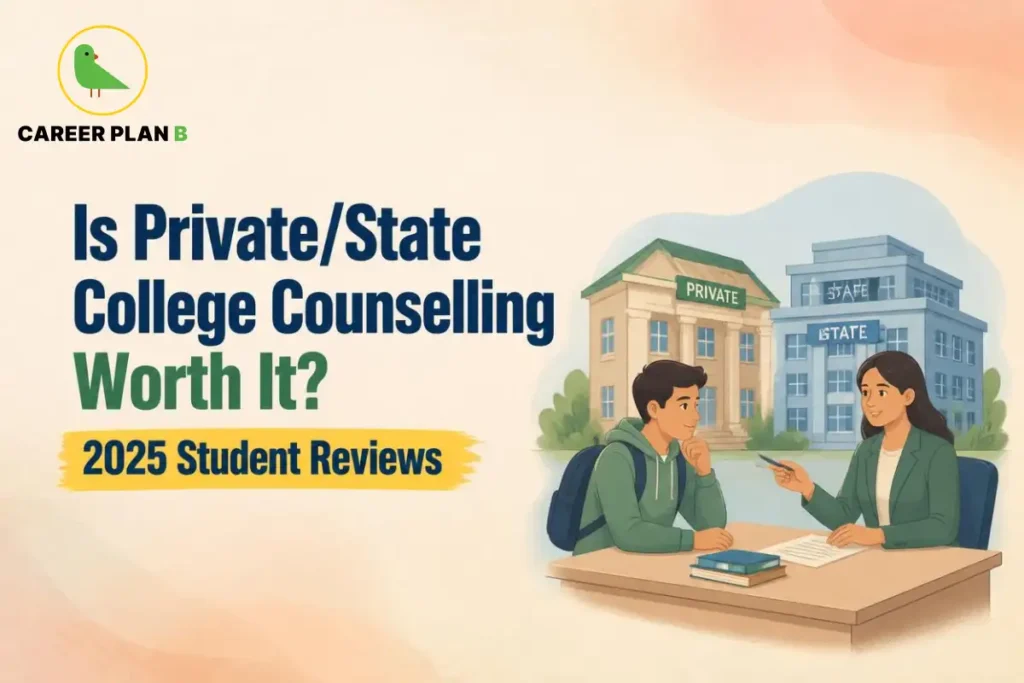
Introduction
It’s 11 p.m., and Priya has fourteen browser tabs open. Common App. A spreadsheet of deadlines. A half written essay she’s rewritten four times. Somewhere in her school, a counsellor is doing the same thing for three hundred other students, and Priya knows she’s not the only name on that list. This is the exact moment when private college counselling starts sounding less like a luxury and more like a lifeline.
But is it actually worth the money, the time, and the trust families put into it? That’s the question we’re answering today, using real 2025 student reviews, hard data, and an honest look at what private college counselling delivers and what it doesn’t. By the end, you’ll know whether it fits your situation, or whether you’re better off saving that money for tuition instead.
Why Are So Many Students Turning to Private College Counselling?
Here’s a number that explains a lot. Nationally, public school counsellors are responsible for hundreds of students each, far more than the 250 to 1 ratio experts recommend. When one adult is stretched across an entire grade, personalized guidance becomes nearly impossible, no matter how much a counsellor wants to help.
Can One Counsellor Really Guide 400 Students?
Think about it honestly. If your school counsellor has 400 students on their list, and the college application season runs roughly six months, that leaves them with barely a few hours per student, total, to cover essays, recommendation letters, financial aid questions, and school selection. It’s not a failure of effort. It’s simple math. This gap is exactly why private college counselling has grown so quickly, especially among families who want more one-on-one attention than a stretched school system can offer. As USF’s own admissions blog points out, private counsellors can dedicate hours to research, school visits, and organization that overloaded school counsellors simply don’t have time for.
Confused about your next steps? Get a personalized roadmap tailored to your career goals.
What Do 2025 Student Reviews Actually Say?
We looked through recent student and parent feedback, forums, and testimonials from this admissions cycle, and the picture is refreshingly honest. It’s not all glowing praise, and it’s not all regret either. It’s somewhere in the messy, human middle.
The Students Who Felt It Was Worth Every Penny
For many students, the value showed up quietly, in small moments. A counsellor who caught a scholarship deadline the student had missed. Someone who pushed back on a bland essay draft and said, “this doesn’t sound like you.” Students who felt unseen at school often described their private counsellor as the first adult who really listened to their goals instead of just checking boxes.
The Students Who Felt Let Down
On the flip side, some reviews were more skeptical. A handful of students felt their counsellor gave generic advice they could have found online. Others felt pressured into a list of “reach” schools that didn’t match their actual interests. A few families admitted they hired a counsellor mainly out of anxiety, not necessity, and later realized their school counsellor could have handled most of it.
Here’s a quick snapshot of what came up again and again:
| What Students Praised | What Students Criticized |
|---|---|
| Personalized attention and honest feedback | High cost for basic, generic advice |
| Help with essays, deadlines, and school fit | Some counsellors pushing their own preferences |
| Reduced stress for the whole family | Pressure to apply to “prestige” schools |
| Better organized application timeline | Overlap with what school counsellors already offer |
What Does Private College Counselling Actually Offer?
Beyond the reviews, it helps to know exactly what’s on the table. Most private college counselling packages include a mix of the following:
- Help identifying colleges that genuinely fit a student’s goals, not just their grades
- Guidance on writing personal essays that sound authentic, not rehearsed
- Support building a realistic application timeline across multiple schools
- Coaching on how to approach recommendation letters, including what to share with a school counsellor
That last point matters more than most students realize. According to Bucknell University’s admissions team, a strong counsellor letter should highlight specific stories and character traits rather than simply repeating a resume, something a private counsellor can help a student prepare for well in advance. Similarly, Cornell’s admissions office confirms that this letter typically comes from a school counsellor, college counsellor, or principal, which means private counsellors often work alongside, not instead of, the school system.
There’s also the matter of demonstrated interest, something many students overlook entirely. Bucknell’s own guidance explains that showing genuine, informed interest in a college through visits, interviews, and thoughtful essays can influence admissions decisions at schools that track it. A good private counsellor knows which schools care about this and which don’t, saving students from wasted effort.
Is It Worth the Cost? Breaking Down the Real Value
Let’s be honest about the money question, because that’s usually what decides this for families.
What You’re Really Paying For
You’re not just paying for someone to proofread an essay. You’re paying for time, attention, and expertise that a stretched school system often cannot provide. For students juggling first generation status, learning differences, or simply a chaotic home schedule, that extra structure can be the difference between a rushed application and a thoughtful one.
When It Might Not Be Necessary
If your school counsellor already has a manageable caseload, if you’re applying to a handful of schools with straightforward requirements, or if your family has the time to research schools together, private college counselling might be more support than you actually need. It’s a personal calculation, not a universal rule.
How Career Plan B Helps
Career Plan B helps students make informed higher education decisions through a personalized approach that connects their academic choices with long-term career goals:
- Personalized Career Counselling: Helps students understand their strengths, interests, academic goals, and future aspirations so they can make informed decisions about courses, universities, and admission pathways.
- Psycheintel & Career Assessment Tests: Provides data-backed insights into aptitude, personality traits, interests, and learning styles, helping students identify academic pathways and career options that best match their natural abilities.
- Admission & Academic Profile Guidance: Supports students in strengthening their academic profile, understanding admission requirements, and planning strategically for university applications.
- Course & University Alignment: Helps students evaluate colleges and programs based on academic fit, eligibility, career opportunities, and long-term aspirations, ensuring every decision supports their future goals.
- Career Roadmapping: Creates a structured, step-by-step plan that connects academic decisions with university admissions, skill development, and long-term career aspirations, giving students a clear direction throughout their educational journey.
- End-to-End Guidance: Assists students throughout the planning and admission process so every academic decision is informed, intentional, and aligned with their future ambitions.
For Latest Information
Frequently Asked Questions
1. Is private college counselling only for students applying to top tier universities?
Not at all. Many students use it simply to reduce stress, organize deadlines, and get a second opinion on essays, regardless of which schools they’re targeting.
2. How early should a student start private college counselling?
Most families begin in tenth or eleventh grade, giving enough time to explore school options and build a strong essay before senior year deadlines hit.
3. Does hiring a private counsellor replace the school counsellor?
No. Private counselors typically work alongside school counsellors, especially since official recommendation letters still come through the school, not an outside consultant.
4. Is private college counselling worth it for financial aid guidance too?
Many counsellors do offer basic financial aid direction, though for complex situations, families often also consult a financial aid officer directly at their target schools.
5. Can private college counselling guarantee admission to a specific college?
No ethical counsellor can guarantee admission. What they can offer is stronger preparation, better fit research, and a more polished application overall.
Conclusion
Reading through all these reviews, one thing becomes clear. Private college counselling isn’t magic, and it isn’t a waste either. It’s a tool, and like any tool, its value depends entirely on how and when you use it. For some students, it’s the steady hand that turns chaos into a clear plan. For others, it’s an expense that didn’t quite match the outcome.
What matters most is asking the right question before you sign up: what exactly do you need help with, and can your current resources already provide it? Answer that honestly, and you’ll know whether private college counselling belongs in your story, or whether your own school counselor, a little planning, and some late night determination will get you just as far.