Team6 · July 17, 2026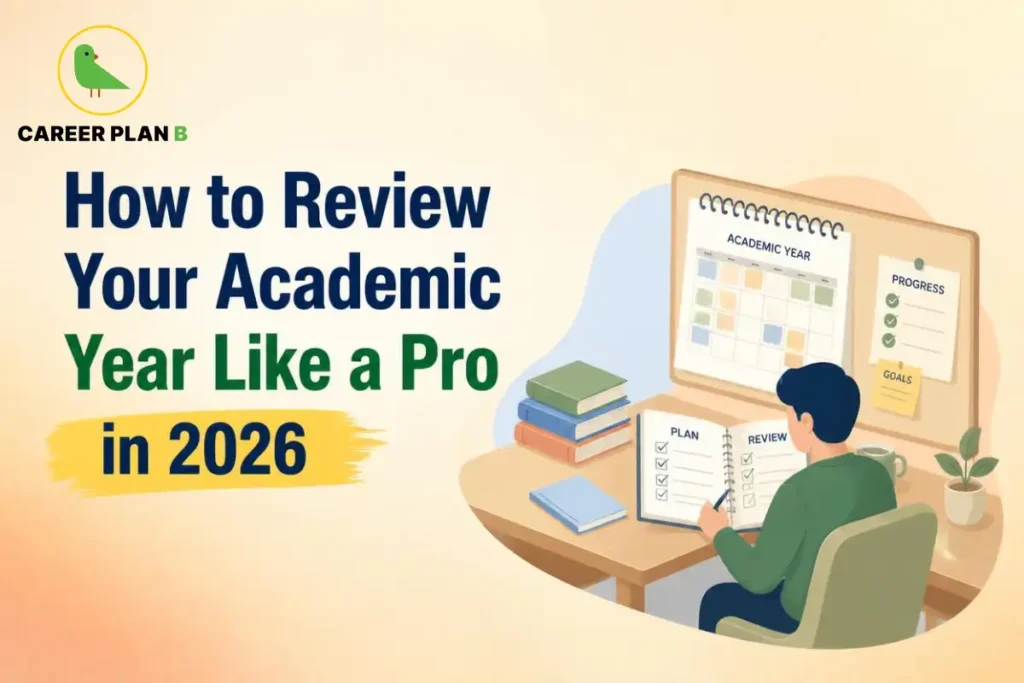
Introduction
Most students close out an academic year the moment their final exam ends. However, this is exactly the moment when a proper review matters most. India’s own National Education Policy 2020 has shifted the entire assessment culture toward this idea. It now formally includes self-assessment as part of every student’s evaluation, alongside teacher and peer assessment.
This guide covers why review your academic year matters, and who should be doing it. It also walks through a clear, step-by-step process for reviewing your year properly. In addition, it highlights common mistakes students make during this process. Finally, it shows you how to turn your review into a real plan for the year ahead.
Why review your academic year ?
Why bother reviewing a year that has already ended? The answer lies in how learning actually improves over time.
A year-end review helps you see patterns you cannot notice mid-year. It shows which subjects genuinely challenged you, and which study habits worked well. Without this reflection, students often repeat the same mistakes every year. National education frameworks now recognise this gap directly. The concept of self-assessment has moved from an afterthought to a formal part of India’s evaluation approach (PARAKH, NCERT).
Moreover, a proper review builds self-awareness that marks alone cannot capture. It helps you understand not just what you scored, but why you scored it.
Who Should Do This, and When?
Is a year-end review only for students who struggled academically? Not at all.
Class 10 and 12 students benefit enormously, especially before board exam years. Reviewing performance early helps identify weak areas before pressure builds. Younger students, with a parent’s guidance, can build this habit early. This makes reflection a natural part of learning rather than a last-minute scramble. College-bound students can also use this process to reconsider subject choices and interests.
The best time to do this is right after your final results arrive. However, before the next academic year begins it is equally effective. This gap between years is often wasted. It works best as reflection time instead.
Step-by-Step: How to Review Your Academic Year
A useful review does not happen by accident. It follows a clear, repeatable structure.
Step 1: Review Subject-Wise Performance
Go through your report card, term results, and test scores subject by subject. Ask yourself which subjects felt easiest, and which consistently felt like a struggle. Write this down instead of relying on memory alone.
Step 2: Examine Your Study Habits
Think honestly about how you studied this year. Did you revise consistently, or mostly before exams? Were your study sessions focused, or frequently interrupted?
Step 3: Assess Your Time Management
Consider how you balanced schoolwork, revision, and personal time. Did you often feel rushed before deadlines or exams? Identifying this pattern early prevents it from repeating next year.
Step 4: Reflect on Extracurricular Involvement
Look beyond academics at how you spent your time outside class. Did extracurriculars support your growth, or did they compete with study time? Both answers are useful, as long as they are honest.
Step 5: Acknowledge Setbacks Without Self-Criticism
Every academic year includes some setbacks, and that is completely normal. Instead of dwelling on them, ask what specifically caused each setback. This turns disappointment into a useful, actionable insight.
Common Mistakes you Make When you Review your Academic Year
Even well-intentioned reviews often go wrong in predictable ways.
Setting vague goals is one of the most common mistakes. Saying “I will study more next year” gives you nothing concrete to act on. Ignoring weak subjects is another frequent pattern. Students often focus only on subjects they already enjoy, avoiding harder ones. Skipping written reflection is a subtler mistake. Thinking about your year mentally is far less effective than writing it down.
Finally, comparing yourself to classmates often derails the entire process. A useful review focuses on your own growth, not someone else’s results.
Have Any Doubts?
Turning Your Review Into Next Year’s Plan
A review only becomes useful once it leads to action. So, how do you convert reflection into a real plan?
Start by choosing two or three specific areas to improve, not ten. Trying to fix everything at once usually leads to fixing nothing well. Next, attach a clear action to each area. Instead of “improve math,” try “revise one math chapter every weekend.”
Set a rough timeline for checking your progress, such as every two months. This keeps your plan active instead of forgotten by September. Finally, keep your written review somewhere you will actually see again. A phone note or a physical planner works better than a forgotten document.
How Career Plan B Helps
A strong year-end review often reveals bigger questions about subject choices and future direction. Career Plan B supports this through:
- Personalised Career Counselling: helping you understand what your academic strengths and struggles this year suggest about future subject or stream choices
- Psycheintel Career Assessment Tests: identifying whether your natural aptitude aligns with the subjects you performed well in, or reveals different strengths entirely
- Admission and Academic Profile Guidance: turning your academic self-assessment into a clearer view of which courses or certifications suit your profile
- Structured Career Roadmapping: building a practical plan for the year ahead based on what your review actually revealed about you
For Latest Information
Frequently Asked Questions
Q1. When is the best time to review my academic year?
Right after your final results arrive works well for most students. The gap before the next academic year begins is also effective.
Q2. What if my review shows mostly negative results?
That is normal and still useful information. Focus on identifying specific causes rather than judging yourself harshly.
Q3. Should younger students also do this kind of review?
Yes, building this habit early makes reflection feel natural over time. It becomes far less stressful than starting it in board exam years.
Q4. How detailed should my written review be?
It does not need to be long, but it should be specific. A few honest paragraphs per subject are far more useful than vague notes.
Q5. Is self-assessment actually part of how Indian schools evaluate students now?
Yes, self-assessment is now formally included in India’s evaluation framework under NEP 2020. It works alongside teacher and peer assessment.
Q6. What should I do if I cannot identify clear patterns in my performance?
Start smaller by reviewing just one term at a time instead. Patterns often become clearer once you compare multiple terms side by side.
Conclusion
Review your academic year is not about dwelling on mistakes or celebrating high scores alone. It is about understanding what worked, identifying what needs improvement, and developing self-awareness that marks alone cannot measure. India’s evolving education framework increasingly recognises reflection and self-assessment as essential skills for lifelong learning and career readiness.
The aim is not to create a perfect plan but to build a more intentional and informed approach to your education and career. If your review leaves you questioning your subject choices, career direction, or future opportunities, Career Plan B can help you explore your options and create a roadmap that aligns with your strengths, interests, and long-term aspirations.