Deepti · July 18, 2026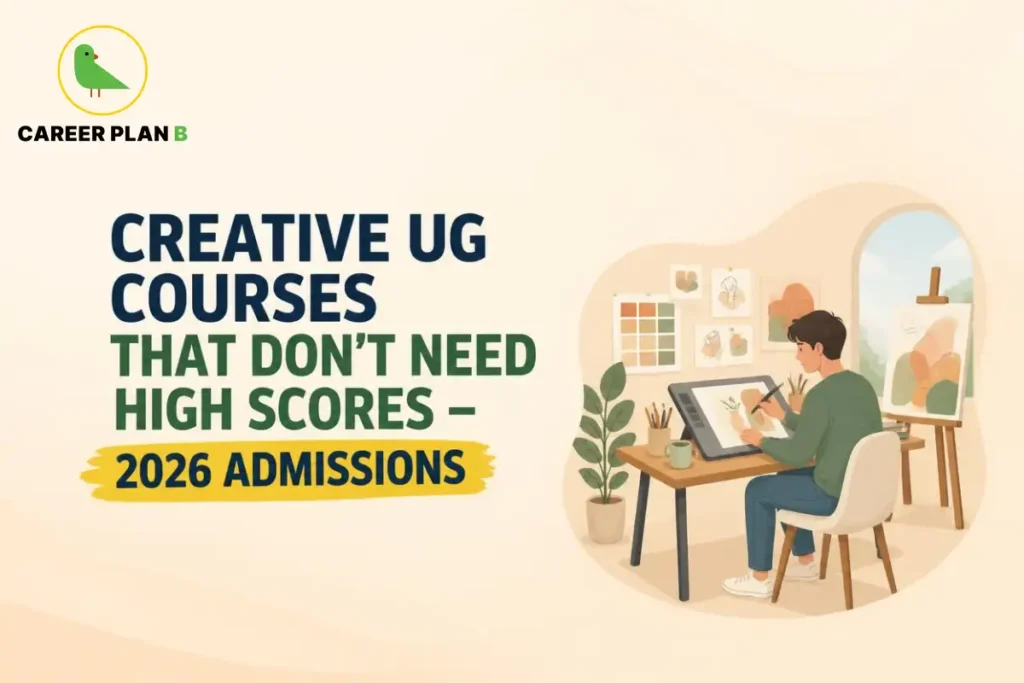
Introduction
Moderate board marks often feel like a barrier when exploring undergraduate options. However, creative fields largely operate on a different admission logic altogether.
Design, fine arts, and media programmes frequently prioritise portfolios, aptitude, and genuine interest over raw percentage cutoffs. Consequently, students with average board scores often find far more accessible entry points here than in conventional academic degrees.
This blog covers creative UG courses that don’t need high scores for 2026 admissions, spanning design, visual arts, and media fields. Therefore, if your marksheet feels limiting, this guide offers a genuinely different path forward.
Why Creative Fields Rarely Demand High Percentages
Unlike engineering or medicine, creative disciplines assess potential through demonstrated skill rather than academic ranking alone. Most institutes therefore set moderate baseline eligibility, typically 45–50% aggregate, while placing far greater weight on portfolios or aptitude tests.
Moreover, many private universities skip formal entrance exams entirely for design and arts programmes, relying instead on Class 12 marks combined with a creative submission. As a result, a moderate percentage rarely disqualifies a genuinely motivated applicant.
Creative Degree Options With Accessible Eligibility
Several undergraduate paths fit this description clearly:
- BA/BFA Fine Arts: Focused on painting, sculpture, and contemporary art practice, generally requiring only a Class 12 pass
- BA/B.Des Animation: Combines storytelling with digital production skills, often admitting students through portfolio review alone
- BA Visual Communication/Graphic Design: Covers branding, typography, and layout design, with moderate percentage requirements at most private institutes
- BA Journalism and Mass Communication: Media-focused programme requiring Class 12 pass, with selection often based on merit or a basic writing test
- BA Photography: Increasingly offered as a specialisation track, generally accessible through Class 12 meritFor Personalized Guidance
Building a Strong Application Without High Marks
Since portfolios and aptitude matter more here, invest time in building demonstrable creative work. Even informal sketches, short films, or writing samples can meaningfully strengthen your application.
Additionally, some institutes conduct short interviews or aptitude tests rather than relying purely on percentage cutoffs. Consequently, preparing thoughtfully for these components often matters more than obsessing over your existing marksheet.
Step-by-Step: Applying to Creative UG Courses in 2026
Step 1: Identify which creative field genuinely interests you, whether design, fine arts, media, or photography.
Step 2: Build a small portfolio or writing sample relevant to your chosen field, even without formal training.
Step 3: Shortlist institutes with moderate eligibility criteria and portfolio-based or merit-based admission.
Step 4: Apply directly through each institute’s admission portal, since many creative programmes skip centralised counselling entirely.
Comparison Table: Creative UG Courses With Accessible Eligibility
| Institute | Programme | Admission Basis |
|---|---|---|
| School of Open Learning, University of Delhi | BA (Programme) with Journalism/English options | Class 12 merit, no CUET required |
| Pearl Academy, Delhi/Mumbai/Jaipur | BA Visual Communication, Animation | Merit and portfolio-based |
| Amity School of Fine Arts, Noida | BFA Fine Arts | Institute-specific counselling, moderate eligibility |
| Shoolini University, Solan | BA Fine Arts and Animation | Direct merit-based admission |
Note: Admission criteria and portfolio requirements change periodically. Verify current details directly with each institute. (Source: School of Open Learning, University of Delhi, official admission portal)
How Career Plan B Helps
Choosing a creative path with a moderate marksheet still requires careful comparison across institutes and specialisations. Career Plan B offers Personalised Career Counselling to help you identify the right creative direction.
Furthermore, Psycheintel and career assessment tests confirm whether your genuine strengths align with design, arts, or media work. Admission and Academic Profile Guidance, alongside Career Roadmapping, then helps you build a portfolio-ready application for 2026.
Get In Touch With Us
Frequently Asked Questions
Q1. Can I pursue a creative UG degree with average board marks?
Yes, most design, arts, and media programmes set moderate eligibility thresholds and prioritise portfolios or aptitude over high percentage cutoffs.
Q2. Do I need prior creative training to build a portfolio?
Not necessarily, many institutes accept informal, self-taught work, provided it demonstrates genuine effort, creativity, and basic technical understanding.
Q3. Which creative field is easiest to get into with moderate marks?
Fine Arts and Journalism/Mass Communication programmes generally have the most accessible eligibility, though animation and design fields also remain achievable with a decent portfolio.
Q4. Are these creative degrees recognised for further studies or jobs?
Recognition depends on the specific university’s UGC status. Always confirm this before enrolling, regardless of how accessible the admission process feels.
Q5. Should I take an entrance test even if it’s optional at some institutes?
If available, attempting it can strengthen your application, particularly if your Class 12 percentage sits closer to the minimum eligibility threshold.
Conclusion
Creative UG courses that don’t need high scores genuinely open up meaningful 2026 admission options for students with moderate board marks. Fields like fine arts, animation, design, and media consistently prioritise portfolios and aptitude over percentage alone.
That said, building a thoughtful portfolio and verifying institute recognition remain essential steps regardless of your marksheet. If a creative career genuinely excites you, Career Plan B can help you compare these options against your specific strengths.
Your percentage doesn’t define your creative potential — your portfolio might just be the stronger story.