Team Career Plan B · July 20, 2026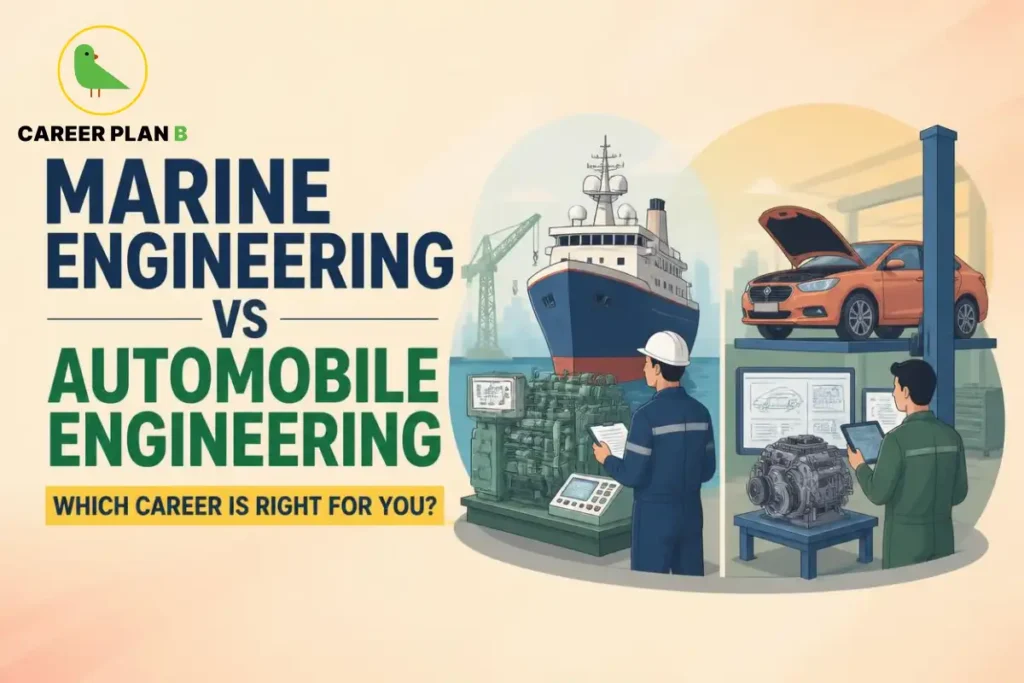
Introduction
Both fields revolve around engines, machinery, and moving parts, yet the working lives that come out of them couldn’t look more different. This is exactly why so many students weighing an engineering path end up comparing marine engineering vs. automobile engineering side by side, without realizing how differently these two careers actually unfold day to day. One takes you out to sea for months at a stretch; the other keeps you largely on land in factories, design studios, or testing facilities. This blog looks at what each field actually involves, how they compare on pay and stability, what the daily lifestyle really looks like in each, and where the long-term career growth stands for both.
What Does a Marine Engineer Actually Do?
A marine engineer’s workplace is a ship, and the job centres on keeping propulsion systems, engines, and onboard machinery running reliably, often in extremely remote conditions. Much of the early career involves extended sea voyages, working in engine rooms, and handling mechanical failures immediately since there’s no repair shop to call in the middle of the ocean. This work demands sharp, hands-on troubleshooting skills and genuine comfort with long stretches away from home. It suits someone who enjoys mechanical problem-solving under real pressure, in an environment where the stakes of a malfunction are considerably higher than they’d be on land.
What Does an Automobile Engineer Actually Do?
An automobile engineer’s world is almost entirely land-based, centred around vehicle design, manufacturing processes, and testing. This includes designing engine components, improving fuel efficiency, developing safety systems, and increasingly, working on electric vehicle technology as the industry shifts in that direction. Much of this work happens in structured environments like design offices, manufacturing plants, or testing facilities, following predictable schedules rather than the unpredictable rhythms of life at sea. It’s a strong fit for someone who enjoys precision engineering and iterative design work, especially within a fast-evolving, innovation-driven industry.
Marine Engineering vs Automobile Engineering: Key Differences
Here’s a direct comparison to clarify the difference between marine and automobile engineering:
| Aspect | Marine Engineering | Automobile Engineering |
|---|---|---|
| Work Environment | Ships, engine rooms, often at sea | Factories, design studios, testing labs |
| Core Focus | Ship propulsion, onboard systems | Vehicle design, manufacturing, EV technology |
| Physical Demands | Confined spaces, extended sea voyages | Standard factory or office-based routine |
| Typical Employers | Shipping companies, navies, marine consultancies | Auto manufacturers, EV startups, R&D labs |
| Industry Driver | Global trade volumes | Consumer demand, EV adoption, innovation cycles |
Which Field Offers Better Pay and Job Stability?
Both fields offer solid earning potential, but they respond to very different industry pressures. Marine engineer salary figures tend to rise sharply with sea-time experience and rank, and pay is often benchmarked against international shipping wage standards, which can make early-career compensation quite attractive despite the demanding lifestyle.
Automobile engineer salary growth, on the other hand, tends to track the health of the automotive sector itself, and right now that means the electric vehicle boom in India is creating fresh demand for engineers with EV-specific skills. The Ministry of Heavy Industries has been actively pushing this shift through incentive schemes for electric vehicle manufacturing. Neither field is more “stable”; outright marine engineering ties to global trade cycles, while automobile engineering ties to consumer demand and technology shifts, like electrification.
Lifestyle Trade-offs: Sea Life vs Factory Floor
This is where the two paths diverge most sharply. Marine engineers spend months at sea, often with limited connectivity and long periods away from family, in exchange for strong pay and international exposure. Automobile engineers, by contrast, generally maintain a far more conventional routine, working regular hours in factories or offices with the ability to go home every evening. For students weighing the best engineering branch after 12th, this lifestyle difference often matters just as much as salary. Someone who values routine and stability at home might lean toward automobile engineering, while someone drawn to travel, higher early pay, and a more adventurous daily life might find marine engineering more appealing.
Have Any Doubts?
Career Scope and Growth in Each Field
Marine engineering career scope extends across shipping companies, naval forces, offshore rigs, and marine consultancies, with strong opportunities for international work given how globally connected the shipping industry is. Automobile engineering career scope, meanwhile, spans traditional manufacturers, emerging EV startups, and R&D divisions increasingly focused on battery technology, autonomous systems, and sustainable vehicle design. Both fields are genuinely growing, just along different trajectories: one tied to global trade expansion, the other to the accelerating shift toward electric and smart vehicle technology within India’s rapidly evolving auto sector.
How Career Plan B Helps
Choosing between a sea-based career and a land-based one isn’t just about comparing salary charts; it’s about understanding which working rhythm actually fits how you want to live day to day. Marine engineering demands comfort with long absences from home, while automobile engineering rewards those who thrive in structured, innovation-driven environments closer to home. Career Plan B offers personalized career counselling and PsycheIntel career assessment tests designed to help you understand which of these two very different working lives genuinely suits your personality and priorities. Their academic profile guidance and career roadmapping services can also help you explore specific entry points into either field, whether that means understanding marine engineering eligibility requirements or identifying which automotive specializations, like EV technology, align with where the industry is heading.
For Latest Information
Frequently Asked Questions
- Which field pays more starting out?
It varies. Marine engineering often offers strong early pay tied to sea time, while automobile engineering salaries depend heavily on the specific company and specialization, such as EV technology.
- Is automobile engineering a safer career choice than marine engineering?
In terms of daily physical risk, yes, automobile engineering involves standard factory or office conditions, while marine engineering carries more inherent occupational hazards at sea.
- Is the automotive industry growing faster than shipping right now?
Both are growing, though for different reasons. The automotive sector is expanding rapidly due to electric vehicle adoption, while shipping continues to grow alongside global trade volumes.
- Can I switch from automobile engineering to marine engineering later?
It’s uncommon and typically requires additional certification since marine engineering involves specific sea service and licensing requirements that automobile engineering doesn’t.
- Which field offers better long-term career stability?
Both offer genuine stability, but through different mechanisms: global trade dependency for marine engineering and consumer demand plus technological innovation for automobile engineering.
Conclusion
When you look past the shared foundation of engines and machinery, marine engineering vs automobile engineering really comes down to two very different daily realities: one built around life at sea, the other around land-based precision engineering and rapid innovation. Marine engineering rewards those who can handle extended time away from home in exchange for strong pay, while automobile engineering suits those who want steady routines while working at the edge of technologies like electric vehicles. Rather than choosing based on which field sounds more prestigious, take the time to honestly weigh which lifestyle you can sustain long-term. Both paths offer genuine career scope and growth, and the right choice is simply the one that matches how you actually want your working life to look.