Team6 · July 20, 2026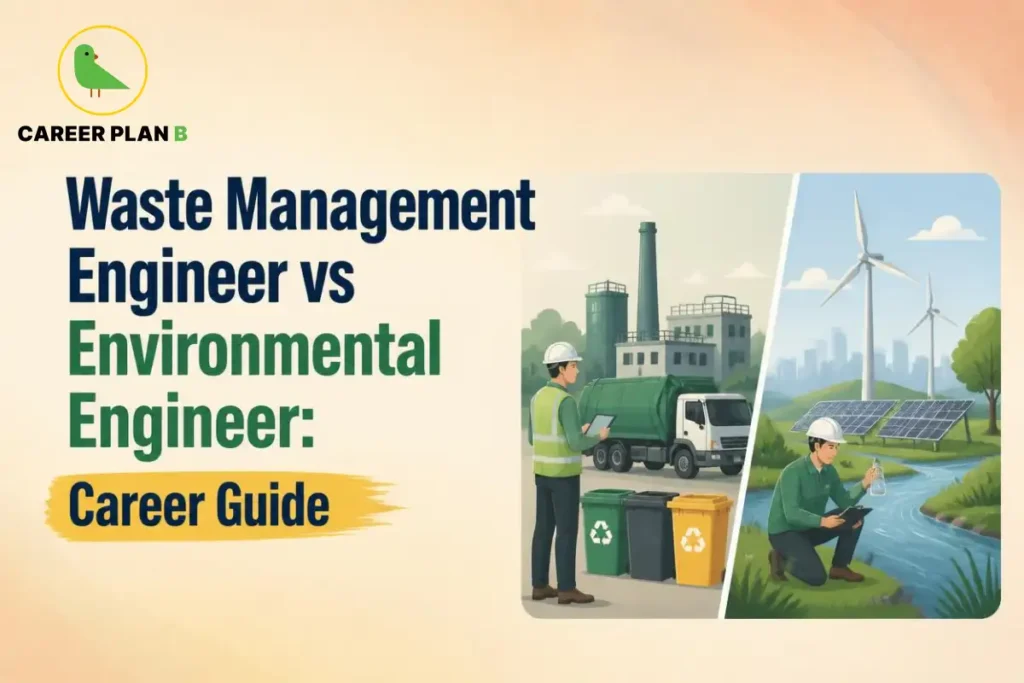
Introduction
If you’ve been researching engineering careers with an environmental focus, you’ve probably come across these two titles and wondered if they’re basically the same thing. The debate over waste management engineer vs environmental engineer comes up constantly among students choosing a major and job seekers applying to roles that sound nearly identical on paper. The truth is, there’s real overlap between them, but the day-to-day work, focus areas, and career paths can look quite different depending on which direction you take.
Both roles fall under the broader umbrella of environmental engineering, and both play a role in how waste is handled responsibly. The U.S. Environmental Protection Agency (EPA) outlines a waste management hierarchy that ranks reducing, reusing, recycling, and composting as the most environmentally preferred strategies, with landfilling and disposal further down the list (EPA Non-Hazardous Materials and Waste Management Hierarchy). Understanding where each role fits into that hierarchy is a good starting point for telling them apart.
What Does a Waste Management Engineer Actually Do?
A waste management engineer focuses specifically on how waste moves through a system, from collection to final disposal. This often means designing landfill systems, planning recycling infrastructure, and figuring out efficient waste collection logistics for cities or private companies. The waste management engineer role is fairly hands-on and specialized, often involving direct work with landfill design, methane capture systems, and transfer stations where waste is temporarily held before being shipped elsewhere. According to the EPA, modern landfills must meet strict design, operation, and closure requirements to prevent groundwater contamination, and engineers in this space are the ones responsible for meeting those standards. It’s a role that leans heavily into the practical, physical side of managing what a city or company throws away.
What Does an Environmental Engineer Actually Do?
An environmental engineer, on the other hand, typically works across a much wider range of problems. Their environmental engineer responsibilities can include managing water treatment systems, monitoring air quality, addressing soil contamination, and helping companies comply with a whole range of environmental regulations. Waste management is just one piece of a much bigger picture for this role. Where a waste management engineer might spend their career deeply focused on one system, an environmental engineer is more likely to move between different environmental challenges depending on the project or client. This broader scope is part of what makes environmental engineering such a flexible career path, since it opens doors across water utilities, government agencies, and private consulting firms alike.
Where the Two Roles Overlap
Despite their differences, these roles share a lot of common ground. Both are deeply involved in regulatory compliance, both care about protecting public health, and both often work on solid waste management projects at some point in their careers. It’s not unusual for an environmental engineer to take on a waste-focused project or for a waste management engineer to need a working understanding of broader environmental regulations to do their job well. In smaller organizations especially, these lines blur even further, with one person sometimes handling responsibilities that would be split across two roles in a larger company.
Have Any Doubts?
Key Differences in Education, Skills, and Day-to-Day Work
While both paths typically start with a similar engineering foundation, the way careers diverge from there is worth understanding clearly.
| Aspect | Waste Management Engineer | Environmental Engineer |
|---|---|---|
| Typical Focus | Landfill design, recycling systems | Water, air, soil, compliance engineering |
| Common Employers | Waste mgmt companies, municipalities | Consulting firms, govt agencies, utilities |
| Day-to-Day Work | Site design, methane systems, logistics | Compliance, pollution control, projects |
| Career Scope | Narrower, specialized | Broader, across many industries |
This kind of specialization versus breadth is often the biggest factor people should weigh when choosing between the two.
Which Career Path Is Right for You?
If you enjoy diving deep into one system and becoming a true specialist, a waste management engineering career might suit you well, especially if you like the idea of working hands-on with physical infrastructure like landfills and recycling facilities. If you’d rather work across a variety of environmental challenges and enjoy the flexibility of moving between industries, a broader environmental engineering path may be the better fit. Both are examples of meaningful sustainability engineering roles, and neither is objectively “better” than the other. It really comes down to whether you prefer depth in one area or variety across many.
How Career Plan B Helps
Career Plan B helps students make informed career decisions through personalized guidance, assessments, and career planning for environmental and sustainability-focused engineering fields.
Personalized Career Counselling: Helps identify whether waste management engineering or environmental engineering matches your interests and career goals.
Psychometric & Career Assessment Tests: Evaluates strengths, skills, and preferences to suggest suitable career paths.
Career Roadmapping: Provides a clear step-by-step plan for education, skills, and career growth.
Admission & Academic Profile Guidance: Assists in choosing the right courses, colleges, and academic pathway.
Get In Touch With Us
Frequently Asked Questions
1. Is a waste management engineer the same as an environmental engineer?
Not exactly. Waste management engineers specialize in waste systems specifically, while environmental engineers work across a broader range of environmental issues.
2. Which pays more, waste management engineering or environmental engineering?
Pay can vary by employer and location more than by title, since both roles fall under similar engineering pay scales in most cases.
3. Do both careers need the same degree?
Generally, yes. Most start with a bachelor’s degree in environmental, civil, or related engineering, then specialize through experience or further study.
4. Can an environmental engineer become a waste management engineer?
Yes, many environmental engineers move into waste-focused roles over time, since the foundational skills overlap significantly.
5. Which career has better long-term growth?
Both offer solid long-term prospects, since demand for responsible waste handling and environmental compliance continues to grow steadily.
Conclusion
When it comes down to waste management engineer vs environmental engineer, the real difference isn’t about which job is more important; it’s about focus. One goes deep into the systems that handle waste specifically, while the other takes a broader view across water, air, soil, and compliance. Both play a genuine role in building a more sustainable future, and both offer solid, stable careers for the right person.
If you’re still weighing which path fits your interests and strengths, you don’t have to figure it out alone. Career Plan B can walk you through the options and help you build a realistic academic and career roadmap. Whichever direction you choose, you’ll be stepping into work that genuinely matters for the world around us.