Team Career Plan B · July 22, 2026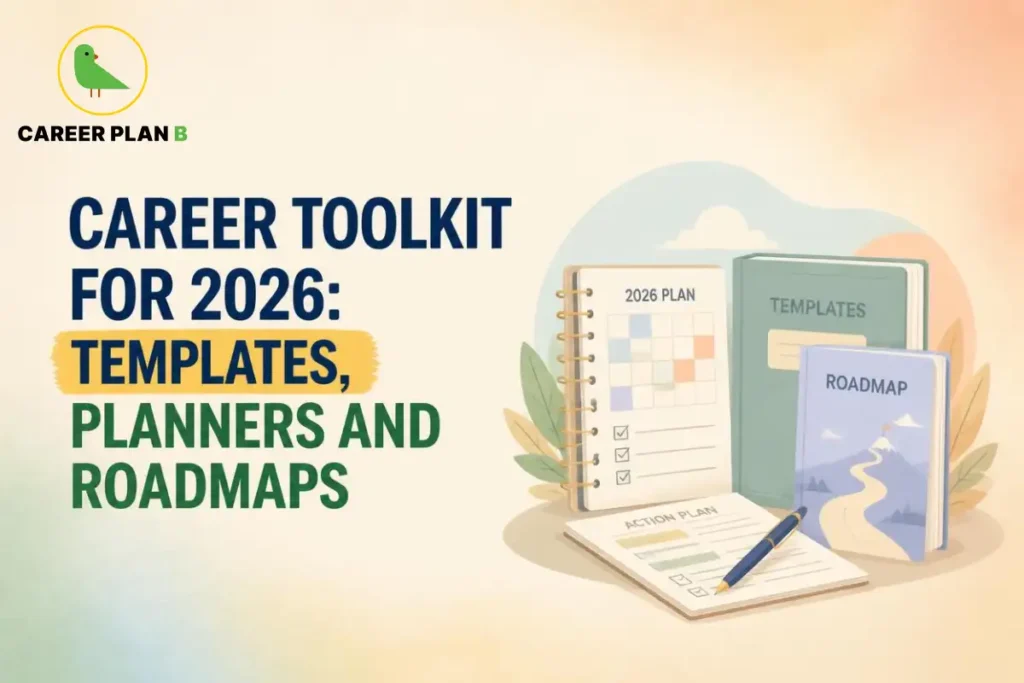
Introduction
Most students think about their career constantly. Few actually write any of it down.
That gap matters more than it seems. A plan that lives only in your head shifts every time you feel anxious or excited. A plan on paper, or in a simple document, stays consistent. It gives you something to check yourself against, instead of just a rotating set of worries.
You don’t need expensive software or a complicated system. You need a small, practical set of career toolkits you’ll actually use. This guide covers exactly that: a resume tracker, a semester planner, a skill roadmap, and a simple system to track your credentials and applications through 2026.
Why Does a Career Toolkit Beats a Vague Plan?
A vague plan sounds like “I want a good job” or “I want to get into a good college.” These aren’t wrong, but they’re not usable either. You can’t check progress against a goal that isn’t specific.
A toolkit fixes this in three ways.
It forces specificity. A template with fields for skills, deadlines, and outcomes makes you name exact things, not vague intentions.
It creates a record. You can look back at what you planned three months ago and see what actually happened. This alone catches drift before it becomes a wasted year.
It reduces decision fatigue. When your plan lives in one place, you stop re-deciding your priorities every week. You just check the plan and act on it.
Tool 1: The One-Page Career Snapshot
Start with a single page. This isn’t a full plan. It’s a quick-reference summary you update every few months.
Include five things on this page: your target role or field, your top three skills right now, your top three skill gaps, one certification or course you’re currently working on, and one specific goal for the next 90 days.
Keep this page short on purpose. If it takes more than ten minutes to update, it’s too detailed to maintain. The value comes from checking it often, not from how thorough it looks.
Tool 2: A Semester or Term Planner
Academic terms move fast, and career-building activities often get pushed aside by coursework and exams. A simple term planner prevents that.
Break your term into three columns: academic priorities, skill-building priorities, and application or outreach priorities. Under academic priorities, list your major exams, assignments, and project deadlines. skill-building, list the specific course, certification, or project you’re working on that term. Under application or outreach, list internships, competitions, or people you plan to reach out to.
Review this planner at the start of each month. Adjust it as your term progresses. The goal isn’t a perfect plan. It’s a living document that keeps career work visible alongside academic work, instead of getting lost behind it.
Tool 3: A Skill Roadmap With Real Milestones
A skill roadmap works best when it’s built backward from a target role, not forward from whatever course looks interesting this month.
Start with the role or field you’re aiming for. List the three to five skills that role consistently requires, based on real job postings or research, not assumptions. For each skill, note your current level, the specific resource you’ll use to build it, such as a SWAYAM course, an NPTEL module, or a recognised certification, and a target date to reach a usable level.
A useful reference point here is the National Career Service portal , run by the Ministry of Labour and Employment. It lists role requirements and qualifications across sectors, which helps you build a roadmap based on real data instead of guesswork.
Tool 4: A Credential and Application Tracker
By the time most students reach their final year, they’ve usually completed several courses, certifications, and applications. Without a tracker, it’s easy to lose track of deadlines, certificate numbers, or which application needs a follow-up.
Build a simple table with these columns: credential or application name, issuing body or organisation, status, deadline or expiry, and next action. Update it weekly during active application seasons, and monthly otherwise.
This tracker becomes especially useful when you’re applying to multiple things at once, such as postgraduate programs, government exams, and job applications in parallel. It keeps you from missing a deadline simply because it wasn’t written down anywhere.
Have Any Doubts?
A Sample Toolkit Structure
| Tool | Purpose | Update Frequency |
|---|---|---|
| One-Page Career Snapshot | Quick reference for direction and current gaps | Every 2-3 months |
| Semester or Term Planner | Balances academic, skill-building, and outreach priorities | Monthly |
| Skill Roadmap | Tracks specific skills against a target role, backward-built | Every 2-3 months, or when the target role shifts |
| Credential and Application Tracker | Keeps deadlines, statuses, and follow-ups visible | Weekly during active seasons, monthly otherwise |
How to Actually Stick to a Career Toolkit?
Most students abandon planning tools within a few weeks. A few habits prevent that.
Keep every tool in one place, whether that’s a single document, a notes app, or a physical planner. Splitting your system across five different apps guarantees you’ll stop using at least three of them.
Set a fixed day each month to review everything at once, rather than updating tools randomly whenever you remember. A recurring reminder works well for this.
Finally, treat the toolkit as a working draft, not a finished product. Plans change as you learn more about yourself and your field. A toolkit that flexes with you is far more useful than one you’re afraid to edit.
For Latest Information
How Career Plan B Helps
Building your own toolkit is a strong start, but knowing what to prioritise inside it takes more context than most students have alone. Career Plan B helps you build that clarity through:
- Personalised Career Counselling to help you define a specific, realistic target role or field to build your toolkit around.
- Psycheintel Career Assessment Tests to identify which skills and paths genuinely fit your strengths before you commit time to them.
- Admission and Academic Profile Guidance to help you choose the right certifications and programs to track in your roadmap.
- Structured Career Roadmapping to turn your personal toolkit into a guided, milestone-based plan with expert input.
Frequently Asked Questions
Q1. Do I need special software for a career toolkit, or is a simple document enough?
A simple document or spreadsheet is enough for most students. The value comes from consistent use, not from the tool’s complexity. Start simple and only add structure if you find yourself needing more.
Q2. How far in advance should my skill roadmap plan?
Plan in 6 to 12 month blocks. STEM and business fields both move fast enough that planning much further out often means revising the plan anyway once your goals or the job market shifts.
Q3. What if I don’t know my target role yet?
Build a simpler version of the roadmap around a broader field instead of one specific role. Use your One-Page Career Snapshot to track your exploration, and narrow the roadmap down once you have more clarity.
Q4. How do I know if my toolkit is actually working?
Check whether your snapshot and roadmap look meaningfully different every few months. If they look identical update after update, either your effort has stalled, or your review process needs to go deeper.
Q5. Should I share my career toolkit with a mentor or counsellor?
Yes, this is often where a toolkit adds the most value. A mentor or counsellor can spot gaps and blind spots you might miss reviewing your own plan alone.
Q6. Is it too late to start a toolkit if I’m already in my final year?
No. A toolkit built in your final year still helps you prioritise your remaining time deliberately, and the credential tracker especially becomes useful once applications and deadlines start overlapping.
Conclusion
A career plan that only exists in your head is easy to lose track of. A small Career toolkit, built from a snapshot, a term planner, a skill roadmap, and a credential tracker, turns vague intentions into something you can actually check yourself against.
You don’t need a complicated system. You need one you’ll actually keep using through 2026.
Not sure how to build a toolkit around your specific goals? Career counselling can help you set the right direction before you start tracking it.