Careerplanb · July 22, 2026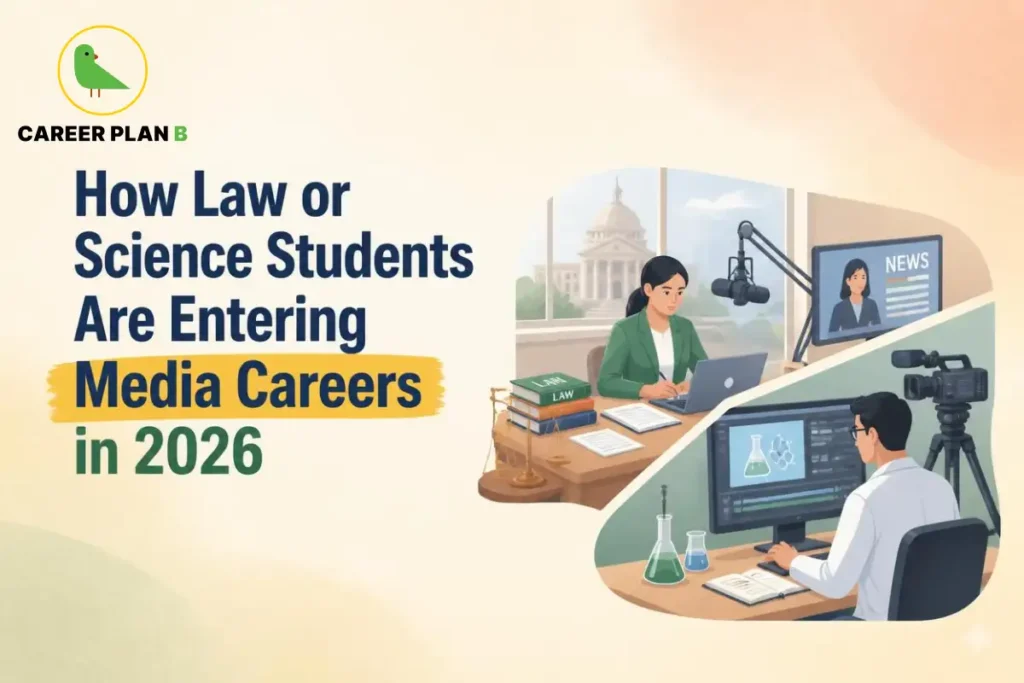
Introduction
A law graduate explaining a Supreme Court judgment on Instagram. A biology graduate hosting a podcast on climate change. Neither picture matches the traditional courtroom or laboratory image. However, Media Careers for Law and Science Students are genuinely booming in 2026, driven by a public hungry for accurate, simplified information.
So, how exactly does someone move from case law or chemistry into a newsroom? This blog explores real, practical Media Careers for Law and Science Students, covering specific roles, required skills, and how to actually get started. By the end, this shift will feel entirely achievable.
Why Are Law and Science Graduates Suddenly in Demand for Media?
Media houses increasingly need specialists, not just generalist reporters. For instance, new criminal codes like the Bharatiya Nyaya Sanhita require genuine legal understanding to report accurately. Similarly, topics like climate change and public health demand real scientific literacy, not surface-level paraphrasing.
Consequently, newsrooms actively seek graduates who already understand the subject matter deeply. Furthermore, India’s digital advertising market is projected to cross fifty thousand crore rupees, creating genuine demand for specialised content creators across every platform.
What Makes These Graduates Different From Traditional Journalists?
A journalism graduate learns storytelling first, then picks up subject knowledge later. In contrast, law and science graduates already possess deep subject expertise. Therefore, they only need to build communication and media skills, often a faster and more targeted transition.
Confused about your next steps? Get a personalized roadmap tailored to your career goals.
Media Careers for Law and Science Students: What Does It Actually Look Like?
Legal journalism has grown into a genuinely serious career path. It bridges complex law with everyday public understanding, covering court judgments, policy changes, and legal rights in accessible language.
| Role | What It Involves | Where They Work |
|---|---|---|
| Legal Journalist | Reporting on and explaining court cases, judgments, legal developments, and public policy | News channels, legal news platforms, digital publications |
| Legal Content Writer | Creating explainer articles, legal guides, case summaries, and educational content | Legal-tech companies, law firm blogs, legal media startups |
| Media Law Consultant | Advising media organisations on defamation, privacy, copyright, and broadcasting laws | News organisations, production houses, media companies |
Notably, digital platforms have genuinely lowered the entry barrier here. Young law graduates can now start instantly by publishing case summaries and legal explainers on personal blogs or LinkedIn, without needing a big media house’s endorsement first.
What Skills Does a Career in Media After Law Actually Require?
Strong legal understanding forms the foundation, but it is not enough alone. Additionally, you need agile writing skills, since digital media demands direct, concise, and fast-paced content. Furthermore, comfort with AI research tools now genuinely helps in sifting through dense judgments quickly.
Career in Media After BSc: The Science Communication Route
Science graduates have an equally compelling path, often called science communication or science journalism. This field translates complex research into content that a general audience can genuinely understand and trust.
What Roles Actually Exist in Science Communication?
- Science journalist – covering new research, medical breakthroughs, and technology for news outlets
- Science writer or editor – creating educational content, explainer articles, and scripts for videos
- Medical or scientific content writer – producing accurate content for pharma, biotech, and healthcare brands
- Science YouTuber or podcaster – building independent audiences through original, research-backed content
- Public outreach officer – working with research institutions to communicate findings to the public
Interestingly, a formal PhD or advanced degree is not always required for this path. Instead, skills genuinely matter more than credentials, and many successful science communicators built their careers through internships, writing practice, and consistent networking.
How Do You Actually Build Credibility Without a Journalism Degree?
Start by writing regularly, even informally. Editing peer research, lab reports, or thesis drafts builds genuine practical experience. Additionally, platforms like Coursera offer specific writing-for-science courses that fill gaps traditional science coursework does not cover.
How Should You Actually Make This Transition?
Switching from law or science into media is realistic, but it benefits from a structured approach rather than a sudden leap. Here is a practical path forward.
- Start creating content immediately, even informally, through a blog, LinkedIn, or a small YouTube channel
- Consider a short journalism or media certification, rather than a full second degree, to fill specific skill gaps
- Seek internships at niche platforms covering legal or science topics, since these value your subject expertise directly
- Build a focused portfolio around one or two specific themes, rather than writing broadly about everything
- Network actively on LinkedIn, since many science and legal media roles get filled through direct outreach and referrals
Is a Full Journalism Degree Actually Necessary?
Not always. For legal or science graduates, employers often value subject expertise combined with a demonstrated ability to write clearly. Therefore, a short diploma or certification can suffice, especially if your portfolio genuinely shows strong communication skill.
How Much Can You Actually Earn in These Roles?
Earnings vary considerably by platform and experience. Media law consultants and specialists typically earn between four and fifteen lakh rupees annually, depending on role and experience. Meanwhile, science and medical content writers, especially those working with pharma or biotech companies, often command competitive, steadily rising salaries as demand grows.
A Word of Caution Before You Switch
Regional and smaller digital platforms sometimes offer modest starting salaries, so research realistic income expectations for your specific target platform. Additionally, always verify a media organisation’s credibility and reach before committing significant time to unpaid or underpaid opportunities.
How Career Plan B Helps
Deciding whether Media Careers for Law and Science Students genuinely fit your strengths takes more than curiosity alone.This is where Career Plan B can help by offering:
- Personalised Career Counselling: Provides expert guidance based on individual interests, skills, and career goals, helping you judge if a shift into media genuinely fits your law or science background.
- Psychometric & Career Assessment Tests: Identifies strengths, personality traits, and suitable career opportunities, useful for confirming genuine aptitude for writing and public communication.
- Career Roadmapping: Creates a clear step-by-step plan to achieve academic and professional goals, including realistic timelines for building a media portfolio.
- Admission & Academic Profile Guidance: Helps in selecting the right courses and colleges and improving academic profiles, so any additional certification stays genuinely relevant.
Get In Touch With Us
Frequently Asked Questions
1. Can a law graduate actually build a full career in media?
Yes, legal journalism and media law consulting are genuinely growing fields, especially given rising public interest in court judgments and legal policy.
2. Do science graduates need a journalism degree for media roles?
Not necessarily. Many science communicators build careers through writing practice, internships, and short certifications rather than a full journalism degree.
3. What is the difference between science journalism and science communication?
Science journalism focuses on reporting scientific news and discoveries, while science communication more broadly covers explaining scientific concepts through articles, videos, or social media.
4. How much can I earn in a career in media after law?
Roles like media law consulting and legal content writing typically range between four and fifteen lakh rupees annually, depending on experience and platform.
5. Is it possible to start a media career while still studying?
Yes, starting a blog, LinkedIn presence, or small content channel during your degree genuinely builds a portfolio before you even graduate.
Conclusion
Law and science degrees no longer lead only to courtrooms or laboratories. Media Careers for Law and Science Students now offer a genuine, growing path for graduates who can translate complex knowledge into content people actually want to read or watch. For those with both subject expertise and a flair for communication, this shift offers real, sustainable opportunity.
If this unconventional path has been quietly tempting you, structured guidance can help you evaluate it properly. The most impactful careers often blend two skills nobody expects to see together. Talk to a Career Plan B counsellor today to explore media career options that fit your law or science background.