Team6 · July 22, 2026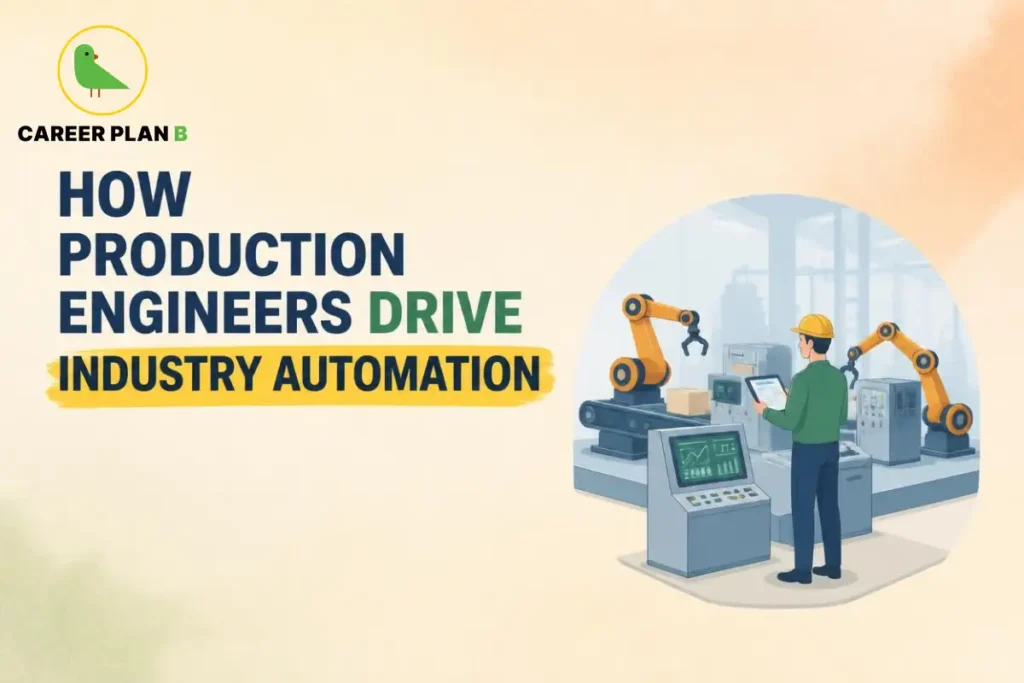
Introduction
India’s robot installations grew by roughly 84 per cent between 2021 and 2024, making the country the world’s sixth-largest market for industrial robots. This rapid expansion raises a genuinely practical question: how production engineers drive industry automation on the ground, rather than simply operating machines that already exist. Most students picture automation as something that happens automatically, without realizing production engineers are the ones designing, integrating, and optimizing these robotic systems in the first place. This blog explains exactly how production engineers drive industry automation, the skills this work demands, and what it means for your career.
How Big Is India’s Industrial Automation Shift, Really?
Robot Installations and Market Growth
India recorded 9,120 industrial robot installations in 2024 alone, positioning the country among the fastest-growing robotics markets globally. Additionally, the automotive sector installed over 3,500 robots in a single year, driven heavily by EV platforms and precision component manufacturing. This growth trajectory signals genuine, sustained demand for industrial automation India-wide, rather than a short-term spike.
Government Schemes Fueling This Shift
This growth isn’t happening by accident. The Production Linked Incentive (PLI) scheme, backed by an outlay of ₹1.91 lakh crore, has attracted approved investment commitments exceeding ₹2.16 lakh crore across 836 approved applications. Furthermore, the Ministry of Electronics and Information Technology’s Draft National Strategy on Robotics outlines comprehensive non-fiscal interventions specifically designed to build a stronger robotics ecosystem in India.
What Role Do Production Engineers Actually Play in This Shift?
Is automation something that just happens once companies buy the robots? Not quite. Production engineers act as the critical link between purchasing automation equipment and actually making it work efficiently on a real factory floor. Without their technical planning, robots and automated systems would sit disconnected from existing production lines, therefore failing to deliver the efficiency gains companies expect.
Core Ways Production Engineers Drive Industry Automation
Designing and Integrating Robotic Work Cells
Production engineers design the physical layout and workflow logic for robotic work cells, ensuring machines interact safely and efficiently with human workers and existing equipment. This involves programming robot movement sequences, setting safety parameters, and testing systems extensively before full deployment. Consequently, this integration work often determines whether an automation investment actually pays off.
Optimizing Automated Production Lines for Efficiency
Beyond initial setup, production engineers continuously monitor automated lines, identifying bottlenecks and fine-tuning cycle times to maximize throughput. For example, articulated robots dominate India’s automotive and electronics sectors precisely because production engineers configure them for the flexibility these industries demand. This ongoing optimization work is where much of the real value from automation gets unlocked.
Have Any Doubts?
Which Industries Rely Most on Production Engineers for Automation?
The automotive sector remains the dominant adopter of industrial robots, accounting for a significant share of all installations nationwide. Electronics manufacturing follows closely, with growing automation in assembly lines and component testing. Both sectors depend heavily on production engineers who understand robotics jobs in India widely enough to keep these systems running reliably at scale.
Skills Production Engineers Need to Lead Automation Projects
Technical Skills: PLCs, Robotics, and IIoT
Succeeding in this space requires hands-on familiarity with programmable logic controllers, robotic programming, and industrial Internet of Things platforms. Moreover, understanding SCADA systems and basic sensor integration has become increasingly valuable, since most modern automation projects combine several of these technologies simultaneously.
Skills Gaps and Training Programs
However, a genuine skills gap exists in this space right now. Industry reports point to a pressing need for specialized training programmes to equip workers with the automation-specific skills employers actually need. To address this, initiatives like SAMARTH Udyog Bharat 4.0, run by the Ministry of Heavy Industries, offer demonstration centres where engineers can build practical automation engineer skills through hands-on exposure.
Career Roles and Growth Path
| Career Stage | Typical Role | What You’ll Do |
|---|---|---|
| Entry-Level | Automation Engineer Trainee | Support robot integration and monitor production line performance |
| Mid-Level | Automation/Production Engineer | Design work cells, optimize cycle times, troubleshoot systems |
| Senior-Level | Automation Lead / Plant Digitisation Manager | Oversee factory-wide automation strategy and vendor management |
Given the persistent skills gap reported across industry surveys, professionals who combine core production engineering scope with robotics and IIoT expertise are well positioned for strong long-term growth in this space.
How Career Plan B Helps
Career Plan B helps students and professionals make informed career decisions by providing personalized guidance, assessments, and structured career planning for emerging fields like industrial automation, robotics, and smart manufacturing.
Personalized Career Counselling: Provides expert guidance based on individual interests, skills, career goals, and understanding of future opportunities in production engineering and automation-driven industries.
Psychometric & Career Assessment Tests: Helps identify strengths, technical interests, personality traits, and suitable career opportunities aligned with automation, robotics, and Industry 4.0 roles.
Career Roadmapping: Creates a clear step-by-step plan covering required skills, certifications, internships, and career development strategies to build a successful career in industrial automation and smart manufacturing.
Admission & Academic Profile Guidance: Helps students select the right engineering courses, colleges, and specialization pathways while improving their academic profile for better opportunities in robotics, automation, and manufacturing industries.
Get In Touch With Us
Frequently Asked Questions
1. What exactly do production engineers do in automated factories?
They design robotic work cell layouts, program automation sequences, and continuously optimize production lines for efficiency and safety.
2. Is India’s automation market growing fast enough to matter for careers?
Yes, with robot installations growing roughly 84 per cent between 2021 and 2024, demand for skilled automation professionals continues rising steadily.
3. What skills should I build to work in industrial automation?
Familiarity with PLCs, robotic programming, IIoT platforms, and SCADA systems significantly strengthens your profile for this specialization.
4. Which industries hire the most automation-focused production engineers?
The automotive and electronics sectors currently lead automation adoption, creating the strongest demand for this expertise.
5. Will automation reduce job opportunities for production engineers?
No, it’s actually expanding opportunities, since companies need skilled engineers to design, integrate, and maintain these automated systems.
Conclusion
Understanding how production engineers drive industry automation shows that robots and smart systems don’t operate on their own. Skilled production engineers design, integrate, and continuously optimize these systems to keep factories running efficiently. As India’s Industry 4.0 ecosystem expands through government initiatives and private investment, demand for automation expertise continues to grow. Production engineers with strong robotics and automation skills are well positioned for long-term career success. This transformation offers excellent opportunities for engineering students who want to stay relevant in the future of manufacturing.
If you want to build a career in industrial automation, Career Plan B can help. Our expert counsellors provide personalized guidance to help you choose the right skills, certifications, and career path for success in smart manufacturing and Industry 4.0.