Team Career Plan B · August 13, 2026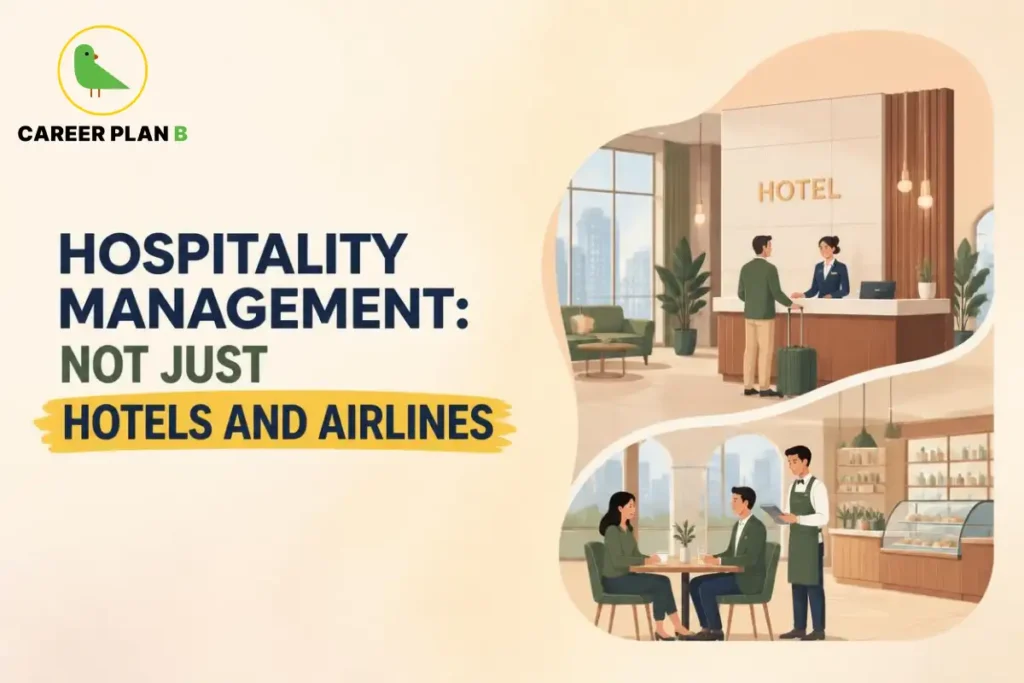
Introduction
Hospitality Management gets reduced to two images in most people’s minds: a hotel receptionist or an airline cabin crew member. Both roles genuinely exist within the field, but they represent a small slice of what hospitality management actually trains you for.
This guide covers the real breadth of Hospitality Management career options, well beyond the two roles most families default to when they hear the term. It walks through specific paths in event management, cruise lines, wellness tourism, and facility management, along with the actual entrance route into this field through India’s national hospitality education system.
Why Hospitality Management Gets Reduced to Hotels and Airlines
Most students first encounter hospitality management through hotel front-office training or cabin crew advertisements, since these are the most visible, heavily marketed roles in the field. This visibility creates a narrow first impression that sticks long after students actually enrol in the degree.
In reality, hospitality management degrees build transferable skills in service operations, guest experience, and business management. These skills apply across a much wider range of industries than hotels and airlines alone.
The Real Entry Route Into Hospitality Management
Before covering the career paths themselves, it helps to understand how students actually enter this field in India. The National Council for Hotel Management and Catering Technology, an autonomous body under the Ministry of Tourism, oversees hospitality education standards nationally.
Admission into NCHMCT-affiliated Institutes of Hotel Management runs through the NCHM JEE, conducted by the National Testing Agency. This exam leads into the B.Sc. in Hospitality and Hotel Administration program, the foundational degree behind most of the career paths covered in this guide.
Career One: Event and Wedding Management
Event managers plan and execute everything from corporate conferences to large-scale weddings, coordinating vendors, logistics, and client expectations simultaneously. India’s wedding and events industry has grown into a genuinely large, structured business, not an informal side activity anymore.
Key skills: vendor negotiation, budget management, logistics coordination, and calm decision-making under pressure.
Where demand exists: dedicated event management firms, hotel banquet divisions, and increasingly, independent event planning startups.
Career growth: Event Coordinator to Event Manager to Creative Director or Agency Founder.
Career Two: Cruise Line Hospitality
Cruise ships function as floating hotels, requiring the same hospitality skill set as land-based hotels, applied within a genuinely different working environment. This path suits graduates specifically drawn to international travel as part of their actual job.
Key skills: guest service, multi-cultural communication, adaptability, and comfort with extended time away from home.
Where demand exists: international cruise line operators actively recruiting hospitality graduates from India each year.
Career growth: Guest Service Associate to Department Supervisor to Hotel Director aboard ship.
Career Three: Wellness and Spa Tourism Management
Wellness tourism blends traditional hospitality service with spa operations, wellness programming, and guest health-focused experiences. This niche has grown steadily as wellness retreats and medical tourism have expanded across India specifically.
Key skills: wellness program design, guest experience management, and basic understanding of health and wellness trends.
Where demand exists: dedicated wellness resorts, luxury hotel spa divisions, and destination wellness retreats.
Career growth: Spa Coordinator to Spa Manager to Wellness Director.
Career Four: Facility and Real Estate Hospitality Management
Large commercial properties, corporate campuses, and residential communities increasingly hire hospitality-trained professionals to manage guest and resident experience directly. This path applies hospitality skills well outside the traditional travel and tourism context entirely.
Key skills: operations management, vendor coordination, and service-quality standard-setting.
Where demand exists: corporate campuses, large residential developments, and commercial property management firms.
Career growth: Facility Executive to Facility Manager to Head of Operations.
Career Five: Food and Beverage Entrepreneurship
Many hospitality management graduates use their training to launch independent restaurants, cafes, or catering businesses rather than working within someone else’s establishment. This path rewards the same operational discipline taught in hospitality programs, applied to an owner’s own venture.
Key skills: menu planning, cost control, staff management, and customer experience design.
Where demand exists: self-owned ventures, alongside operational roles at established restaurant groups.
Career growth: Outlet Manager to Multi-Outlet Owner to Restaurant Group Founder.
Career Six: Corporate Hospitality and Guest Relations
Large corporations increasingly hire hospitality-trained professionals to manage executive guest relations, corporate events, and internal hospitality services. This path suits graduates who want hospitality skills without the shift-based schedule typical of hotels and airlines.
Key skills: executive-level communication, event coordination, and polished guest relations under corporate expectations.
Where demand exists: large corporations, consulting firms, and executive services companies.
Career growth: Guest Relations Executive to Corporate Hospitality Manager to Head of Corporate Services.
For Personalized Guidance
Hospitality Management Career Options at a Glance
| Career Path | Core Focus | Best Suited For |
|---|---|---|
| Event and Wedding Management | Planning and executing large-scale events | Students who thrive under pressure and enjoy logistics |
| Cruise Line Hospitality | Hotel-style service in an international, mobile setting | Students who want travel built into their actual job |
| Wellness and Spa Tourism | Guest experience blended with wellness programming | Students interested in health-focused hospitality |
| Facility and Real Estate Management | Hospitality skills applied to commercial properties | Students who want hospitality without travel/tourism focus |
| Food and Beverage Entrepreneurship | Independent restaurant, cafe, or catering ventures | Students with an entrepreneurial, ownership mindset |
| Corporate Hospitality | Executive guest relations within corporations | Students who prefer a stable, non-shift-based schedule |
What Actually Determines Success in Any of These Paths
Regardless of which specific path you choose, a few core traits matter across all of them. Genuine comfort serving and anticipating other people’s needs sits at the centre of hospitality work, no matter the specific setting.
Strong operational discipline matters just as much, since hospitality careers reward consistency and reliability far more than isolated moments of excellence. Building real, demonstrated experience through internships during your degree also matters significantly, since employers in this field weigh practical exposure heavily alongside academic performance.
How Career Plan B Helps
Choosing the right path within Hospitality Management, well beyond the default hotel or airline image, takes real research. Career Plan B helps you explore this properly through:
- Personalized Career Counselling to match your specific strengths to the right hospitality career track.
- PsycheIntel Career Assessment Tests to confirm which hospitality path genuinely fits your working style.
- Career Roadmapping to plan your path from NCHM JEE preparation to your target role.
- Admission & Academic Profile Guidance to strengthen your application to NCHMCT-affiliated institutes.
For Latest Information
Frequently Asked Questions
Q1. Is Hospitality Management the same as Hotel Management?
They overlap significantly but aren’t identical. Hotel Management focuses specifically on hotel operations, while Hospitality Management covers a broader range of service industries, including events, cruise lines, and facility management.
Q2. Do I need to clear NCHM JEE to build a hospitality career?
It’s the primary route into NCHMCT-affiliated Institutes of Hotel Management specifically, but several private institutes also offer hospitality and event management programs through separate admission processes.
Q3. Can hospitality management graduates work outside the travel and tourism industry entirely?
Yes, genuinely. Corporate hospitality, facility management, and food and beverage entrepreneurship all apply hospitality training well outside traditional travel and tourism contexts.
Q4. Is cruise line hospitality a stable long-term career, or just a short-term adventure?
It can be both, depending on your goals. Many professionals use cruise line experience as a launching point before moving into land-based hospitality management roles with stronger long-term stability.
Conclusion
Hospitality Management career options extend far beyond the hotel front desk and airline cabin image most people default to. Event management, cruise line hospitality, wellness tourism, facility management, food and beverage entrepreneurship, and corporate hospitality all offer genuine, structured paths within this field.
Research the specific path that matches your actual strengths, and treat the NCHM JEE route or a strong private institute program as a foundation to build on, not a narrow, single-outcome degree.
Curious which Hospitality Management career path actually fits you? Structured career counselling can help you explore the full breadth of this field with real clarity.