Team Career Plan B · August 13, 2026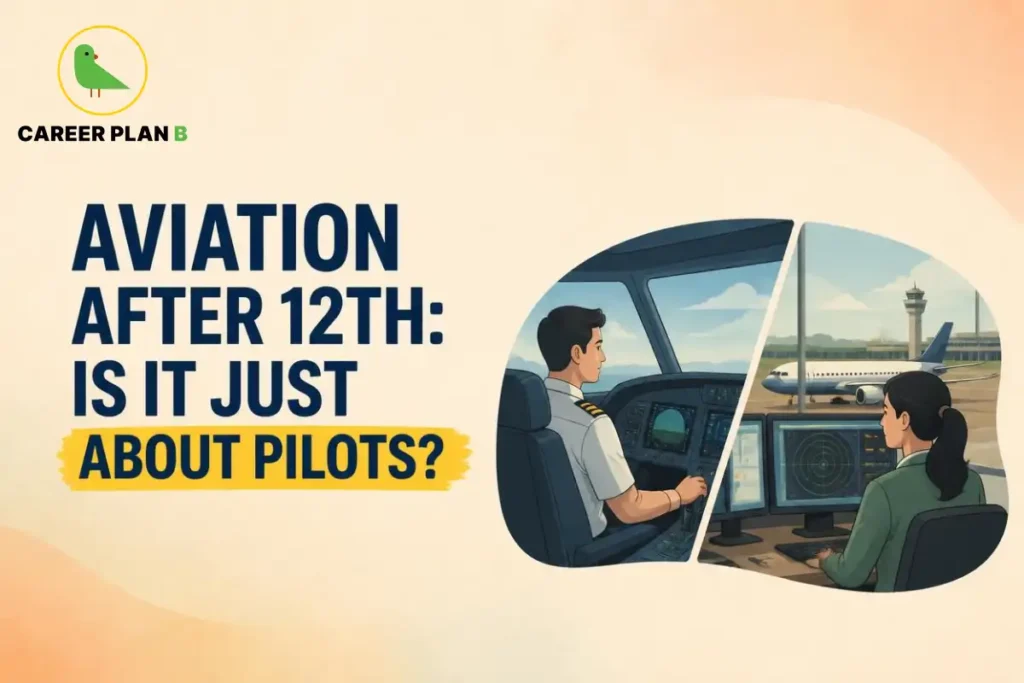
Introduction
Aviation after 12th almost always triggers one single image: a pilot in the cockpit. That image is so dominant that most students never learn about the dozens of other genuine, well-paying careers running the aviation industry behind the scenes.
This guide covers what aviation after 12th actually offers beyond piloting. It walks through air traffic control, aircraft maintenance engineering, cabin crew, and ground operations, along with the real entry route and regulatory structure behind each one.
Why the Pilot Image Dominates Aviation Conversations
A Simple Visibility Problem
Pilots are the most visible aviation professionals by design, since passengers interact with them directly on every flight. This visibility creates an outsized impression of what aviation careers actually look like.
What Gets Missed as a Result
Behind every flight, dozens of professionals in maintenance, air traffic control, and ground operations do equally essential work that passengers never see directly. These roles carry real responsibility and genuine career stability, often without the extended, expensive training path piloting requires.
Career One: Air Traffic Controller
What the Role Involves
Air traffic controllers manage aircraft movements on the ground and in the air, coordinating takeoffs, landings, and flight paths to keep air travel safe. This role demands intense concentration, quick decision-making, and clear, precise communication under real pressure.
Entry Route and Regulatory Body
Air Traffic Control recruitment in India runs through the Airports Authority of India, a government body responsible for managing the country’s civil aviation infrastructure. Candidates typically need 10+2 with Physics and Mathematics, followed by specialised training covering radar control, communication procedures, and airspace management.
Career Two: Aircraft Maintenance Engineer
What the Role Involves
Aircraft Maintenance Engineers inspect, service, and certify aircraft as airworthy before every flight, carrying direct responsibility for passenger safety. This role suits students with strong mechanical and technical aptitude who prefer hands-on, high-precision work over flying itself.
Entry Route and Regulatory Body
The Directorate General of Civil Aviation regulates all pilot and aircraft maintenance training programs in the country, ensuring safety standards align with international aviation norms. Students typically pursue a DGCA-approved AME program after 10+2 with Physics, Chemistry, and Mathematics, followed by mandatory licensing exams.
Career Three: Commercial Pilot
What the Role Involves
This is the path most students already know, involving flying commercial or charter aircraft after extensive flight training and licensing. Piloting remains a genuinely strong career choice, just not the only one worth researching seriously.
Entry Route and Regulatory Body
DGCA-approved flight schools require candidates to be at least 17 years old, with 10+2 completed in Physics and Mathematics. Students from non-science backgrounds can still qualify through DGCA-approved bridge courses before beginning formal flight training.
Career Four: Cabin Crew
What the Role Involves
Cabin crew manage passenger safety and comfort throughout a flight, requiring genuine composure, strong communication skills, and the ability to handle emergency procedures calmly. This role offers a faster entry route into aviation than most other paths on this list.
Entry Route and Training
Airlines typically require 10+2 completion, specific height and medical fitness standards, and completion of airline-specific or DGCA-recognised cabin crew training programs. This path suits students who want aviation exposure without the extended, technical training that piloting or engineering roles demand.
Career Five: Ground Operations and Airport Management
What the Role Involves
Ground operations professionals manage everything from baggage handling coordination to passenger check-in systems and aircraft turnaround logistics. Airport management roles oversee broader airport operations, security coordination, and facility management at a systems level.
Entry Route and Growth Path
These roles typically require a bachelor’s degree, often in aviation management or a related field, with several institutes now offering dedicated aviation management programs. This path offers a genuinely accessible entry point for students interested in aviation’s business and operations side specifically.
Aviation Careers After 12th at a Glance
| Career Path | Core Focus | Typical Entry Requirement |
|---|---|---|
| Air Traffic Controller | Managing aircraft movement safely | 10+2 with Physics and Mathematics, AAI recruitment |
| Aircraft Maintenance Engineer | Inspecting and certifying aircraft airworthiness | 10+2 with PCM, DGCA-approved AME program |
| Commercial Pilot | Flying commercial or charter aircraft | Minimum age 17, 10+2 with PCM or bridge course |
| Cabin Crew | Passenger safety and in-flight service | 10+2 completion, fitness standards, airline training |
| Ground Operations and Airport Management | Airport logistics, operations, and management | Bachelor’s degree, often in aviation management |
What Actually Determines Success in Aviation Careers
Shared Traits Across Every Role
Regardless of which specific path you choose, a few traits matter across nearly every aviation career. Genuine composure under pressure sits at the centre of aviation work, since delays, emergencies, and tight schedules are a routine part of the industry.
Why Precision Matters Everywhere
Strong attention to detail matters just as much, whether you’re managing airspace, certifying an aircraft, or coordinating ground logistics. Aviation as an industry has almost no tolerance for careless error, and this discipline runs through every role covered here, not just piloting.
How Career Plan B Helps
Choosing the right aviation career after 12th, well beyond the default pilot image, takes real research. Career Plan B helps you explore this properly through:
- Personalized Career Counselling to match your specific strengths to the right aviation career track.
- PsycheIntel Career Assessment Tests to confirm which aviation path genuinely fits your working style.
- Career Roadmapping to plan your path through DGCA or AAI-regulated training routes.
- Admission & Academic Profile Guidance to strengthen your application to your chosen aviation program.
For Latest Information
Frequently Asked Questions
1. Is aviation after 12th really only about becoming a pilot?
No. Air traffic control, aircraft maintenance engineering, cabin crew, and ground operations all offer genuine, well-regulated aviation careers that don’t require pilot training at all.
2. Which non-pilot aviation career requires the least additional training after 12th?
Cabin crew roles typically offer the fastest entry route, requiring 10+2 completion plus airline-specific training, without the multi-year technical training that maintenance engineering or air traffic control demand.
3. Do I need Physics and Mathematics for every aviation career?
Not for every path. Piloting, aircraft maintenance, and air traffic control typically require Physics and Mathematics at 10+2 level, while cabin crew and ground operations roles generally have more flexible academic requirements.
4. Is Air Traffic Control a government job in India?
Yes, largely. Air Traffic Control recruitment runs primarily through the Airports Authority of India, a government body, making it a stable, government-affiliated career path within aviation.
Conclusion
Aviation after 12th offers far more breadth than the single, dominant image of a pilot suggests. Air traffic control, aircraft maintenance engineering, cabin crew, and ground operations each offer genuine, well-regulated career paths with real long-term stability.
Research the specific entry route and regulatory body behind whichever path interests you, and don’t let the visibility of piloting alone limit how you think about a career in this industry.
Curious which aviation career after 12th actually fits you? Structured career counselling at Career Plan B can help you explore the full breadth of this field with real clarity.