Team5 · July 30, 2026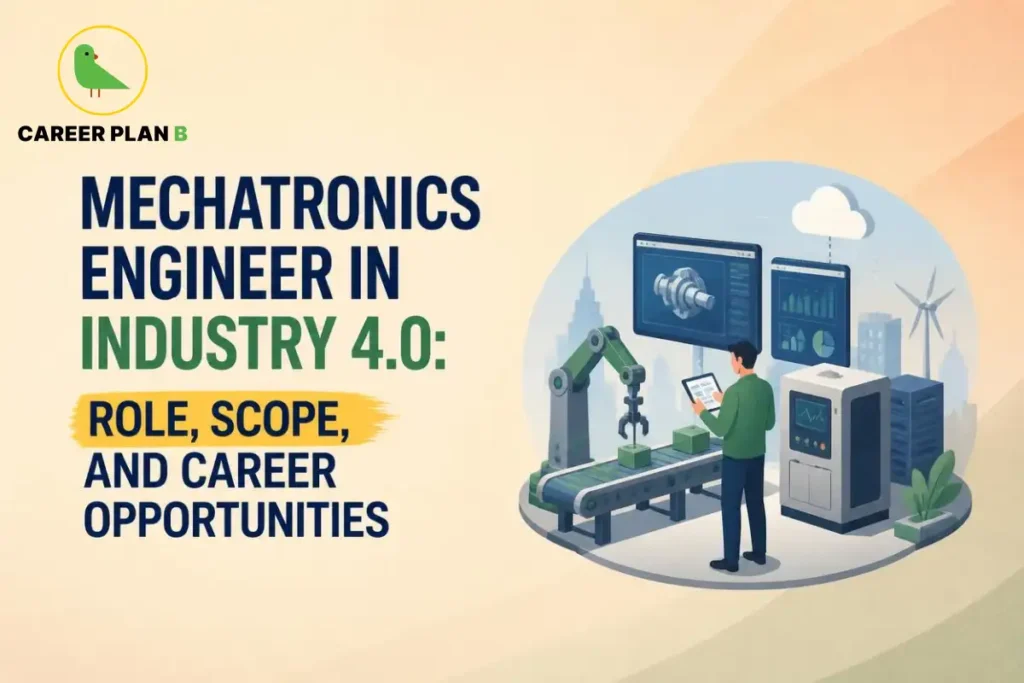
Introduction
Factories today do not just manufacture products they think, communicate, and self-optimise. Machines talk to each other in real time. Robots collaborate with human workers. Production lines reconfigure themselves based on live data. This is not a distant vision this is Industry 4.0, and it is already reshaping manufacturing floors across India and the world. At the heart of this transformation is one of engineering’s most versatile professionals the mechatronics engineer in Industry 4.0.
A mechatronics engineer in Industry 4.0 is uniquely positioned to design, build, and manage the intelligent systems that define modern manufacturing. Mechatronics engineers differ from traditional engineers by combining mechanical engineering, electrical engineering, computer science, and control systems. This multidisciplinary expertise makes them ideal for designing smart factories, automated production lines, and cyber-physical systems.
What Is Industry 4.0 and Why Does It Need Mechatronics Engineers?
Industry 4.0 also called the Fourth Industrial Revolution refers to the integration of digital technologies into physical manufacturing processes. Its core pillars include the Internet of Things (IoT), Artificial Intelligence (AI), robotics, cyber-physical systems, big data analytics, and cloud computing.
What makes smart manufacturing and mechatronics such a natural fit is simple: every single one of these technologies requires engineers who understand both the physical world of machines and the digital world of software and sensors. A pure mechanical engineer cannot programme a smart robot. A pure software engineer cannot design a precision actuator. A mechatronics engineer does both and everything in between.
How Mechatronics Bridges Mechanical, Electrical, and Software Engineering
Mechatronics engineering was born precisely to address the gap between disciplines. It combines:
- Mechanical Engineering structures, mechanisms, thermodynamics
- Electrical and Electronics Engineering circuits, sensors, power systems
- Computer Science and Software programming, embedded systems, AI
- Control Engineering feedback systems, automation, process control
What Does a Mechatronics Engineer Do in Industry 4.0?
The day-to-day responsibilities of a mechatronics engineer in an Industry 4.0 environment are diverse and deeply technical.
Core responsibilities include:
- Designing and integrating automated production systems and robotic cells
- Developing embedded systems and firmware for smart machines and IoT devices
- Programming and commissioning PLC-based (Programmable Logic Controller) control systems
- Building and maintaining digital twin models of physical production systems
- Analysing sensor and production data to optimise system performance
- Ensuring seamless integration between mechanical hardware, electronics, and software platforms
- Troubleshooting and improving existing automated systems for efficiency and reliability
Key Domains Where Mechatronics Engineers Lead
A career in automation and robotics is the most prominent domain but mechatronics engineers are equally active in industrial IoT development, autonomous vehicle systems, precision agriculture technology, and advanced medical devices.
Why the Role of Mechatronics Engineers Is Growing in India
India’s manufacturing ambitions are directly fuelling demand for mechatronics engineering talent.
The Make in India initiative has identified advanced manufacturing as a strategic priority encouraging both domestic and global manufacturers to set up smart, technology-driven production facilities in India. The Production Linked Incentive (PLI) schemes administered by the Department for Promotion of Industry and Internal Trade (DPIIT) are injecting billions of rupees into sectors like electronics, automotive, pharmaceuticals, and food processing, all of which are rapidly automating their operations.
The Ministry of Heavy Industries is also driving automation adoption across India’s heavy manufacturing sector through targeted policy support. Perhaps most significantly, India’s Department of Science and Technology (DST) has launched the National Mission on Interdisciplinary Cyber-Physical Systems (NM-ICPS) a dedicated government programme to build India’s capability in cyber-physical systems, IoT, AI, and advanced robotics. This mission directly creates research, development, and industry opportunities for mechatronics engineers.
Top Career Paths for Mechatronics Engineers in Industry 4.0
Automation and Robotics Engineering
This is the most direct expression of a mechatronics engineering career in India designing and deploying robotic arms, automated assembly systems, and collaborative robots (cobots) across manufacturing facilities. Companies like Bosch, Siemens, ABB, and FANUC India actively recruit mechatronics engineers for automation roles.
Smart Manufacturing and Production Systems
Smart manufacturing and mechatronics professionals design and manage intelligent production lines integrating real-time data acquisition, predictive maintenance systems, and AI-driven quality control to maximise output and minimise downtime.
IoT and Embedded Systems Development
Mechatronics engineers with strong software skills are building the sensor networks, embedded controllers, and cloud-connected devices that form the backbone of Industry 4.0 infrastructure. The Ministry of Electronics and Information Technology (MeitY) actively supports IoT and embedded technology development in India.
Defence and Aerospace Systems Integration
Career in automation and robotics extends naturally into defence and aerospace where mechatronics engineers develop unmanned aerial vehicles (UAVs), autonomous ground vehicles, missile guidance systems, and advanced manufacturing systems for aircraft production at organisations like DRDO and ISRO.
Research and Development in Cyber-Physical Systems
For those drawn to innovation and research, India’s technology institutes and DST-funded centres are actively developing next-generation cyber-physical systems, autonomous robots, and AI-integrated manufacturing technologies offering fulfilling research careers for mechatronics engineers.
Mechatronics Engineer Job Opportunities and Salary Snapshot
Mechatronics engineer job opportunities span both established manufacturing giants and fast-growing technology companies offering strong career stability and competitive compensation.
Top Recruiters in India:
- Automotive and Manufacturing: Bosch India, Siemens, Tata Motors, Mahindra, Maruti Suzuki
- Electronics and IoT: Honeywell, Schneider Electric, ABB India, Rockwell Automation
- Defence and Aerospace: DRDO, ISRO, HAL
- Technology and Startups: Ola Electric, Niramai, Systemantics India, Grey Orange Robotics
Have Any Doubts?
Future of Mechatronics Engineering What Lies Ahead
The future of mechatronics engineering is being shaped by technologies that are still in their early stages which means engineers entering the field today will grow alongside them.
Digital twins virtual replicas of physical machines and production systems are becoming standard in advanced manufacturing. Collaborative robots (cobots) that work safely alongside human workers are expanding from automotive plants to hospitals and warehouses. AI-integrated vision systems are replacing manual quality inspection across industries.
The future of mechatronics engineering in India is not just about automation replacing manual work. It is about engineers who can design, manage, and continuously improve intelligent systems. These systems will shape how India manufactures, strengthens defence capabilities, and drives innovation in the decades ahead.
How Career Plan B Helps
Choosing the right specialisation within mechatronics engineering career in India whether automation, robotics, IoT, defence systems, or research requires a clear understanding of your own strengths, aptitude, and long-term goals. Career Plan B offers personalised career counselling, the PsycheIntel psychometric and career assessment tool, and structured career roadmapping to help you identify which path within the mechatronics engineer in Industry 4.0 landscape best aligns with your natural abilities and professional ambitions. Whether you are a student selecting your engineering specialisation or a working engineer looking to pivot into smart manufacturing and mechatronics, Career Plan B provides the expert clarity and personalised guidance to help you make your next career move with complete confidence.
For Latest Information
Frequently Asked Questions
- What degree is best to start a mechatronics engineering career in India?
A B.Tech in Mechatronics Engineering or Robotics Engineering is the most direct route.
- Is mechatronics engineering relevant in India’s current job market?
Highly relevant. India’s Make in India initiative and PLI schemes are accelerating smart manufacturing adoption creating strong and consistent demand for mechatronics engineer job opportunities across automotive, electronics, defence, and pharmaceutical sectors.
- What government programmes support mechatronics and automation careers in India?
The DST’s National Mission on Interdisciplinary Cyber-Physical Systems (NM-ICPS) and MeitY’s digital technology initiatives are the most significant government programmes directly supporting the skills and research ecosystem for mechatronics engineers in India.
- How does mechatronics engineering connect to a career in automation and robotics?
Mechatronics is the foundational discipline for career in automation and robotics it provides the mechanical design, electronics, programming, and control systems knowledge needed to build, deploy, and manage robotic and automated systems in real industrial environments.
- What is the long-term salary growth potential for mechatronics engineers in India?
Mechatronics engineer salary in India grows strongly with experience and specialisation. Engineers who develop expertise in robotics integration, PLC and SCADA systems, and Industry 4.0 platforms can progress into senior systems architect or automation manager roles with salaries ranging from ₹18–30 LPA domestically and significantly higher in global markets.
Conclusion
The mechatronics engineer in Industry 4.0 is not simply a technical specialist they are the architect of the intelligent, automated, and interconnected manufacturing systems that will define the global economy for the next several decades. With mechatronics engineer job opportunities growing across every sector that is embracing smart manufacturing, a future of mechatronics engineering backed by government investment and technological momentum, and a mechatronics engineer salary in India that reflects genuine market demand this career offers everything an ambitious engineer could ask for.
Wondering if mechatronics engineering is the right fit for your strengths and career goals? Visit Career Plan B for personalised counselling, psychometric assessments, and a career roadmap built entirely around you.