Team6 · October 30, 2026
Introduction
The electric vehicle revolution is already here, but here’s what most people miss: the real challenge isn’t building better batteries. It’s rebuilding the world that powers them.
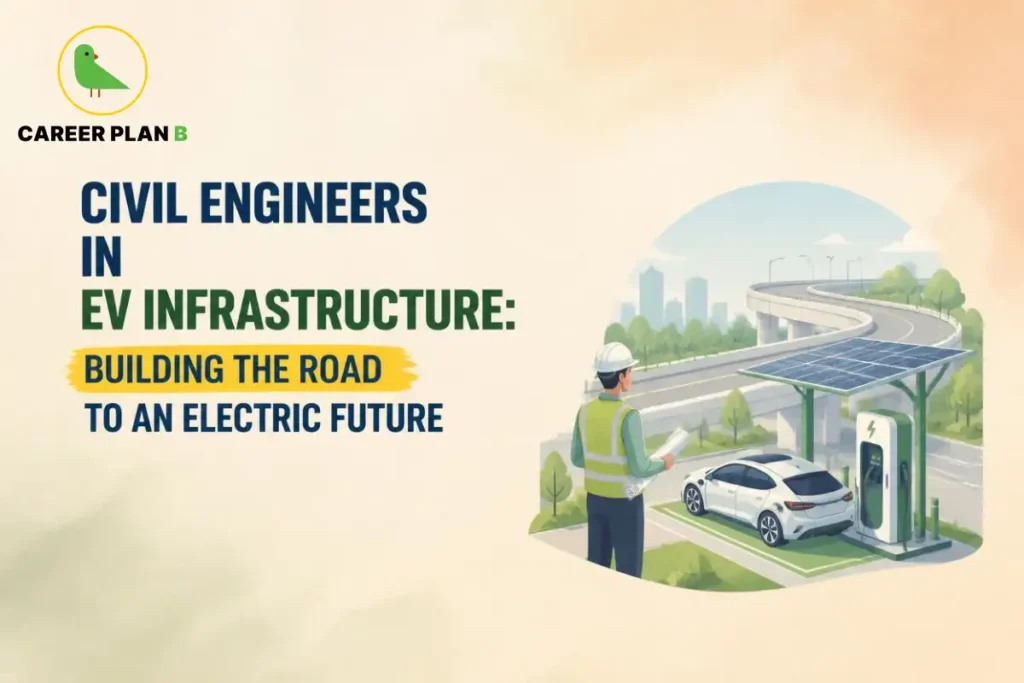
Civil engineers in EV infrastructure are at the heart of this transformation. From designing structurally sound charging hubs to planning highway corridors and integrating power grids with road networks, civil engineering is what makes the EV future physically possible.
The numbers back this up. The global EV charging infrastructure market is projected to reach $224 billion by 2030. Governments across the US, UK, India, and Europe are already committing billions to this transition. And at the centre of every project breaking ground, laying foundations, and designing sustainable systems are civil engineers.
This blog explores exactly how civil engineers are shaping the EV infrastructure landscape, what skills you need, and where the biggest global opportunities lie.
Why EV Infrastructure Is Far More Than an Electrical Problem
Most people assume EV infrastructure is purely an electrical engineering domain. The truth is far more complex.
Every charging station needs a site. That site needs land assessment, soil testing, drainage planning, structural foundations, access roads, and parking layout design. Every highway EV corridor requires geotechnical surveys, pavement design, and stormwater management. Every urban charging hub needs civil planning approvals, utility coordination, and structural safety certification.
Electric vehicle infrastructure development is, at its core, a civil engineering challenge. Electrical systems sit on top of a physical world that civil engineers design, build, and maintain.
Key Roles Civil Engineers Play in EV Infrastructure Development
So what does a civil engineer actually do on an EV infrastructure project? The scope is broader than most people realise.
Site Selection and Geotechnical Assessment
Before a single cable is laid, civil engineers evaluate whether a site is suitable. This involves soil testing, load-bearing analysis, groundwater assessment, and environmental impact studies the foundational work that makes every project viable.
Structural Design for Charging Stations
EV charging station design demands serious structural expertise. Charging hubs, especially multi-storey or covered facilities, require reinforced concrete design, canopy structures, and full compliance with local building codes and safety standards.
Road and Pavement Engineering
Road and grid infrastructure for EVs is a fast-growing specialisation. Wireless or inductive EV charging embedded in roads already being piloted in Sweden and the UK requires entirely new pavement design standards and civil engineering protocols that simply didn’t exist a decade ago.
Drainage and Utility Coordination
Installing underground conduits for EV charging networks involves complex coordination with existing utility infrastructure, water mains, sewage lines, and telecom cables all areas where civil engineers take the lead.
Types of EV Infrastructure Civil Engineers Work On
Urban EV infrastructure projects come in many forms, and each one requires distinct civil engineering expertise:
- Public Charging Hubs Multi-bay urban stations with structural canopies, drainage systems, and traffic flow design
- Highway Fast-Charging Corridors: Service area expansions along national and interstate road networks
- Residential and Commercial Complexes Underground parking with integrated EV charging bays
- Fleet Depots Large-scale facilities for electric buses, trucks, and logistics vehicles requiring heavy civil groundwork
- Smart Road Projects Pilot roads with embedded wireless charging requiring new pavement engineering approaches
Each of these begins with EV infrastructure planning site surveys, feasibility studies, and civil design long before any electrical work begins.
Civil Engineering Meets Sustainability: Designing Green EV Infrastructure
The EV transition isn’t just about eliminating tailpipe emissions. It’s about building infrastructure sustainably, too.
This is where civil engineering for sustainable transport becomes a critical discipline. Civil engineers working in this space are integrating the following:
- Solar carport canopies over charging stations to generate on-site renewable energy
- Permeable pavements that manage stormwater effectively while accommodating heavy EV traffic loads
- LEED-certified construction practices for EV facility design.
- Recycled and low-carbon construction materials to reduce the environmental footprint of new charging infrastructure
Green infrastructure for electric vehicles is now a dedicated focus area in many national infrastructure strategies. The UK government’s Office for Zero Emission Vehicles, for instance, mandates sustainability considerations in all publicly funded EV infrastructure grants.
Have Any Doubts?
Skills and Certifications Civil Engineers’ Need for EV Projects
To stay competitive in this emerging field, civil engineers need a strong combination of traditional expertise and forward-looking skills.
Technical Skills to Build:
- BIM (Building Information Modelling) For integrated, multi-disciplinary infrastructure design. Certification available via Building SMART
- GIS Mapping For site analysis, corridor planning, and spatial data management
- Sustainable design and LEED principles Increasingly required on publicly funded green projects
- Pavement engineering Especially relevant as smart and EV-embedded roads gain traction
Professional Registrations Worth Pursuing:
- American Society of Civil Engineers (ASCE)
- Engineers Australia
- Engineering Council UK (CEng)
Global Opportunities: Where Are Civil Engineers Most Needed for EV Projects?
Governments worldwide are pouring historic levels of investment into EV infrastructure, and they need civil engineers to deliver it.
United States
The Bipartisan Infrastructure Law commits $7.5 billion specifically to EV charging networks. The Federal Highway Administration (FHWA) is overseeing the National Electric Vehicle Infrastructure (NEVI) Formula Programme, creating thousands of civil engineering roles.
United Kingdom
The UK aims for 300,000 public charge points by 2030. The Office for Zero Emission Vehicles leads national planning and funding.
India
India’s FAME II scheme and the newer PM e-DRIVE programme are funding thousands of EV charging stations across cities and highways, creating significant domestic demand for civil engineers.
European Union
The EU’s Alternative Fuels Infrastructure Regulation (AFIR) mandates charging points every 60 km on major highways by 2026, driving large-scale civil engineering projects across all member states.
Australia
Australia’s National Electric Vehicle Strategy outlines public charging infrastructure rollouts across urban and regional areas, with civil engineering at the core of delivery.
How Career Plan B Helps
Breaking into the EV infrastructure space requires more than technical skills; it requires a clear, well-structured career strategy. Career Plan B offers personalised career counselling, Psycheintel assessments, and career roadmapping tailored specifically for civil engineers looking to pivot into high-growth emerging fields like EV infrastructure. Whether you need help identifying the right certifications, building a globally competitive profile, or charting your next career move, Career Plan B provides the structured, expert guidance to get you there with confidence.
For Latest Information
Frequently Asked Questions (FAQs)
1. Do civil engineers need electrical knowledge to work in EV infrastructure?
A basic understanding of electrical systems is helpful, but civil engineers primarily focus on structural design, geotechnical assessment, drainage, and site planning. Electrical engineers handle the power systems; civil engineers build the physical world around them.
2. Is EV infrastructure a growing career field for civil engineers in 2026?
Absolutely. With governments globally committing trillions to EV transitions, civil engineers with EV infrastructure expertise are among the most in-demand professionals in the construction and transport sectors right now.
3. Which countries offer the best civil engineering opportunities in EV projects?
The USA, UK, India, Germany, and Australia are currently leading EV infrastructure investment and actively recruiting civil engineers for large-scale national programmes.
4. What certifications help civil engineers get into EV infrastructure roles?
BIM certification from BuildingSMART, LEED accreditation from USGBC, PMP, and sustainable transport qualifications are highly valued. Registering with national engineering bodies like ASCE or Engineers Australia also significantly boosts your professional credibility.
5. Can fresh civil engineering graduates work on EV infrastructure projects?
Yes, entry-level roles in site assessment, drafting, surveying, and project coordination are widely available. Upskilling in BIM and GIS tools alongside your degree substantially improves your chances of landing these roles early in your career.
Conclusion
The electric vehicle revolution is rewriting the rules of infrastructure, and civil engineers in EV infrastructure are the ones holding the pen.
From designing resilient charging hubs and sustainable urban facilities to building smart road networks and cross-country EV corridors, civil engineers are indispensable to making the electric future a physical reality. The global investment is massive, the government commitments are firm, and the demand for skilled professionals is accelerating every year.
The question isn’t whether civil engineering has a role in the EV transition. The question is whether you’re ready to claim yours.
Start building your EV infrastructure career today; the road ahead is electric.