Team6 · August 12, 2026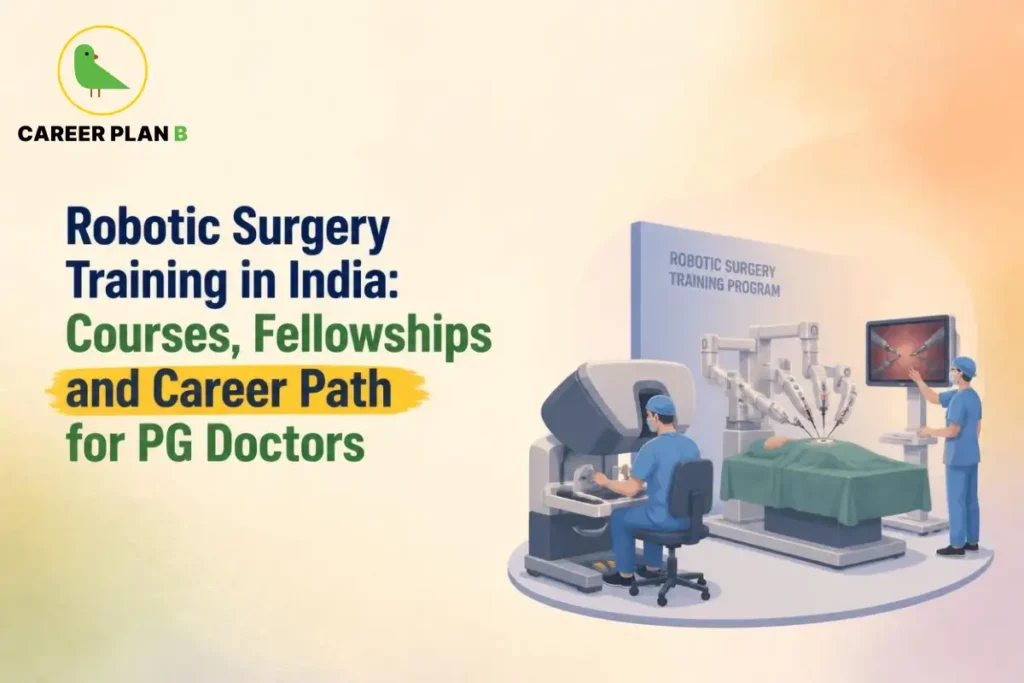
Introduction
Modern surgical procedures evolve rapidly across major Indian hospitals today. Advanced minimal access techniques now transform traditional surgical practice completely. Therefore, acquiring robotic surgery training in India helps young postgraduate doctors stay ahead in modern healthcare.
Furthermore, healthcare systems demand high precision and shorter hospital stays. Surgeons with specialised robotic skill sets achieve exceptional surgical outcomes. Consequently, pursuing a structured robotic surgery course in India opens incredible clinical career pathways for medical professionals.
Why Is Robotic Surgery Training India Essential for PG Doctors?
Surgical specialities increasingly shift toward minimally invasive procedures worldwide. Traditional open surgeries require larger incisions and longer recovery times. However, robot-assisted procedures minimise patient trauma and accelerate healing significantly. Additionally, master-slave robotic console systems improve surgical dexterity and field vision. High-definition 3D visualisation allows surgeons to operate inside complex anatomical structures seamlessly. Thus, investing in robotic surgery training in India gives young surgeons an early professional advantage.
Structure of a Robotic Surgery Course in India
Acquiring robotic skill sets involves systematic training modules. Programs strictly blend simulation practice, dry lab drills, and wet lab training. Moreover, structured learning ensures full patient safety before clinical transition.
Core Modules in Basic Training
Initial phases introduce fundamental robotic system mechanics and docking protocols. Trainees master console controls, camera navigation, and wrist articulation exercises. Furthermore, basic certification programmes require mandatory simulator hours before moving into live observation.
Advanced Surgical Execution
After mastering basic controls, candidates transition to live case assistance. Trainees observe expert surgical mentors during complex oncological and reconstructive procedures. Therefore, structured training builds complete operational confidence step by step.
Finding the Right Robotic Surgery Fellowship in India
Pursuing a dedicated robotic surgery fellowship in India provides comprehensive sub-speciality clinical exposure. Fellowships typically span six months to two years depending on the institution.
Key Surgical Specialties Offering Fellowships
- Urology: Radical prostatectomies, partial nephrectomies, and pyeloplasties.
- Gynaecology: Complex hysterectomy, myomectomy, and pelvic reconstruction.
- Surgical Oncology: Esophagectomy, colorectal resection, and head and neck surgeries.
- General Surgery: Complex ventral hernia repair and bariatric procedures.
Institutions like the All India Institute of Medical Sciences actively advance surgical education and sub-speciality research. Joining a recognised fellowship in robotic surgery in India ensures dedicated bedside assistance and supervised console time.
Have Any Doubts?
Premier Robotic Surgery Training Centers in India
Top medical institutes across the country host state-of-the-art robotic suites. Choosing accredited robotic surgery training centres in India ensures valid certification and standardised skill evaluation.
Major training hubs include:
- Government institutes of national importance offering academic super-specialisation programmes.
- Multi-speciality tertiary hospitals operating high-volume robotic clinical programmes.
- Dedicated simulation laboratories providing standardised dry-lab skill assessments.
Consequently, aspiring fellows gain exposure to diverse clinical cases and cutting-edge surgical consoles.
Read More – Education Loan for MD/MS in India: Complete Guide to Loans and Scholarships for NEET PG Aspirants
Career Path and Financial Scope for Trained Robotic Surgeons
Completing advanced training transforms a surgeon’s professional trajectory dramatically. Hospitals actively recruit certified robotic console surgeons to lead minimal-access departments. Moreover, patients actively seek surgeons specialising in precise, minimally invasive options. Financially, certified robotic specialists command higher professional compensation. Furthermore, international career opportunities expand significantly for credentialed robotic console operators. Thus, early specialisation delivers excellent long-term career returns.
How Career Plan B Helps
Planning advanced surgical training, fellowship options, and long-term medical career growth requires informed decision-making. Career Plan B helps doctors evaluate specialisation pathways and make strategic career choices.
- Personalised Career Counselling: Get guidance based on your surgical speciality, career goals, fellowship interests, and future practice plans.
- Psychometric & Career Assessment Tests: Identify your strengths and understand suitable medical specialisation and sub-specialisation pathways.
- Career Roadmapping: Build a structured roadmap from PG completion to fellowship selection, skill development, and future career opportunities.
- Admission & Academic Profile Guidance: Receive support with course selection, fellowship options, institutional evaluation, and advanced medical training decisions.
Get In Touch With Us
Frequently Asked Questions
Q1. Who is eligible for robotic surgery training in India?
Medical professionals holding recognised MS, DNB, or MCh degrees in surgical disciplines are eligible for advanced training.
Q2. How long does a standard robotic surgery fellowship last?
Fellowship durations typically range from six months to two years, depending on the clinical speciality and institution.
Q3. Is simulator training mandatory before operating on live cases?
Yes, trainees must complete mandatory simulator hours and pass proficiency benchmarks before live console operating.
Q4. Which surgical branches benefit most from robotic training?
Urology, surgical oncology, gynaecology, gastrointestinal surgery, and cardiothoracic surgery benefit immensely from robotic assistance.
Q5. Do government hospitals in India offer robotic surgical training?
Yes, premier public medical institutions and centres of national importance offer structured robotic surgical programmes and fellowships.
Conclusion
Enrolling in robotic surgery training in India prepares surgeons for the future of healthcare. Highly structured fellowships and advanced courses equip postgraduate doctors with unmatched clinical accuracy.
Moreover, consulting platforms like Career Plan B ensure that medical professionals make well-informed career choices. Investing in advanced surgical skill sets today secures a thriving medical career tomorrow.