Team6 · August 12, 2026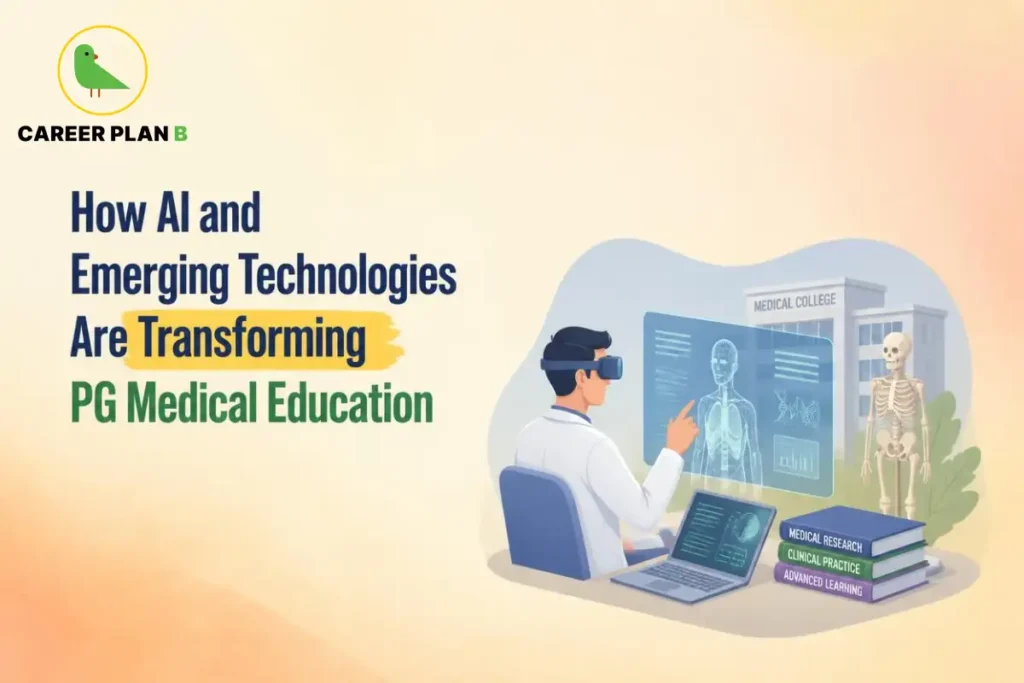
Introduction
The global healthcare landscape is undergoing an unprecedented digital transformation. Consequently, integrating AI in medical education has become essential for modern postgraduate training. Advanced algorithms and clinical simulations are rapidly reshaping how resident doctors learn, diagnose, and treat complex conditions.
Furthermore, medical training must keep pace with rapid technological innovations. Today, emerging technologies in healthcare allow medical residents to practise intricate surgical procedures safely. As a result, implementing modern technology in medical education ensures that future specialists gain deep clinical expertise before entering real-world operating rooms.
The Rising Role of AI in Medical Education and Residency Training
Integrating artificial intelligence into medical curricula enhances diagnostic accuracy and research capacity. Moreover, modern clinical platforms process vast amounts of medical literature instantly. Therefore, residents utilising AI in medical education in India can analyse rare clinical cases efficiently. Additionally, smart clinical decision support systems help postgraduate students understand complex diagnostic pathways. AI models analyse patient vitals, lab reports, and imaging data in real-time. Thus, young doctors learn to make faster, evidence-based treatment choices during busy hospital shifts.
Core Medical Technology Trends Reshaping Postgraduate Learning
Understanding key medical technology trends is vital for healthcare institutions and medical postgraduates. Modern teaching hospitals now rely heavily on advanced digital infrastructure. Consequently, traditional lectures are quickly giving way to dynamic, interactive training platforms.
Advanced Medical Education Technology and Simulation Labs
Simulators play a major role in modern surgical and diagnostic training. For example, high-fidelity robotic simulators let residents practise laparoscopic and endovascular procedures repeatedly. Furthermore, virtual reality (VR) systems recreate complex anatomical structures with absolute precision.
Adaptive Learning Platforms for Specialty Studies
Personalised learning systems assess a postgraduate resident’s performance automatically. These algorithms identify knowledge gaps in specialised subjects like radiology or pathology. Therefore, residents receive tailored quizzes and targeted reading materials to strengthen their weak areas.
Have Any Doubts?
Evaluating Technology in PG Medical Education Across Indian Institutes
Adopting technology in PG medical education is expanding rapidly across premier government and private institutes. Institutions are upgrading their classrooms into smart, connected learning hubs.
Key advancements include the following:
- Digital Pathology Systems: High-resolution slide scanners allow postgraduates to study rare tissue samples remotely.
- 3D Anatomical Mapping: Interactive digital dissection tables offer clear, detailed visualisation of complex human organs.
- AI-Driven Radiology Tools: Advanced algorithms assist residents in detecting subtle anomalies on chest X-rays and MRI scans.
Moreover, regulatory bodies like the National Medical Commission (NMC) actively monitor and support the modernisation of postgraduate medical standards across India.
Read more – Robotic Surgery Training in India: Courses, Fellowships and Career Path for PG Doctors
Future Medical Education Trends India: What Lies Ahead?
Examining current medical education trends in India reveals a clear shift toward blended, technology-driven learning models. Virtual patient encounters now allow residents to practise clinical history taking and diagnostic reasoning safely. Consequently, these emerging medical technologies build strong clinical confidence while fully protecting patient safety.
Additionally, tele-mentoring platforms connect residents in rural medical colleges with expert surgeons in metro cities. Experienced specialists guide live surgical procedures via secure high-speed video feeds. Thus, advanced digital tools effectively bridge the training gap between urban and regional medical centres.
How Career Plan B Helps
Understanding future medical education trends, technology-driven specialisations, and institutional infrastructure requires strategic guidance. Career Plan B helps medical aspirants make informed decisions while planning their postgraduate journey.
- Personalised Career Counselling: Get guidance based on your specialisation interests, career goals, and preference for technology-enabled medical training environments.
- Psychometric & Career Assessment Tests: Identify your strengths and evaluate suitable medical career pathways aligned with your skills and learning preferences.
- Career Roadmapping: Build a structured roadmap from PG admission to specialisation selection, skill development, and future healthcare opportunities.
- Admission & Academic Profile Guidance: Receive support with college selection, counselling strategy, infrastructure evaluation, and identifying institutes offering advanced medical education facilities.
Get In Touch With Us
Frequently Asked Questions
Q1. How is AI in medical education benefiting resident doctors in India?
AI tools analyse diagnostic reports rapidly, assist in clinical decision-making, and offer personalised learning schedules for postgraduates.
Q2. What are the most impactful emerging technologies in healthcare education?
Virtual reality simulators, digital pathology scanners, AI diagnostic platforms, and 3D anatomical visualisation tools are transforming training.
Q3. Will AI replace human clinical judgement in postgraduate medical training?
No, AI serves as a supportive educational tool that enhances diagnostic precision and learning efficiency without replacing clinical judgement.
Q4. Are Indian government medical colleges adopting modern medical education technology?
Yes, leading public medical institutes are establishing state-of-the-art simulation centres and digital labs under updated national guidelines.
Q5. How can virtual simulation improve surgical training for postgraduates?
Simulators allow residents to perform complex procedures repeatedly in risk-free environments, improving spatial awareness and procedural dexterity.
Conclusion
Embracing AI in medical education equips postgraduate doctors with the skills required for modern healthcare delivery. Advanced diagnostic algorithms, VR simulations, and adaptive learning platforms elevate clinical competence significantly.
Furthermore, platforms like Career Plan B empower doctors to navigate their admissions smoothly and choose institutions with cutting-edge infrastructure. By embracing modern digital tools today, medical residents build a solid foundation for successful clinical careers tomorrow.