Careerplanb · August 13, 2026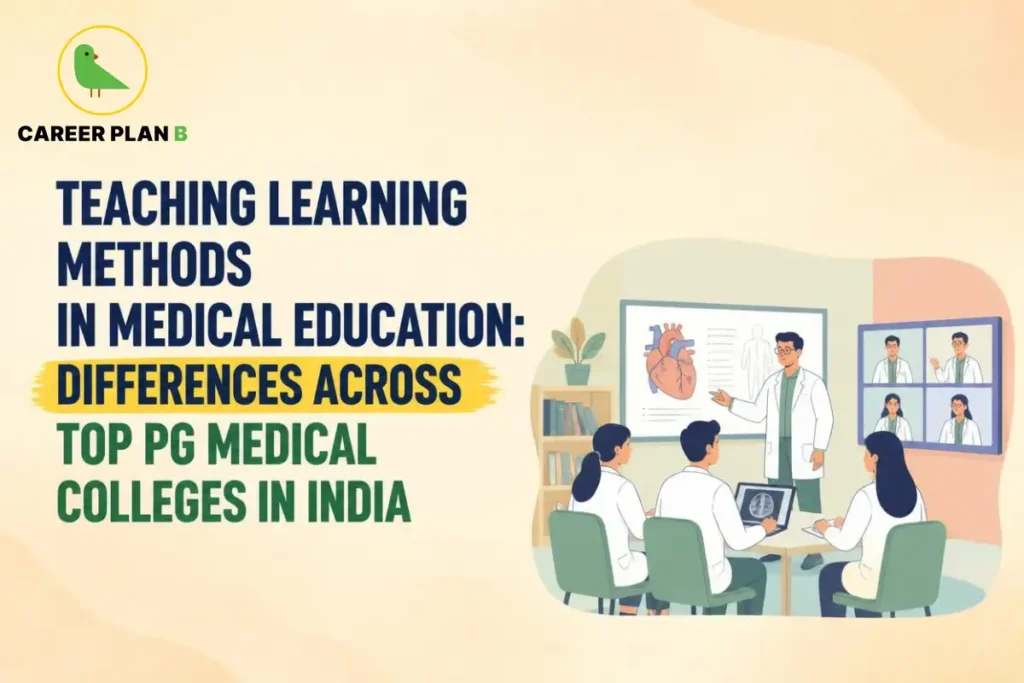
Introduction
Two PG medical colleges can follow the exact same curriculum on paper and still deliver very different learning experiences. That gap almost always comes down to teaching learning methods in medical education, how much hands-on exposure you actually get, how classes are structured, and how much attention faculty can genuinely give each student.
If you’re choosing between institutes during counselling, understanding these differences matters as much as comparing rankings. This guide breaks down the teaching approaches used across Indian medical colleges and what actually separates a strong learning environment from a mediocre one.
The Regulatory Shift: Competency-Based Medical Education
India’s approach to medical education changed formally with the introduction of Competency-Based Medical Education (CBME) by the erstwhile Medical Council of India, now continued under the National Medical Commission (NMC). This framework moved the system away from pure rote-memorisation toward defined, measurable competencies students must demonstrate, with structural additions like a foundation course for new MBBS entrants, early clinical exposure from the first year, and the AETCOM module covering attitude, ethics, and communication.
Every recognised medical college is required to follow this framework, but how thoroughly and effectively it’s implemented varies significantly from one institute to another, which is where real differences in teaching quality show up.
Core Teaching Methods Used in Medical Colleges
Most Indian medical colleges use some combination of these approaches, though the balance between them differs a lot:
- Didactic lectures: The traditional classroom format, still widely used, especially for large first-cohort teaching.
- Problem-based learning (PBL): Small-group sessions built around clinical scenarios, encouraging students to work through diagnostic reasoning themselves rather than just receiving information.
- Case-based learning: Similar to PBL but typically built around real or realistic patient cases, often used in clinical years.
- Simulation-based training: Skill labs and simulators for practicing procedures before working directly with patients, availability varies significantly by institute resources.
- Bedside clinical teaching: Direct patient-based teaching during ward rounds and clinical postings, one of the most valuable but also most inconsistently delivered methods.
- E-learning and digital resources: Recorded lectures, learning management systems, and digital case libraries, increasingly common but still unevenly adopted.
Why Student Satisfaction With Teaching Methods Is Often Low
This isn’t just anecdotal. A study published in The National Medical Journal of India, surveying undergraduate students across four Delhi government medical colleges, found that 81% of students were dissatisfied with classroom teaching methods, citing poor coordination between departments and a lack of problem-based learning. An even higher share, 86%, reported dissatisfaction with their clinical posting experience, largely because senior doctors were too occupied with patient care to teach effectively during rounds.
The same study found that batch size and infrastructure significantly affected how conducive the classroom environment felt for learning, and that students specifically wanted more standardised teaching aids and structured mentor-mentee programmes.
Clinical Teaching Methods in Postgraduate Medical Education
At the PG level, teaching shifts heavily toward clinical, hands-on learning, but the format and quality still vary by institute:
- Bedside rounds and case discussions: The backbone of clinical teaching, quality depends heavily on faculty availability and how deliberately teaching time is protected from pure service work.
- Journal clubs and seminars: Regular sessions where residents present and critique research, building both clinical reasoning and academic writing skills.
- OSCE (Objective Structured Clinical Examination): A standardised method for assessing clinical skills, used with varying frequency and rigour across institutes.
- Hands-on procedural training: Direct exposure to procedures under supervision, closely tied to a college’s patient volume and case diversity.
- Mentor-mentee structures: Formal or informal, these significantly affect how supported residents feel through a demanding training period.
Have Any Doubts?
What Actually Drives the Differences Across Top PG Colleges
A few structural factors explain most of the variation you’ll see between institutes:
- Patient volume and case diversity: Colleges attached to high-footfall government hospitals often offer richer, more varied clinical exposure than smaller private institutes, even when the private institute has better physical infrastructure.
- Faculty-to-student ratio: A lower ratio generally means more individual attention during rounds and procedures, a genuinely meaningful factor that doesn’t always show up in college rankings.
- Simulation and skill lab investment: Newer or better-funded institutes often have stronger simulation facilities, useful for building procedural confidence before real patient contact.
- Research culture: Institutes with a stronger research emphasis tend to run more structured journal clubs and academic mentorship, which shapes residents differently than a purely service-heavy environment.
- Protected teaching time: Some colleges structurally carve out dedicated non-clinical teaching hours; others leave teaching entirely dependent on how busy the ward is that day.
Read more:- Scholarship for Medical Students in India: Medical PG, NEET PG & Financial Aid Guide
What to Look For When Comparing Colleges During Counselling
Rankings and reputation matter, but a few practical questions can tell you more about actual teaching quality:
- Does the department have a structured academic calendar with regular seminars and journal clubs, or is teaching ad hoc?
- What’s the resident-to-patient ratio in the specific department you’re interested in?
- Is there a formal mentor-mentee system, or informal only?
- How much hands-on procedural exposure do residents typically get by the end of year one?
- Talking to current residents, if possible, usually reveals more about day-to-day teaching quality than any published ranking.
How Career Plan B Helps
Choosing a college based on genuine teaching and training quality, not just its name, makes a real difference to your PG years. Here’s how personalised guidance can help.
- Personalized Career Counselling: Help evaluating colleges beyond rankings, factoring in teaching structure and clinical exposure.
- Psychometric & Career Assessment Tests: Assessments to help you understand what kind of learning environment genuinely suits how you learn best.
- Career Roadmapping: A plan connecting your college choice to the kind of clinical or academic career you’re aiming for.
- Admission & Academic Profile Guidance: Support building a realistic choice list that weighs teaching quality alongside rank and specialisation.
Get In Touch With Us
Frequently Asked Questions
Q1. What are the main teaching methods used in Indian medical colleges?
Didactic lectures, problem-based and case-based learning, simulation training, bedside clinical teaching, and increasingly, digital learning resources. The specific mix varies significantly by institute.
Q2. Why do teaching methods differ across top PG medical colleges?
Differences largely come down to patient volume, faculty-to-student ratio, simulation lab investment, research culture, and how much protected, structured teaching time a department actually maintains.
Q3. Is Competency-Based Medical Education mandatory across all colleges?
Yes, the NMC’s CBME framework is mandatory for all recognised medical colleges, though the quality and thoroughness of implementation varies by institute.
Q4. What are clinical teaching methods used at the PG level?
Bedside rounds, case discussions, journal clubs, OSCE assessments, hands-on procedural training, and mentor-mentee structures are the main formats used in postgraduate clinical training.
Q5. How can I judge a college’s teaching quality before joining?
Look at academic calendar structure, resident-to-patient ratios, mentor-mentee availability, and hands-on exposure by year one. Talking to current residents often reveals more than published rankings.
Conclusion
Genuine differences in teaching learning methods in medical education come down to structural factors, patient volume, faculty ratios, and how deliberately teaching time is protected, not just an institute’s name or reputation. Understanding this helps you make a more informed choice during counselling, rather than relying on rankings alone.
If you’d like help evaluating colleges with this in mind alongside your rank and specialisation goals, Career Plan B’s counsellors can walk you through it.