Team Career Plan B · September 7, 2026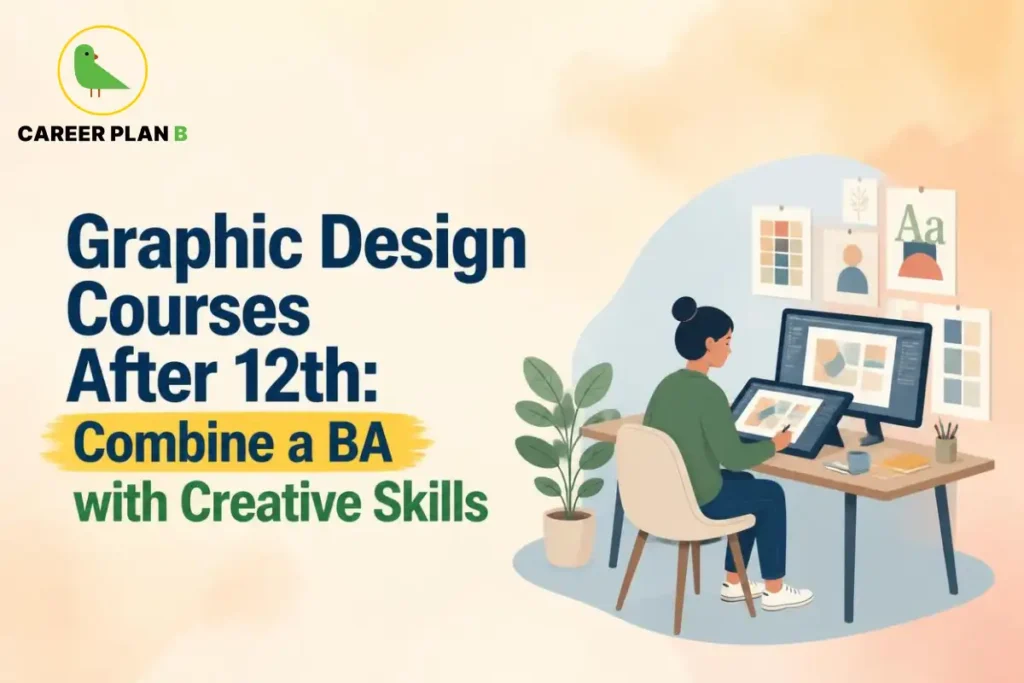
Introduction
Pursuing a creative profession right after higher secondary school offers tremendous career flexibility and financial independence. Consequently, enrolling in graphic design courses after 12th has become one of the smartest educational pathways across India.
Many ambitious school leavers actively ask how to become a graphic designer after 12th while completing a traditional graduation. Furthermore, students frequently explore graphic design courses after 12th with BA to balance liberal arts with high-demand visual design skills.
Higher education accreditations, dual-degree policies, and open university recognitions in India are regulated by the University Grants Commission (UGC). Additionally, national vocational training benchmarks are governed through the National Council for Vocational Education and Training (NCVET). Digital learning modules and creative credit transfers operate via the SWAYAM Portal under the Ministry of Education (MoE). Premier national design education is benchmarked by the National Institute of Design (NID).
This comprehensive guide details eligibility criteria, diploma tracks, software competencies, portfolio building, and career opportunities for young designers.
Why Choose Graphic Design Courses After 12th?
Visual communication powers the entire digital economy, including social media, e-commerce, advertising, and user interfaces. As a result, businesses urgently require skilled designers who can translate marketing concepts into compelling digital artwork.
Enrolling in specialized graphic designer courses gives young learners early exposure to visual hierarchy, typography, and branding. Moreover, studying visual design directly after high school allows students to master industry software tools years before graduation.
Therefore, completing targeted creative training ensures that candidates enter the job market with hands-on technical fluency.
How to Combine a BA with Graphic Design Courses
Many creative learners constantly ask how to combine a BA with graphic design courses effectively without academic burnout. Fortunately, official statutory guidelines make this dual-track pathway entirely practical.
Under guidelines issued by the University Grants Commission, students can pursue two academic programs simultaneously. For example, candidates can enroll in a regular or distance BA degree while completing an accredited design diploma.
Alternatively, learners can pursue a full-time Bachelor of Arts and complete self-paced graphic design certification tracks online. Consequently, this balanced combination protects your graduation eligibility for government exams while building lucrative commercial design capabilities.
Therefore, choosing BA and graphic design courses for creative skills gives you the perfect blend of theory and execution.
Strategic Advantages of a BA Plus Graphic Design Model
Evaluating a BA plus graphic design educational strategy highlights significant practical benefits for creative students:
- Socio-Cultural Context: Humanities coursework in literature, history, and psychology sharpens your narrative understanding and storytelling ability.
- Academic Safety Net: Earning an accredited bachelor’s degree ensures full eligibility for UPSC, SSC, and state civil services.
- Rapid Freelance Earnings: Practical visual design skills allow students to earn money through client commissions during college.
- Double Industry Edge: Graduates can work as brand consultants, creative copywriters, or visual communication directors.
Consequently, pursuing a BA with graphic design course equips you with critical thinking and technical design mastery.
Comparing Graphic Design Degree Courses Alongside BA and Diplomas
Understanding the differences between degree, diploma, and certificate programs helps candidates choose the best academic track:
| Program Category | Standard Graphic Design Course Duration | Regulatory Recognition | Ideal Candidate Profile |
|---|---|---|---|
| B.Des in Graphic Design | 4 Academic Years (8 Semesters) | AICTE / UGC / INI Degree | Students seeking intensive, full-time campus design education. |
| B.Voc in Visual Communication | 3 Academic Years (6 Semesters) | UGC Approved Vocational Degree | Learners wanting practical skill tracks with flexible exit points. |
| Graphic Design Diploma Courses | 6 to 12 Months | NCVET / State Technical Board | Students pursuing a distance BA degree alongside design training. |
| Online Design Certification | 3 to 6 Months | Industry / Platform Endorsement | College undergraduates needing targeted visual software upskilling. |
If you are already enrolled in a liberal arts college, graphic design diploma courses offer the ideal duration. However, students wanting single-discipline immersion should evaluate graphic design degree courses alongside BA alternatives.
Statutory Graphic Design Course Eligibility Norms
Reviewing standard graphic design course eligibility criteria prevents registration delays across recognized institutes:
- Qualifying Examination: Candidates must have passed Class 12 (10+2) from CBSE, CISCE, NIOS, or recognized State Boards.
- Stream Openness: Students from Arts, Science, and Commerce streams qualify equally for creative design admissions.
- Minimum Aggregate Marks: Most institutions mandate a simple passing grade or 45% to 50% aggregate marks.
- Aptitude Evaluation: Top institutes like NID conduct the Design Aptitude Test (DAT) to assess visual perception and drawing logic.
Therefore, creative enthusiasm and visual imagination matter significantly more than your previous high school subject combination.
For Personalized Guidance
Core Graphic Design Course Syllabus and Software Tools
A comprehensive graphic design course syllabus balances foundational artistic theory with hands-on software applications across all modules:
| Academic Design Module | Core Theoretical Principles | Industry Software & Platforms Learned |
|---|---|---|
| Visual Design Foundations | Color psychology, grid systems, framing, visual balance | Sketching, Procreate, Paper wireframing |
| Vector Illustration & Icons | Typography hierarchy, scalable artwork, logo design | Adobe Illustrator, CorelDRAW, Affinity Designer |
| Image Manipulation & Layout | Photo correction, digital blending, composite raster art | Adobe Photoshop, Lightroom |
| Editorial & Print Design | Editorial grids, prepress setup, color separations | Adobe InDesign, Canva Enterprise |
| UI/UX & Digital Brand Identity | Mobile mockups, responsive screens, user flow mapping | Figma, Adobe XD |
Consequently, mastering this structured curriculum equips you to design for both physical print and digital screens.
Essential Graphic Design Skills Every Student Must Build
Securing high-paying agency contracts requires more than memorizing software shortcut keys. Successful creators develop well-rounded graphic design skills that solve real business problems:
Typography and Font Pairing
Typography controls how audiences read and interpret brand messages. Therefore, designers must understand kerning, tracking, leading, font pairing, and readability across varying device viewports.
Branding and Identity Architecture
Modern enterprises need complete visual identities rather than isolated logos. Consequently, students must learn how to design color palettes, corporate stationary, social media design kits, and brand books.
Layout and Spatial Hierarchy
Designers must guide the viewer’s eye through intentional use of contrast, proportion, and negative space. As a result, clean layouts improve digital conversion rates on advertisements and landing pages.
Client Communication and Design Rationale
Creative professionals must explain their visual choices clearly to non-design stakeholders. Furthermore, articulating the commercial reasoning behind a design layout builds client trust and ensures project approvals.
Step-by-Step Guide: How to Become a Graphic Designer
Transitioning from a curious high school graduate to a paid creative professional requires deliberate execution. Follow this proven roadmap to discover how to become a graphic designer:
| Milestone Stage | Primary Action Required | Tangible Outcome Achieved |
|---|---|---|
| Stage 1: Enrolment | Join a recognized BA degree and a design diploma simultaneously. | Academic and vocational tracks secured |
| Stage 2: Tool Mastery | Dedicate two hours daily to mastering Photoshop, Illustrator, and Figma. | Software command and shortcut fluency |
| Stage 3: Portfolio Creation | Execute six diverse concept design briefs across multiple industries. | High-quality graphic design portfolio built |
| Stage 4: Internship Pursuit | Apply for graphic design internships at digital marketing agencies. | Verifiable corporate client exposure |
| Stage 5: Professional Launch | Transition into full-time visual designer roles or remote freelancing. | Sustainable creative career established |
Consequently, this structured approach eliminates confusion and accelerates your entry into commercial design.
The Ultimate Asset: Building Your Graphic Design Portfolio
In creative industries, your graphic design portfolio carries far more weight than your university degree certificates. Corporate design directors evaluate portfolio links before checking college names.
To make your portfolio stand out to recruiters, include these high-impact projects:
- Brand Identity Redesign: Pick an existing consumer brand, audit its visual flaws, and showcase a refreshed logo system.
- Commercial Advertising Campaign: Create three multi-platform banners including Instagram story ads, billboard mockups, and website headers.
- Packaging and Label Design: Design realistic 3D bottle labels, merchandise boxes, or eco-friendly pouch packaging.
- Editorial Layout Spread: Format a clean twelve-page magazine layout displaying disciplined typography and text column balancing.
Presenting these projects on platforms like Behance, Dribbble, or a personal website demonstrates real commercial capabilities.
Career Scope and Salary Opportunities After Graphic Design Courses
Completing modern graphic design degree courses or diploma certifications unlocks rewarding job opportunities across creative sectors:
| Creative Career Designation | Primary Hiring Sectors | Average Starting Salary (INR) |
|---|---|---|
| Junior Graphic Designer | Creative advertising agencies, design studios, publishing houses. | ₹3,00,000 – ₹4,80,000 |
| Brand Identity Specialist | Corporate branding consultancies, consumer product brands. | ₹4,20,000 – ₹7,00,000 |
| Digital Marketing Visualiser | E-commerce platforms, performance ad agencies, tech startups. | ₹3,50,000 – ₹5,50,000 |
| Junior UI/UX Designer | Software product enterprises, mobile app development agencies. | ₹4,50,000 – ₹8,00,000 |
| Motion Graphics Trainee | Film animation studios, broadcast television networks, gaming firms. | ₹3,80,000 – ₹6,50,000 |
Disclaimer: The salary figures mentioned above are indicative starting salary ranges and may vary based on experience, location, employer, industry, portfolio quality, technical skills, and job role.
How Career Plan B Helps
Navigating college admissions, balancing creative diplomas with degrees, and selecting the right design programs requires experienced mentorship. Career Plan B supports creative students across India through:
- Personalized Career Counselling: Assess your creative strengths, academic background, and career goals to determine whether a B.Des, B.Voc, or BA with an online diploma best fits your aspirations.
- Psycheintel and Career Assessment Tests: Evaluate your aptitude, interests, and creative strengths to identify suitable specializations in branding, packaging, UI/UX, or motion graphics.
- Career Roadmapping: Build a structured plan covering creative internships, portfolio development, client outreach, skill building, and design agency interview preparation.
- Admission and Academic Profile Guidance: Review your academic profile, entrance requirements, programme options, and design institute choices, while guiding you on preparing a strong portfolio for your target institutions and career opportunities
Get In Touch With Us
Frequently Asked Questions
Q1. Can I study graphic design while completing a regular BA degree?
Yes, UGC guidelines officially permit students to pursue an online or diploma course alongside their regular bachelor’s degree.
Q2. Do I need to be exceptionally good at hand drawing to become a graphic designer?
No, while sketching helps with visual brainstorming, modern graphic design relies primarily on digital tools, typography, and layout logic.
Q3. Which software should a beginner learn first in graphic design?
Adobe Illustrator and Adobe Photoshop are the two essential foundational tools that every beginner should learn first.
Q4. Can arts students get high-paying corporate jobs through graphic design?
Yes, multinational tech brands, advertising agencies, and corporate marketing teams hire designers based entirely on portfolio quality.
Q5. How long does it take to become job-ready in graphic design?
Dedicating six to nine months of consistent daily software practice and portfolio building is sufficient to land entry-level design roles.
Conclusion
Enrolling in graphic design courses after 12th offers a practical pathway to build a creative career while developing industry-relevant skills. By combining a recognized graduation programme with hands-on expertise in design software, visual communication, branding, and digital design, students can build a strong foundation for professional growth.
A compelling digital portfolio further helps aspiring designers showcase their creativity and explore opportunities across design agencies, creative studios, digital businesses, and freelance projects.
Ready to turn your creativity into a career? Explore the right graphic design course, start mastering industry-standard design tools, and build a professional portfolio with guidance from Career Plan B’s expert counsellor.