Team5 · September 8, 2026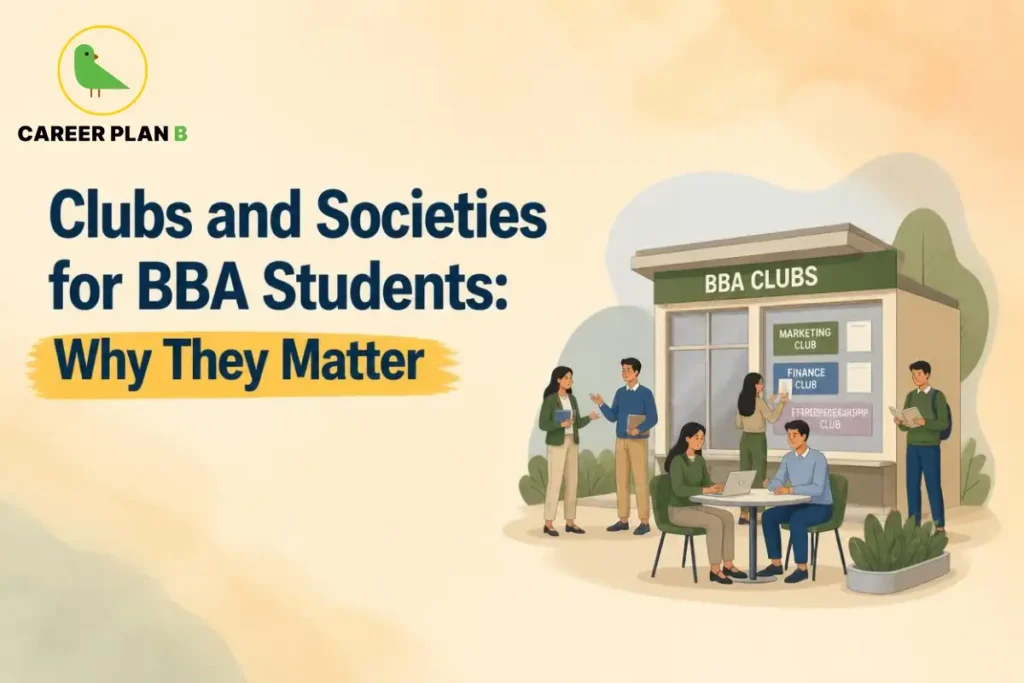
Introduction
Sitting in a classroom, you can learn what a balance sheet is. But can you learn how to pitch a business idea to a room full of skeptical judges? Or negotiate a deal when two teams want completely different outcomes? That’s where clubs and societies for BBA students come in.
If you’re a 12th grader picking a BBA college, or already enrolled and wondering whether to join that finance club everyone’s talking about, this guide breaks down what these groups actually do, what skills you walk away with, and how to choose the right ones without spreading yourself too thin.
What Are Clubs and Societies for BBA Students?
Clubs and societies for BBA students are student-run groups within a college that focus on a specific interest, whether that’s entrepreneurship, finance, public speaking, or social causes. Think of them as the practical wing of your degree. While your professors teach theory in class, these societies give you a space to apply it, often through real projects, competitions, and events you help organize yourself.
At Delhi University’s Shaheed Sukhdev College of Business Studies (SSCBS), for example, students can join over 30 societies covering everything from consulting to debate to community service, including the 180 Degrees Consulting chapter, the Financial Management Association, and CBS Model United Nations (CBSMUN). Most BBA colleges across India, government and private alike, run a similar setup, just under different names.
Types of College Clubs and Societies for BBA Students
Not all clubs serve the same purpose. Here’s a breakdown of the main categories you’ll come across.
Entrepreneurship Cells for BBA Students
Often called E-Cells, these groups exist to nurture the founder instinct. You’ll get a taste of pitching ideas, building a basic business model, and sometimes even pitching to real investors during college fests. Many E-Cells also run mentorship programs connecting students with founders and run startup weekends or hackathons.
Finance and Investment Clubs
If numbers excite you, a finance or investment club is where you’ll thrive. These groups run mock stock trading competitions, host workshops on financial markets, and break down real case studies. They’re especially useful if you’re eyeing a career in banking, equity research, or financial analysis after your BBA.
Marketing and Consulting Clubs
Marketing societies usually work on live brand campaigns, social media strategy projects, or ad-making competitions. Consulting clubs, many of which are affiliated with global organizations like 180 Degrees Consulting, take it a step further by pairing student teams with real non-profits or small businesses to solve genuine business problems.
Debate, MUN, and Public Speaking Societies
Model United Nations (MUN) societies and debate clubs are some of the oldest and most respected groups on any campus. They sharpen your ability to think on your feet, structure an argument, and hold your own in a room full of strong opinions, skills that matter just as much in a boardroom as they do in a debate hall.
Cultural, Sports, and CSR Clubs
Not every valuable skill comes from a business simulation. Cultural societies (dance, music, theatre), sports clubs, and CSR or volunteering groups like Enactus or NSS chapters teach teamwork, discipline, and empathy in ways that round out your personality and make you more than just a resume on paper.
For Personalized Guidance
How Do Clubs and Societies Help BBA Students Build Skills?
Here’s a quick look at which clubs build which skills, so you can match your interests to your goals.
| Club Type | Core Skill You Build | Where It Helps Later |
|---|---|---|
| E-Cell | Idea validation, pitching | Startups, product roles |
| Finance/Investment Club | Analytical thinking, market awareness | Banking, equity research |
| Marketing/Consulting Club | Strategic problem-solving | Brand management, consulting |
| MUN/Debate Society | Public speaking, negotiation | Client-facing roles, leadership |
| Cultural/CSR Club | Teamwork, empathy | People management, HR |
Beyond specific skills, club involvement teaches you something a syllabus rarely can: how to manage your time when you’re juggling academics, a society role, and a personal life all at once. Recruiters notice this too. A 60-70% placement rate is common at colleges with strong society cultures, and many B-school case competition wins and live project experiences get specifically called out in interviews.
How to Choose the Right Clubs and Societies in College
With dozens of options available, here’s how to narrow it down without overcommitting:
- Start with one or two, not ten. Quality of involvement matters far more than the number of clubs on your resume.
- Pick at least one aligned with your career goal. If you want to work in finance, a finance club isn’t optional, it’s essential.
- Aim for a leadership role by your second year. Coordinator, treasurer, or event head positions show initiative far better than passive membership.
- Don’t ignore non-academic clubs entirely. A mix of professional and personal-interest clubs makes for a more balanced college experience.
How Career Plan B Helps
Choosing the right clubs is easier when you know your strengths first.
Career Plan B’s Psycheintel Career Assessment helps you identify where your natural aptitude lies, while our Career Counselling and Career Roadmapping sessions guide you on which extracurriculars to prioritize.
Our Admission and Academic Profile Guidance also helps you present this involvement effectively in college applications and interviews.
Get In Touch With Us
Frequently Asked Questions
- Do clubs and societies actually help in BBA placements?
Yes. Recruiters often value real project experience and leadership roles from clubs almost as much as academic performance, especially for roles in consulting, marketing, and finance. - Are entrepreneurship cells useful even if I don’t want to start a business?
Absolutely. E-Cells teach problem-solving, pitching, and basic business modelling, skills useful in corporate jobs too, not just startups. - How many clubs should a BBA student realistically join?
One or two is ideal. Spreading yourself across five or six clubs usually means shallow involvement in all of them rather than meaningful impact in any. - Do colleges consider club participation during BBA admissions?
Some private universities do look at extracurricular involvement during interviews or personal statements, though it’s rarely a deciding factor for merit-based admissions like DU’s CUET process. - Can introverts benefit from joining clubs and societies?
Yes. Many clubs have research, content, or design roles that don’t require constant public interaction, making them a comfortable entry point before moving into more visible roles. - What’s the difference between a club and a society in college?
The terms are often used interchangeably in India, though “society” sometimes implies a more formal, long-standing structure with elected positions, while “club” can refer to more casual interest-based groups.
Conclusion
Clubs and societies for BBA students aren’t just a way to fill up your college calendar; they’re where classroom theory turns into real, usable skill. Whether it’s pitching in an E-Cell, debating in an MUN society, or running a campaign for a marketing club, every bit of involvement adds something a transcript alone can’t show.
Not sure which clubs align with your career goals? Book a session with Career Plan B’s career counsellors to map out a path that fits both your degree and your ambitions.