Team6 · September 14, 2026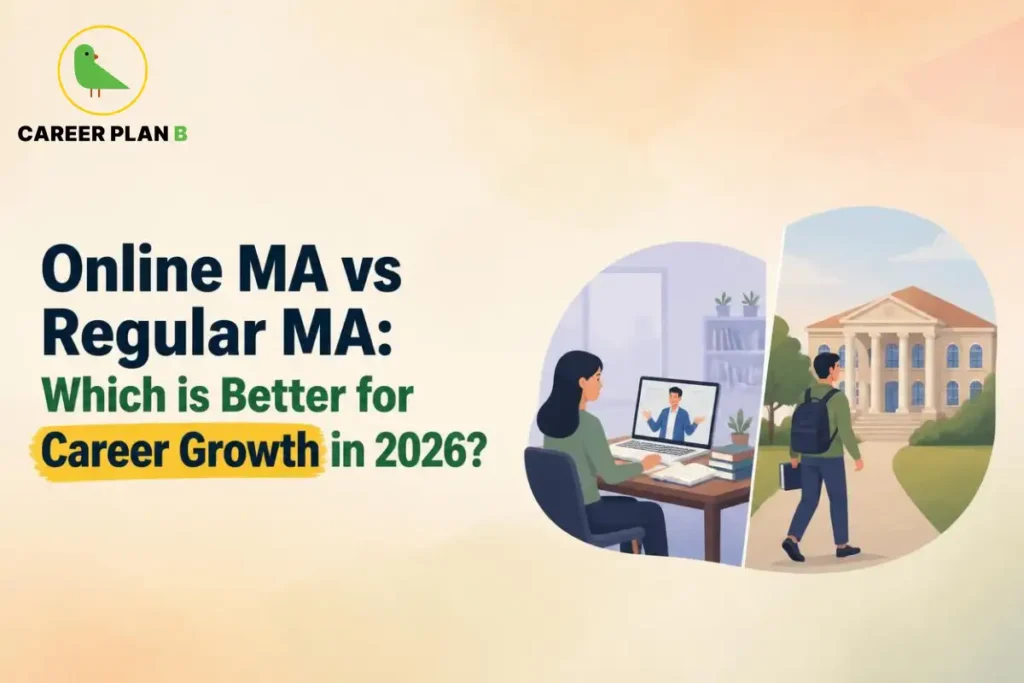
Introduction
The Indian educational landscape has completely evolved in 2026, erasing the outdated stigma once associated with distance learning. Consequently, the debate surrounding an Online MA vs Regular MA has become the most critical decision for ambitious arts and humanities graduates. With global corporations now prioritizing actual skills over physical campus attendance, flexible digital degrees are fiercely competing with traditional universities.
Historically, pursuing a Master of Arts (MA) required a massive two-year commitment, forcing professionals to completely pause their income and career progression. Today, however, elite institutions offer highly rigorous digital programs that perfectly mirror their on-campus equivalents in both syllabus and prestige. This structural shift empowers working professionals to aggressively upskill while maintaining their full-time corporate salaries.
This comprehensive guide breaks down the exact differences between these two academic pathways to determine which truly accelerates professional success. By exploring corporate acceptance rates, financial return on investment, and specialized career scopes, you can confidently navigate the Online MA vs Regular MA dilemma.
Flexibility and Learning Modalities
When comparing an Online MA vs Regular MA, the absolute primary differentiator is logistical flexibility.
The Freedom of Digital Learning
An online Master of Arts is meticulously designed for working professionals, freelancers, and students preparing for competitive government exams. The asynchronous learning model allows you to consume highly produced video lectures and submit assignments strictly on your own schedule. This unmatched flexibility means you never have to sacrifice your current job or relocate to an expensive metropolitan city to secure a premium degree.
The Immersive Campus Experience
Conversely, a regular MA provides a deeply immersive, highly structured academic environment. Physical campuses offer unparalleled access to massive university libraries, spontaneous peer networking, and intense face-to-face debates with elite faculty. For students who thrive on strict routines and crave traditional academic socialization, the regular campus experience remains incredibly valuable.
Corporate Acceptance and Employer Perception
The most common anxiety surrounding the Online MA vs Regular MA debate is whether top-tier companies actually respect digital credentials.
UGC and DEB Validation
In 2026, the mode of learning is largely irrelevant to modern employers, provided the degree is legally legitimate. As long as your online MA is officially recognized by the University Grants Commission’s Distance Education Bureau (UGC-DEB), it holds the exact same legal and corporate weight as a regular degree. Multinational corporations heavily recruit from recognized digital platforms, completely eliminating any previous hiring bias against online graduates.
Skills Over Physical Attendance
Modern hiring managers prioritize a candidate’s practical portfolio, critical thinking abilities, and active work experience over their physical campus attendance. An online student who successfully balances a full-time corporate job while earning their MA demonstrates massive time-management skills and intense self-discipline. This incredible work ethic frequently makes online graduates far more attractive to fast-paced tech startups and global media agencies.
For Personalized Guidance
Financial Investment and Return on Investment (ROI)
Analyzing the financial realities is absolutely crucial when resolving the Online MA vs Regular MA conflict.
The Cost-Effective Digital Route
Online MA programs are drastically more affordable than their traditional on-campus counterparts. By choosing the digital route, you completely eliminate massive hostel fees, daily commuting costs, and expensive university infrastructure charges. Furthermore, because you can continue earning your regular salary while studying, the financial breakeven point is exceptionally fast and highly lucrative.
The Premium Price of Campus Life
Regular MA programs, especially at elite private universities, require a massive, upfront financial investment. While prestigious institutions offer excellent campus placement drives and vibrant cultural festivals, the opportunity cost of leaving the workforce for two years is severe. You must carefully calculate if the traditional campus networking opportunities justify the massive tuition and lost corporate wages.
Career Scope and Salary Trajectories
A Master of Arts degree, regardless of the format, opens doors to highly prestigious roles in media, public policy, and corporate communications. The financial compensation scales rapidly based on your chosen specialization and accumulated work experience.
| MA Specialization | High-Impact Corporate Roles | Starting Salary (2026) | Senior Salary Scope (5+ Yrs) |
|---|---|---|---|
| MA in Public Policy | Policy Analyst, Political Strategist | ₹6.0 – ₹9.0 LPA | ₹18.0 – ₹35.0+ LPA |
| MA in English / Comm. | Corporate Communications, UX Writer | ₹5.0 – ₹8.0 LPA | ₹15.0 – ₹30.0+ LPA |
| MA in Economics | Economic Researcher, Data Analyst | ₹7.0 – ₹12.0 LPA | ₹20.0 – ₹40.0+ LPA |
| MA in Psychology | Corporate HR, Behavioral Analyst | ₹5.5 – ₹8.5 LPA | ₹16.0 – ₹32.0+ LPA |
(Source: Educational framework comparisons strictly aligned with 2026 Indian corporate recruitment and humanities placement data).
How Career Plan B Helps
Deciding between an Online MA vs Regular MA requires meticulous, long-term strategic planning tailored to your unique financial situation. Career Plan B assists ambitious humanities and arts graduates in navigating this complex academic choice with absolute clarity.
- Personalised Career Counselling: We thoroughly evaluate your current professional trajectory to ensure you choose the exact learning mode that maximizes your corporate growth.
- Psycheintel & Career Assessments: Scientifically backed tests that accurately map your unique strengths for managing isolated digital learning or thriving in competitive campus environments.
- Customized Admission Guidance: Strategic support to help you select the highest-ROI, UGC-approved online MA programs or crack elite university entrance exams.
- Career Roadmapping: Tailored, long-term pathways that guarantee your new academic credentials perfectly align with the highest-paying corporate roles in 2026.
For Latest Information
Frequently Asked Questions
Q1. Is an online MA valid for government jobs in 2026?
Yes, absolutely. Any online MA degree officially approved by the UGC-DEB is 100% legally valid for all central and state government competitive exams, including the UPSC.
Q2. Which is better for a PhD: Online MA vs Regular MA?
If your ultimate goal is hardcore academia and pursuing a full-time PhD, a Regular MA is generally preferred due to the intense research exposure and direct faculty mentorship.
Q3. Do employers differentiate between online and regular degrees?
Top-tier multinational corporations in 2026 rarely differentiate between the two, provided the online degree is from a recognized, accredited university. They focus heavily on your actual skills and interview performance.
Q4. What is the average fee for an online MA in India?
The total course fee for a premium online MA in India typically ranges from ₹40,000 to ₹1.5 Lakhs, making it significantly cheaper than most regular private campus programs.
Q5. Can I pursue an online MA while working a full-time job?
Yes. Online MA programs are specifically designed with asynchronous lectures and flexible weekend assignments to perfectly accommodate the schedules of busy working professionals.
Conclusion
Analyzing the modern corporate sector reveals exactly why the Online MA vs Regular MA debate is so intensely contested in 2026. By choosing a regular campus program, you invest heavily in spontaneous networking, vibrant academic socialization, and deep, face-to-face faculty mentorship. Conversely, opting for an online degree grants you the ultimate superpower: the ability to aggressively upskill and secure premium credentials without ever sacrificing your monthly corporate salary.
Ultimately, neither path is inherently superior; the true value depends entirely on your specific lifestyle constraints and professional ambitions. If you require absolute flexibility to scale your current career, the digital route is undeniably the smartest modern choice. If you are ready to identify the exact academic pathway that fits your unique strengths, consult Career Plan B today to build a meticulously personalized roadmap to success.