Team6 · September 19, 2026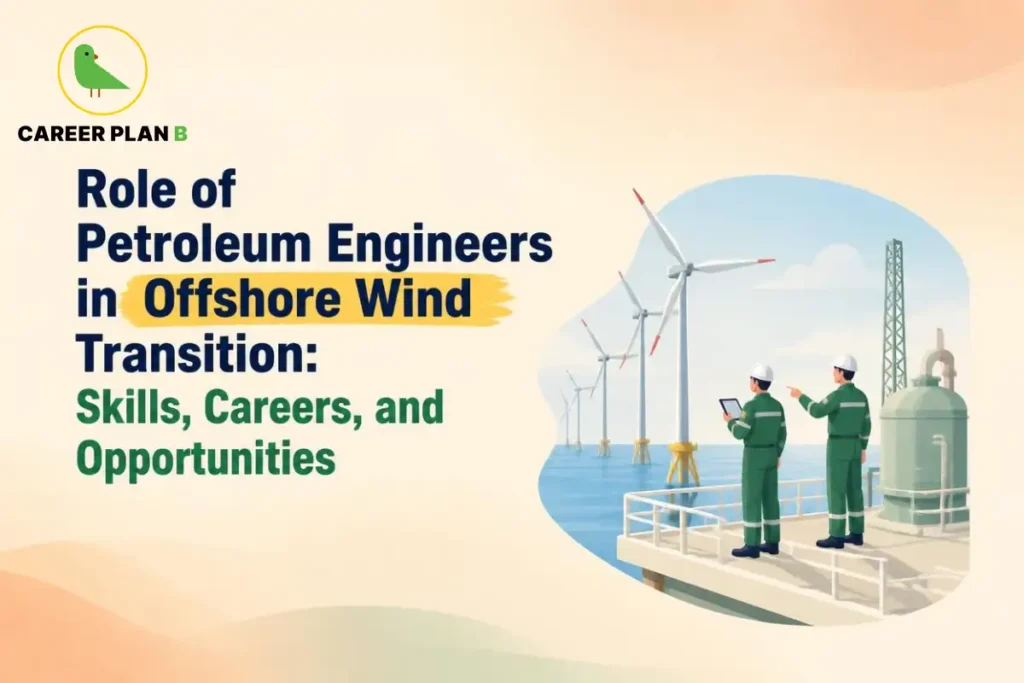
Introduction
The energy world is undergoing its biggest transformation in a century. Offshore wind farms are rising where oil rigs once dominated the horizon. Governments are setting ambitious renewable targets. And many petroleum engineers are asking a very real question: Does my career still have a future?
The answer is a strong yes. The role of petroleum engineers in the offshore wind transition is more significant than most people realise. The skills you build in oil and gas subsea engineering, structural analysis, risk management, and offshore operations are precisely what the wind energy industry desperately needs. You are not starting over. You are pivoting with an advantage.
India’s offshore wind sector is still in its early stages, but the trajectory is steep. The government has set a target of 30 GW of offshore wind capacity by 2030, and the engineering talent required to build that future does not yet exist in sufficient numbers. That gap is your opportunity.
This blog breaks down exactly how petroleum engineers fit into the offshore wind transition, whose skills transfer, what new ones are needed, and where the career opportunities lie, especially in India.
Why Are Petroleum Engineers Relevant to Offshore Wind?
At first glance, oil rigs and wind turbines seem like opposites. One extracts fossil fuels; the other harvests clean energy. But look beneath the surface, literally, and the engineering overlap is striking.
Offshore wind platforms share significant technical DNA with offshore oil and gas infrastructure. Both involve:
- Designing and installing heavy structures in open ocean environments
- Managing subsea cables, pipelines, and foundation systems
- Conducting marine surveys, environmental assessments, and geotechnical studies
- Operating complex machinery under harsh weather conditions
- Managing large, multi-disciplinary teams across remote locations
Offshore platform engineering experience is directly applicable to wind turbine foundation design, installation vessel operations, and offshore substation management. Petroleum engineering skills in fluid dynamics, structural mechanics, and project execution are not just relevant; they are in demand.
The transition is not a leap into the unknown. It is a calculated step sideways, with strong footing.
What Skills Transfer from Oil and Gas to Offshore Wind?
This is the section every petroleum engineering student and professional needs to read carefully. The transferable skills in oil and gas are broader than most engineers realise.
- Foundation and Structural Engineering Drilling engineers understand casing design, load-bearing calculations, and soil-structure interaction. These skills map directly onto monopile and jacket foundation design for offshore wind turbines. The physics is different, but the engineering discipline is the same.
- Project Management and Offshore Logistics Managing an offshore oil platform requires coordinating vessels, personnel, equipment, and timelines under strict safety protocols. Offshore wind installation follows an almost identical project structure. Engineers with offshore project experience are valuable from day one.
- Health, Safety, and Environment (HSE): HSE is non-negotiable in both industries. Petroleum engineers trained in process safety, risk assessment, and emergency response carry certifications and mindsets that wind energy companies actively seek. Energy transition for engineers is smoother when safety culture is already embedded.
- Subsea Engineering Subsea pipelines, umbilicals, and control systems in oil and gas have clear parallels in offshore wind inter-array cables, export cables, and subsea connectors; they require the same engineering rigour.
- Data and Reservoir Analysis Petroleum engineers are trained to interpret complex subsurface data to optimise extraction. This analytical thinking translates well to wind resource assessment, turbine performance monitoring, and predictive maintenance skills increasingly driven by data analytics platforms.
The energy transition for engineers is not about abandoning expertise. It is about redeploying it in a new context.
Offshore Wind Energy in India The Opportunity Landscape
India’s offshore wind journey is just beginning, but the scale of ambition is enormous.
The Ministry of New and Renewable Energy (MNRE) has set a target of 30 GW of offshore wind capacity by 2030 and 70 GW by 2032. The first commercial-scale projects are being planned along the Gujarat and Tamil Nadu coastlines, where wind speeds and seabed conditions are favourable.
The National Institute of Wind Energy (NIWE), under MNRE, is the nodal agency for wind resource assessment in India, including offshore zones. NIWE has published offshore wind potential assessments and is actively involved in site surveys.
ONGC, India’s largest oil and gas company, has announced its intent to enter the offshore wind space, leveraging its existing offshore infrastructure, vessels, and engineering workforce. This is a direct signal that petroleum engineering professionals within ONGC are being looked at as potential contributors to India’s offshore wind energy buildout in India.
The Indian government has also introduced the Offshore Wind Energy Policy to provide a regulatory framework for development, procurement, and operation. For engineers planning their careers, this policy landscape means that offshore wind career opportunities in India are no longer speculative; they are becoming real and funded.
What New Skills Do Petroleum Engineers Need to Learn?
Transferable skills get you in the door. But to thrive in offshore wind, petroleum engineers need to add some new tools to their kit.
- Wind Turbine Fundamentals Understanding how wind turbines generate power from rotor aerodynamics to generator mechanics is essential. Short certification courses from institutions like NPTEL or international bodies cover this well.
- Grid Integration and Power Systems Basics Offshore wind farms connect to national grids through complex electrical systems. A working knowledge of power transmission, grid codes, and offshore substation design will distinguish petroleum engineers entering this space.
- Environmental Impact Assessment for Marine Zones Offshore wind projects require detailed marine environmental assessments covering impact on fisheries, marine mammals, and seabed ecology. Engineers with exposure to environmental compliance in oil and gas can build on this quickly. India’s environmental clearance framework is governed by the Ministry of Environment, Forest and Climate Change (MoEFCC)
- Digital Skills and Predictive Analytics Both oil and gas and offshore wind are moving toward digital operations. Learning tools for turbine performance monitoring, predictive maintenance algorithms, and digital twin modelling will make you significantly more employable in renewable energy engineering jobs.
The learning curve is real but manageable, especially for engineers who already have a strong offshore foundation.
Have Any Doubts?
Career Paths Opening Up for Petroleum Engineers in Offshore Wind
Here are the specific roles where petroleum engineers are finding strong traction in the offshore wind sector:
Subsea and Foundation Engineers design and oversee the installation of monopiles, tripods, and jacket foundations. Your subsea and structural background from oil and gas is directly applicable.
HSE and Risk Consultant Offshore wind developers need experienced safety professionals. Petroleum engineers with offshore HSE certifications from OPITO or similar bodies are well-positioned for these roles.
Offshore Project and Operations Manager Managing the construction, installation, and operation of an offshore wind farm requires exactly the project management capabilities petroleum engineers develop on oil platforms.
Marine and Installation Engineer Coordinating jack-up vessels, cable-laying ships, and turbine installation operations draws heavily on offshore logistics experience from oil and gas.
Energy Transition Consultant As companies navigate the shift from fossil fuels to renewables, consultants who understand both worlds are invaluable. This is a growing segment of renewable energy engineering jobs globally and increasingly in India.
The common thread across all these offshore wind career opportunities is that offshore experience and engineering rigour matter more than industry-specific knowledge, and petroleum engineers have both in abundance.
How Career Plan B Helps
Making a confident move from petroleum engineering into offshore wind requires more than just enthusiasm; it requires a clear, personalised strategy. Career Plan B offers one-on-one career counselling, psychometric assessments, and structured career roadmapping specifically designed for engineering students and professionals navigating energy transition. Whether you are a final-year student or a working engineer exploring offshore wind career opportunities, Career Plan B helps you identify your strengths, map your skill gaps, and build a focused plan to move forward.
Get In Touch With Us
Frequently Asked Questions
1. Can petroleum engineers really work in offshore wind without starting from scratch?
Absolutely. The transferable skills in oil and gas subsea engineering, HSE, project management, and offshore operations are directly valued in offshore wind. You will need to add some new technical knowledge, but you are building on a very strong foundation.
2. What is India’s current status in offshore wind energy?
India has set a target of 30 GW of offshore wind by 2030. MNRE and NIWE are leading resource assessment and policy work, while ONGC has signalled entry into the sector. Commercial projects are expected along the Gujarat and Tamil Nadu coasts.
3. Which certifications help petroleum engineers transition to offshore wind?
Globally recognised certifications such as GWO (Global Wind Organisation) Basic Safety Training, along with courses in wind energy fundamentals from NPTEL or IITs, are good starting points. Existing OPITO and offshore safety certifications also carry significant value.
4. Are there offshore wind jobs in India right now?
The sector is early-stage, but engineering, policy, and project development roles are beginning to emerge, especially with ONGC, MNRE-linked agencies, and international developers entering the Indian market. Early movers will have a significant career advantage.
Conclusion
The role of petroleum engineers in the offshore wind transition is not a footnote in the energy story; it is a central chapter. The skills, mindset, and offshore experience that petroleum engineers carry are exactly what this industry needs to build the next generation of energy infrastructure.
India’s offshore wind ambitions are growing fast, and the engineering talent pipeline is still being built. For petroleum engineering students and professionals, this is not a crisis; it is a career-defining opportunity. The question is whether you will prepare early enough to claim it.
Start building your transition strategy today at Career Plan B.