Team6 · September 19, 2026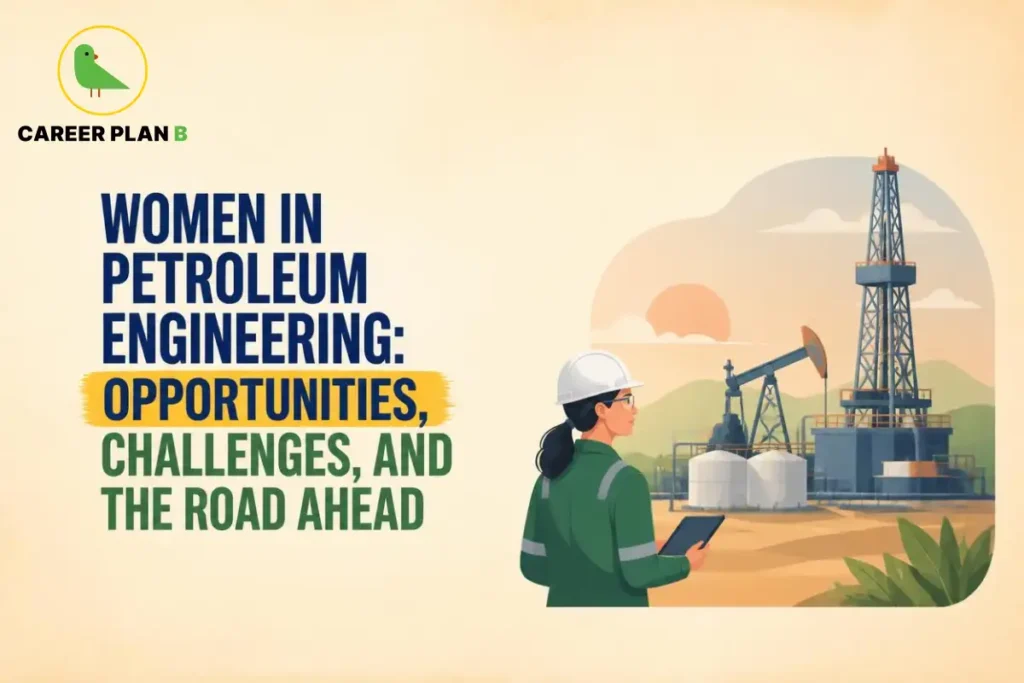
Introduction
The oil rig has long been imagined as a man’s world. Dusty boots, hard hats, remote locations, and heavy machinery the image of petroleum engineering has historically kept women at the margins of a field they are more than capable of leading. But that image is changing fast, and women in petroleum engineering are at the centre of that transformation.
Today, women in petroleum engineering are drilling wells, managing billion-dollar reservoirs, leading HSE teams, and heading upstream operations at some of the world’s largest energy companies. Across India and globally, the petroleum and energy sector is actively working to close its gender gap not just because it is the right thing to do but because the data shows that diverse engineering teams consistently outperform homogeneous ones.
If you are a woman considering petroleum engineering as a career or already studying it and wondering what lies ahead, this blog is for you. We cover where women stand in the industry today, what roles and opportunities are available, which companies are actively hiring, what scholarships exist to support your journey, and how do you build a career in this field with confidence and clarity?
Where Do Women Stand in Petroleum Engineering Today?
The honest starting point is that women remain under-represented in petroleum engineering, but the gap is narrowing with real momentum.
Globally, women make up roughly 20 to 25 per cent of the oil and gas workforce, with representation dropping further in technical and field engineering roles. In India, enrolment of female engineers in petroleum engineering programmes at institutions like IIT Kharagpur and IIT (ISM) Dhanbad has been gradually increasing, though it still lags behind branches like computer science and electronics.
However, the trend line is moving in the right direction. Gender diversity in energy sector conversations is no longer peripheral; it is now embedded in the strategic priorities of companies like ONGC, Shell, TotalEnergies, and BP. Hiring targets, diversity fellowships, and leadership development programmes specifically for female engineers in oil and gas are becoming standard practice rather than exceptions.
The foundation is being built. The question now is whether you are ready to build on it.
Why the Oil and Gas Industry Needs More Women Engineers
This is not about charity or tokenism. The business case for gender diversity in the energy sector is well established and growing stronger.
Research consistently shows that companies with greater gender diversity in technical and leadership roles deliver better safety outcomes, more innovative problem-solving, and stronger financial performance. In an industry where a single reservoir management decision can involve hundreds of millions of dollars, diverse perspectives around the table directly improve the quality of outcomes.
Major energy companies have taken note. Shell has committed to gender-balanced shortlists for all technical roles globally. TotalEnergies has set targets for women in leadership positions across its upstream operations. In India, ONGC has been expanding its women-friendly workplace policies and actively recruiting female engineers through campus drives.
Women’s leadership in the energy industry is no longer an aspiration; it is an active recruitment and retention priority for the companies that will dominate the next decade of global energy.
For women in STEM careers in India, petroleum engineering now represents one of the most opportunity-rich branches available precisely because demand is growing faster than supply.
What Roles Can Women Pursue in Petroleum Engineering?
One of the most persistent myths about petroleum engineering is that all roles involve physically demanding fieldwork in remote locations. The reality is far more varied and far more accessible.
Petroleum engineering career opportunities span a wide range of environments and functions:
Technical Roles:
- Reservoir engineers analyse subsurface data to model and optimise oil and gas recovery. Primarily office and lab-based, involving simulation software and data interpretation
- Production engineers monitor and optimises well performance, often working from onshore control centres and periodic field visits
- Drilling engineers design well programmes and oversees drilling operations, with varying degrees of field involvement depending on the company
- A completions engineer focuses on well design post-drilling to maximise output
Specialised and Emerging Roles:
- An HSE engineer ensures health, safety, and environmental compliance across operations. A growing area with strong demand for detail-oriented engineers
- Data analytics and digital engineering use AI, machine learning, and simulation tools to optimise reservoir and production performance. Increasingly office-based and tech-driven
- Energy Transition Specialists help oil and gas companies integrate renewable energy, reduce emissions, and meet ESG targets
Oil and gas jobs for women engineers are available across all of these tracks in India with PSUs and in global markets with international majors. The idea that women can only pursue non-field roles is outdated; many women engineers today are choosing field postings and thriving in them.
Top Recruiters Actively Hiring Women in Oil and Gas
Knowing where to apply is as important as knowing what to apply for. Here are the key recruiters in India and globally that are actively building more diverse engineering workforces.
In India:
- ONGC (Oil and Natural Gas Corporation) India’s largest upstream company recruits petroleum engineers through GATE and campus placements. ONGC has active diversity initiatives and women-friendly workplace policies. Recruitment details at:
- OIL India Limited recruits engineers for upstream oil and gas operations across Assam and Rajasthan, with structured induction programmes for fresh graduates.
- GAIL India, India’s largest natural gas company, hires engineers for processing, pipeline, and project roles.
- Hindustan Petroleum Corporation Limited (HPCL) recruits for refining and downstream engineering roles
Globally:
- Shell is one of the most active global recruiters with dedicated diversity hiring programmes and women-in-engineering fellowships.
- TotalEnergies has formal gender diversity targets across its upstream technical workforce
- Saudi Aramco has significantly expanded its recruitment of female engineers in recent years, particularly in reservoir and data roles.
Female engineers in oil and gas who target these companies early through internships, campus presentations, and GATE scores have a strong competitive advantage in a market that is actively seeking them.
Have Any Doubts?
Scholarships and Support Programmes for Women in Engineering
Financial support is available for women pursuing petroleum engineering in India, and it is more substantial than most students realise.
- AICTE Pragati Scholarship for Girl Students The All India Council for Technical Education (AICTE) offers the Pragati Scholarship specifically for girl students pursuing technical education, including engineering. It provides financial assistance of up to Rs. 50,000 per year for tuition and incidental expenses.
- DST-INSPIRE Fellowship The Department of Science and Technology (DST) runs the INSPIRE (Innovation in Science Pursuit for Inspired Research) programme, which includes fellowships for students pursuing science and engineering at undergraduate and postgraduate levels. Women in STEM careers in India are strongly encouraged to apply.
- ONGC Scholarship Programme ONGC runs a scholarship programme for meritorious students from economically weaker sections, including engineering students.
- Ministry of Education Scholarships The Ministry of Education’s National Scholarship Portal consolidates multiple central government scholarship schemes available to engineering students, including women-specific schemes.
- GATE Fellowship at IITs: Women engineers who qualify for GATE and secure admission to IIT MTech programmes receive a monthly stipend that covers most living expenses, making postgraduate study financially viable without family support.
Scholarships for women in engineering in India are real, accessible, and underutilised. Applying early and systematically can significantly reduce the financial burden of a petroleum engineering education.
Challenges Women Face and How the Industry Is Responding
Acknowledging challenges is not pessimism; it is preparation. Women in petroleum engineering do face specific hurdles, and understanding them helps you navigate them more effectively.
Common challenges include:
- Field posting concerns some women and their families are hesitant about remote field postings. The reality is that many petroleum engineering roles are office- or lab-based, and field roles come with structured safety protocols and company-provided accommodation
- Work-life balance perceptions: The industry has a reputation for long hours and demanding schedules. While this is true in some roles, many companies now offer flexible working arrangements, parental leave policies, and remote monitoring roles that significantly improve balance
- Unconscious bias in hiring and promotion: This is real but declining, as diversity targets and structured hiring processes reduce subjective decision-making
How the industry is responding:
- The Maternity Benefit (Amendment) Act, 2017, in India, mandates 26 weeks of paid maternity leave for women in organised-sector companies, providing important legal protection.
- Companies like Shell and TotalEnergies have introduced returnship programmes for women who take career breaks
- ONGC and OIL India have invested in women-friendly facilities at field locations, including dedicated accommodation and safety infrastructure
Women’s leadership in the energy industry is growing not despite these challenges but partly because the women who have navigated them have demonstrated the resilience and capability that the industry values most.
How Career Plan B Helps
Every woman in petroleum engineering has a unique profile, different strengths, different goals, and different constraints. A one-size-fits-all career plan simply does not work. Career Plan B offers personalised career counselling, psychometric and career assessment tests, and structured career roadmapping designed specifically to help engineering students, including women navigating a male-dominated field, identify their best-fit petroleum engineering career opportunities, build a competitive profile, and move forward with a clear, confident plan. Whether you are choosing your specialisation, preparing for GATE, or targeting oil and gas jobs for women engineers in India or abroad, Career Plan B is built to support you.
Get In Touch With Us
Frequently Asked Questions
1. Is petroleum engineering a safe career choice for women in India?
Yes. The vast majority of petroleum engineering roles, including reservoir engineering, production optimisation, data analytics, and HSE, are office-or control-room-based. Field roles come with structured safety protocols, company accommodation, and legal protections under Indian labour law. Many women engineers in India are thriving in both field and non-field roles.
2. Do ONGC and other Indian PSUs actively hire women petroleum engineers?
Yes. ONGC, OIL India, GAIL, and HPCL recruit through GATE and campus placements without gender discrimination, and several have active diversity hiring initiatives. Women engineers with strong GATE scores and academic records are competitive candidates for PSU roles.
3. What scholarships are available for women studying petroleum engineering in India?
Key scholarships include the AICTE Pragati Scholarship, DST-INSPIRE Fellowship, ONGC Scholarship, and various schemes available through the National Scholarship Portal. Women who qualify for GATE also receive monthly stipends during MTech programmes at IITs.
4. Are there global opportunities specifically for female engineers in oil and gas?
Yes. Companies like Shell, TotalEnergies, and Saudi Aramco have dedicated diversity hiring programmes and women-in-engineering fellowships that provide pathways for female engineers to enter global operations. Networking organisations like the Society of Petroleum Engineers (SPE) also run women-focused mentoring and career development initiatives.
5. Can women pursue leadership roles in the petroleum engineering and energy sector?
Absolutely. Women are currently serving as reservoir managers, HSE directors, field development leads, and senior executives at major energy companies globally. Women’s leadership in the energy industry is actively supported through mentoring programmes, leadership development tracks, and diversity targets at the world’s largest energy firms.
Conclusion
Women in petroleum engineering are not the future of the industry; they are its present and an increasingly prominent one. The opportunities are real, the support systems are growing, and the companies that will shape the next decade of global energy are actively looking for talented women engineers to help lead that work.
The challenges exist, but they are not insurmountable and they are not unique to petroleum engineering. What is unique to this field is the scale of opportunity, the global reach of careers, and the genuine impact that petroleum engineers have on the energy systems that power the world.
If you are a woman considering this path, the most important thing you can do right now is to stop waiting for permission and start building your plan.
Take the first step at Career Plan B.