Team6 · September 19, 2026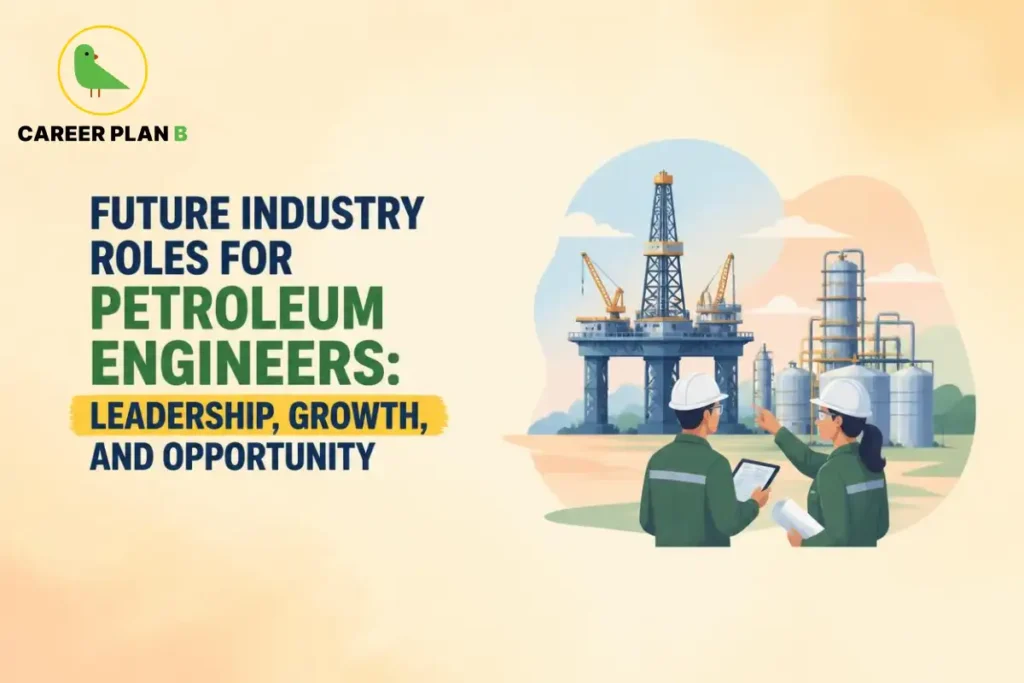
Introduction
The energy industry continues to evolve. Petroleum engineers must evolve with it. Engineers entering the workforce today may retire in a very different industry.Artificial intelligence is reshaping reservoir management. Meanwhile, the energy transition is creating new technical disciplines. Future engineers will need more than drilling expertise. They will also need leadership, problem-solving, and cross-disciplinary skills.
Understanding future roles is important for students and early-career engineers. These roles span technical leadership, digital innovation, energy transition, and corporate strategy.Therefore, engineers should start preparing early. Building the right skills today can support long-term career growth and create new opportunities.
How the Role of Petroleum Engineers Is Changing
To understand where petroleum engineering is going, it helps to understand what is driving the change. Three forces are reshaping the profession simultaneously, and they are moving fast.
Digital transformation is the first. Oil and gas companies are deploying AI, machine learning, and digital twin technology across every stage of the upstream value chain. Reservoir simulation, drilling optimisation, production forecasting, and predictive maintenance are all being automated and augmented with data. Petroleum engineers who once relied primarily on manual analysis are now expected to work alongside data scientists and software engineers.
The energy transition is the second. As governments push toward net-zero targets and energy companies diversify their portfolios, petroleum engineers are being asked to contribute to carbon capture projects, hydrogen production, and LNG infrastructure, not just conventional oil and gas. Oil and gas industry trends 2025 show a clear shift toward hybrid energy organisations where petroleum engineers sit alongside renewable energy specialists.
Core Technical Leadership Roles in Oil and Gas
The most direct petroleum engineer career path leads through technical specialisation to senior leadership within upstream operations. These roles represent the pinnacle of the traditional career ladder, and they remain among the most sought-after positions in the global energy industry.
Reservoir Engineering Manager This role oversees the full lifecycle of reservoir management from initial characterisation through production optimisation to enhanced recovery planning. Reservoir engineering managers lead teams of engineers and geoscientists, present field development plans to senior executives, and make decisions that directly affect billions of dollars of asset value. Reaching this role typically requires ten to fifteen years of progressive reservoir engineering experience, strong simulation skills, and demonstrated leadership capability.
Drilling and Wells Director One of the highest-ranking technical roles in any upstream company, the wells director oversees all drilling and completions activity across a company’s asset portfolio. This includes budget management, technology selection, contractor oversight, and HSE accountability. Engineers on this track develop deep expertise in drilling engineering before transitioning into project and people management.
Emerging Roles at the Intersection of Energy and Technology
Beyond the traditional ladder, a new category of energy sector jobs for engineers is emerging at the intersection of petroleum engineering and digital technology. These roles did not exist a decade ago, and they are growing faster than any other segment of the upstream job market.
Digital Reservoir Engineer This hybrid role combines classical reservoir engineering with advanced data science. Digital reservoir engineers build and maintain AI-driven reservoir models, integrate real-time production data with simulation platforms, and use machine learning to predict reservoir behaviour and optimise recovery strategies. Companies like Shell, BP, and ONGC are actively building teams in this space.
AI and Data Analytics Lead Upstream As oil and gas companies invest in digital operations centres, they need engineers who can bridge the gap between field data and business decisions. AI leads in upstream management of the deployment of predictive algorithms for equipment failure, production optimisation, and drilling performance, reducing costs and improving safety simultaneously.
Leadership Roles in the Energy Transition
The energy transition is not replacing petroleum engineers; it is redeploying them. The subsurface knowledge, project management experience, and offshore engineering expertise that petroleum engineers carry are precisely what the energy transition needs to succeed at scale.
Carbon Capture and Storage (CCS) involves capturing CO₂ from industrial sources and storing it in geological formations, often depleted oil and gas reservoirs. Petroleum engineers understand these formations better than anyone. CCS is a priority technology for India’s climate commitments, and the Ministry of Petroleum and Natural Gas is actively exploring its role in India’s energy future.
Energy Transition Manager Large energy companies are creating dedicated energy transition teams to manage the shift in their portfolio from conventional hydrocarbons to gas, hydrogen, CCS, and renewables. Energy transition managers coordinate these efforts, working across technical, commercial, and regulatory functions. This is one of the most senior energy transition career opportunities available to engineers with broad upstream experience.
Hydrogen and LNG Project Lead: Hydrogen is emerging as a critical clean energy carrier, and LNG continues to grow as a transition fuel. Project leads in these areas manage the full development lifecycle from feasibility and engineering through commissioning and operations. India’s hydrogen mission, overseen by the Ministry of New and Renewable Energy (MNRE), is creating new demand for engineers with this expertise.
HSE and Sustainability Director As ESG standards become central to energy company strategy, senior HSE and sustainability roles are gaining both prominence and compensation. Petroleum engineers with strong safety backgrounds are natural candidates for these positions. The Ministry of Environment, Forest and Climate Change (MoEFCC) governs India’s environmental compliance framework for the energy sector.
Energy transition career opportunities for petroleum engineers are not marginal; they are mainstream, and they are growing with every government policy announcement and corporate net-zero commitment.
Policy, Consulting, and Corporate Strategy Roles
Not all future industry roles for petroleum engineers sit inside operating companies. A significant and growing segment of career opportunities exists in policy, consulting, and corporate strategy roles that shape the industry from the outside in.
Energy Policy Advisor Government ministries, regulatory bodies, and think tanks need petroleum engineers who understand the technical realities of the energy sector. Policy advisors translate engineering complexity into actionable regulation and strategy. In India, the Directorate General of Hydrocarbons (DGH) and NITI Aayog are key institutions where petroleum engineers contribute to national energy policy.
Management Consultant in Oil and Gas Global consulting firms including McKinsey, Deloitte, and BCG have dedicated energy practices that regularly hire petroleum engineers for client-facing roles. These positions involve advising oil and gas companies on strategy, operations, cost reduction, and energy transition planning. A petroleum engineer career path through consulting offers extraordinary breadth of exposure across companies and geographies.
Corporate Strategy Roles at PSUs and Majors Senior petroleum engineers frequently transition into corporate strategy teams at companies like ONGC, OIL India, and Shell, where they use their technical knowledge to evaluate acquisitions, assess new basin entry, and develop long-term portfolio strategy. These roles sit at the highest levels of organisational decision-making and represent the convergence of technical depth and business acumen.
For current updates on India’s upstream policy direction and energy sector strategy, the Ministry of Petroleum and Natural Gas provides authoritative information.
Have Any Doubts?
What Skills Do Petroleum Engineers Need for Future Leadership?
Technical excellence is the foundation, but it is not sufficient for future leadership. Here are the petroleum engineering skills for future roles that will separate the engineers who lead from those who follow:
Digital fluency comfort with data analytics platforms, AI tools, reservoir simulation software, and digital operations systems is now a baseline expectation, not a differentiator
Communication and stakeholder management: the ability to explain complex subsurface decisions to non-technical executives, investors, and regulators is a skill that accelerates careers faster than almost any technical credential
Cross-disciplinary energy knowledge understanding how oil and gas intersects with renewables, hydrogen, grid systems, and climate policy makes you relevant across a wider range of organisations and roles
Financial and commercial literacy senior engineers who understand project economics, capital allocation, and risk assessment are far more valuable than those who cannot speak the language of business
Leadership and team development: managing diverse, multi-disciplinary teams under pressure is the core capability of every senior energy role, and it must be developed intentionally
NPTEL offers free courses on management, data science, and energy systems that petroleum engineers can use to build these broader competencies.
How Career Plan B Helps
Knowing that future industry roles for petroleum engineers exist is one thing; building a deliberate path toward them is another. Career Plan B offers personalised career counselling, psychometric and career assessment tests, and structured long-term career roadmapping to help petroleum engineering students and early-career professionals identify which leadership track aligns with their strengths, interests, and goals. Whether you are targeting upstream oil and gas careers, energy transition career opportunities, or consulting and policy roles, Career Plan B helps you build a focused, realistic plan to get there starting from exactly where you are today.
Get In Touch With Us
Frequently Asked Questions
1. How long does it take to reach a leadership role in petroleum engineering?
The timeline varies by role and company, but most senior technical leadership positions reservoir manager, wells director, and operations lead require ten to fifteen years of progressive experience. Engineers who build cross-disciplinary skills, seek international exposure, and pursue postgraduate qualifications can accelerate this timeline significantly.
2. Which future roles are most secure given the energy transition?
Roles that combine petroleum engineering with the energy transition offer promising long-term opportunities. These include CCS engineers, hydrogen project leads, and energy transition managers.
Digital roles are also growing quickly. Professionals who combine reservoir engineering with AI and data analytics can find opportunities across the energy sector.
3. Are there future leadership roles for petroleum engineers in India specifically?
Yes. ONGC, OIL India, GAIL, and HPCL all have structured career progression tracks that lead to senior technical and management positions. India’s expanding upstream exploration programme and energy transition commitments are creating new senior roles in policy, CCS, and digital operations that did not exist five years ago.
4. Do petroleum engineers need an MBA to reach corporate strategy or consulting roles?
An MBA is not mandatory but is highly advantageous for consulting and corporate strategy tracks. Engineers with strong technical backgrounds and an MBA from a top institution, such as IIM, ISB, or a global programme, are among the most sought-after candidates for energy sector strategy roles.
Conclusion
The future industry roles for petroleum engineers are not shrinking; they are expanding, diversifying, and moving up the value chain. From technical leadership in upstream operations to digital innovation, energy transition management, and corporate strategy, the career ceiling for petroleum engineers has never been higher.
But these roles do not come to those who simply show up and wait. They come to engineers who understand where the industry is heading, build the right skills deliberately, and seek guidance to navigate their path with clarity and confidence.
The energy sector needs its next generation of leaders. The question is whether you are building toward that future or leaving it to chance.
Start building your long-term career roadmap today at Career Plan B