Team6 · September 22, 2026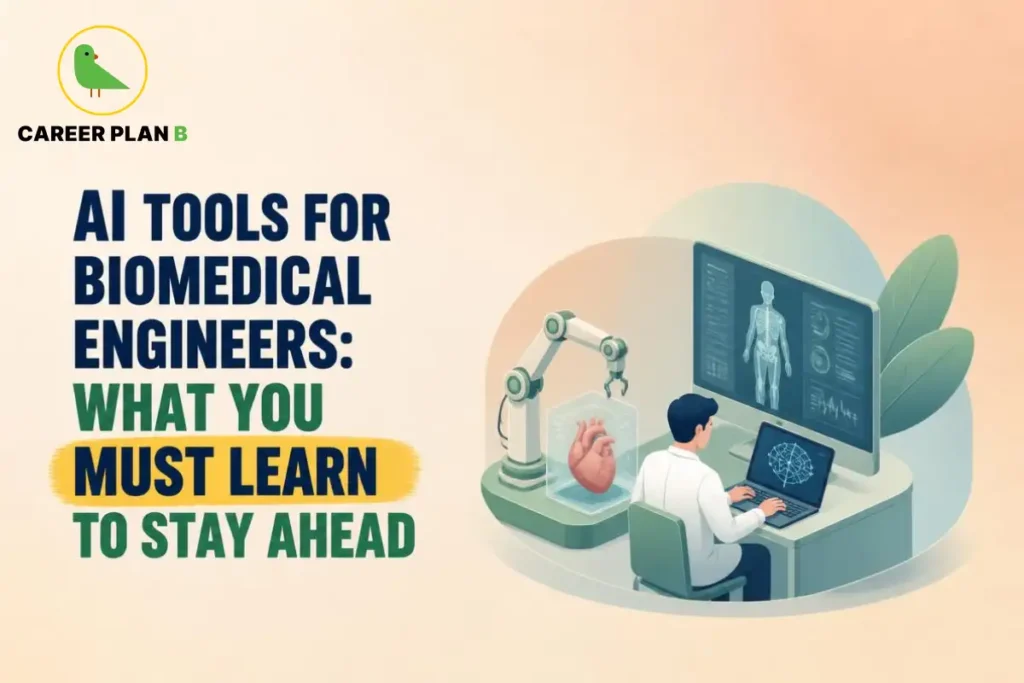
Introduction
The biomedical engineer of tomorrow is not just building devices; they are teaching machines to save lives.Artificial intelligence is no longer a future technology in healthcare. It is already here detecting tumours in radiology scans faster than human eyes, predicting patient deterioration in ICUs before doctors can observe it, designing drug molecules in hours instead of years, and powering prosthetic limbs that learn from the user’s movement patterns in real time.
For biomedical engineers, this shift is not a threat; it is an opportunity. The professionals who combine deep biomedical domain knowledge with practical AI skills are becoming the most sought-after engineers in the global healthcare industry. And right now, most biomedical engineering students in India are not building those skills fast enough.
AI tools for biomedical engineers are not limited to coding or data science. They span medical imaging, signal processing, drug discovery, wearable health monitoring, and regulatory-compliant AI medical device development in India and globally.
In this blog, we walk you through exactly which AI tools matter, why they matter for your career specifically as a biomedical engineer, and how to start building these skills whether you are in your second year of B.Tech or preparing for your first job.
Why Biomedical Engineers Must Embrace AI
Let us be direct: if you are a biomedical engineering student who plans to work in medical devices, clinical engineering, health-tech, or research over the next decade, AI is not optional. It is foundational.
Here is why. Every modern medical device generates data: ECG signals, imaging outputs, biosensor readings, infusion pump logs, and patient monitoring streams. The question is no longer whether this data exists. The question is whether the engineers building and managing these devices know how to make that data intelligent.
Artificial intelligence in biomedical engineering India is being pushed forward at the institutional level. AIIMS New Delhi has established AI research initiatives in medical imaging and diagnostics. IIT Bombay, IIT Madras, and IIT Delhi all have active AI in healthcare research programmes. The Government of India’s Ayushman Bharat Digital Mission (ABDM) is building the national digital health infrastructure that will eventually connect AI-driven diagnostics, wearables, and electronic health records into a single ecosystem.
The National Health Policy and NITI Aayog’s strategy on AI in healthcare explicitly identify AI-driven medical technology as a national priority. Engineers who understand both the healthcare context and the AI tools are the ones this ecosystem needs most.
If your device generates data, should you not know how to make that data intelligent? The answer, increasingly, is yes, and the career market is beginning to reflect that expectation.
Core AI and ML Concepts Every Biomedical Engineer Should Know
Before diving into specific tools, it helps to understand the foundational concepts that underpin all AI work in biomedical contexts. You do not need a computer science degree to grasp these but you do need a working understanding of them to use AI tools effectively.
- Supervised learning training a model on labelled data to make predictions. Example: training a model on labelled ECG recordings to detect arrhythmias
- Unsupervised learning: finding patterns in data without labels. Example: clustering patient populations by disease risk profiles
- Neural networks: computational models loosely inspired by the human brain, capable of learning complex patterns from large datasets
- Computer vision enabling machines to interpret and analyse visual information. Directly relevant to medical imaging, pathology slide analysis, and surgical robotics
- Natural language processing (NLP): processing and understanding text data. Relevant for extracting clinical information from electronic health records and medical literature
Why Deep Learning Is Especially Relevant for Biomedical Engineers
Deep learning, a subset of machine learning that uses multi-layered neural networks, is the technology behind most of the AI breakthroughs in healthcare today. For biomedical engineers specifically, deep learning tools for biomedical research are used to:
- Analyse medical images (X-rays, MRIs, CT scans, pathology slides) with human-level or better accuracy
- Process biosignals like ECG, EEG, and EMG to detect abnormalities
- Analyse continuous data streams from wearable biosensors
- Predict patient outcomes from clinical datasets
Understanding how deep learning models are built, trained, and validated is one of the most high-value skills a biomedical engineer can develop in the current career market.
Top AI Tools Biomedical Engineers Should Learn
Here is a structured, priority-ordered guide to the AI tools that are most relevant and most in-demand for biomedical engineers today.
Python: The Foundation of Everything
If there is one place to start, it is Python for biomedical engineering. Python is the dominant programming language for AI, machine learning, and data science across every industry, and biomedical engineering is no exception. It is free, open-source, beginner-friendly, and supported by the most comprehensive ecosystem of scientific and medical computing libraries available.
Key Python libraries for biomedical engineers include:
- NumPy and Pandas for numerical computation and handling biomedical datasets
- Matplotlib and Seaborn for visualising biosignals, imaging data, and model outputs
- SciPy for signal processing, including ECG and EEG analysis
- MNE-Python, specifically built for analysing EEG and MEG neuroimaging data
- Nibabel and SimpleITK for reading and processing medical imaging file formats (NIfTI, DICOM)
Every other AI tool on this list either runs on Python or integrates with it. Python is the non-negotiable starting point.
TensorFlow and PyTorch Deep Learning Frameworks
These are the two most widely used deep learning frameworks in the world, and both are essential knowledge for any biomedical engineer working with AI.
TensorFlow (developed by Google) and PyTorch (developed by Meta AI) allow engineers to build, train, and deploy neural network models. In biomedical contexts, they are used to build image classification models for radiology, signal classification systems for cardiology, and predictive models for patient monitoring systems.
PyTorch is currently dominant in academic and research settings, including most biomedical AI research labs at IITs and international universities. TensorFlow has stronger deployment tooling and is widely used in industry applications. Learning the fundamentals of both, and going deep on one, is the recommended approach.
Scikit-learn Machine Learning Made Accessible
Before building complex deep learning models, most biomedical AI problems can be approached with classical machine learning, and Scikit-learn is the standard tool for this.
Scikit-learn provides clean, well-documented implementations of algorithms for classification, regression, clustering, and dimensionality reduction. For biomedical engineers, practical applications include:
- Predicting patient readmission risk from clinical data
- Detecting medical device failure patterns from maintenance logs
- Classifying biosensor data into normal and abnormal categories
Scikit-learn is also the best tool for learning the fundamentals of machine learning before moving on to deep learning frameworks.
MONAI AI: Specifically Built for Medical Imaging
MONAI (Medical Open Network for AI) is an open-source framework built specifically for deep learning in medical imaging. Developed and maintained by a consortium that includes NVIDIA and members of the medical AI research community, MONAI is rapidly becoming a widely used tool for medical image segmentation, classification, and detection tasks.
Machine learning for medical imaging is one of the largest and fastest-growing application areas in healthcare AI, covering radiology (X-ray, CT, and MRI), pathology (slide analysis), ophthalmology (retinal imaging), and dermatology. MONAI provides pre-built, validated workflows for these tasks, significantly reducing the time and expertise required to build production-quality medical imaging AI models.
For biomedical engineers interested in AI in healthcare diagnostics in India and globally, MONAI is the most directly relevant specialised tool available today.
3D Slicer Medical Image Visualisation and Analysis
3D Slicer is a free, open-source platform for medical image processing, visualisation, and analysis. It is widely used in:
- Surgical planning and simulation
- Implant design and fit assessment
- Clinical research involving volumetric imaging data
- AI model training data preparation for medical imaging
Unlike TensorFlow or PyTorch, 3D Slicer does not require programming expertise to use at a basic level, making it an accessible entry point for biomedical engineers who are new to medical image analysis. It also has a Python scripting interface for advanced users who want to automate workflows or integrate AI models.
MATLAB Signal Processing and Biomedical Modelling
MATLAB remains one of the most widely used tools in biomedical engineering research labs in India, particularly for signal processing and systems modelling. Its Biomedical Toolbox and Signal Processing Toolbox make it well-suited for:
- ECG, EEG, and EMG signal acquisition and analysis
- Physiological system modelling (cardiovascular, respiratory, neural)
- Medical device simulation and testing
While Python is increasingly replacing MATLAB in many research settings, MATLAB remains dominant in university research labs and is still widely used in medical device R&D departments. Knowledge of both puts you in the strongest possible position.
Have Any Doubts?
AI in Medical Imaging: A Career Specialisation Worth Pursuing
Of all the AI application areas in healthcare, medical imaging is the largest, the most mature, and the one generating the most career opportunities for biomedical engineers right now.
The global AI in medical imaging market is growing rapidly, driven by the need to manage increasing volumes of diagnostic imaging data with fewer radiologists. In India, AIIMS and several IITs have active research programmes specifically focused on AI-assisted diagnostics, developing models for tuberculosis detection in chest X-rays, diabetic retinopathy screening, and brain tumour segmentation in MRI scans.
The Department of Science and Technology funds several AI in healthcare diagnostics India research projects through its national programmes, including collaborative projects with hospitals and engineering institutions.
Career roles in this space include:
- AI Radiologist Support Engineers develop and validate AI tools that assist radiologists in image interpretation
- Medical Image Analyst processes and annotates imaging data for AI model training and clinical research
- Imaging AI Researcher conducts original research on new AI approaches for medical image analysis
For biomedical engineers who develop proficiency in MONAI, TensorFlow or PyTorch and 3D Slicer combined with a strong understanding of medical imaging physics and clinical context, this is one of the most future-proof career specialisations available today.
AI Tools for Biomedical Research and Drug Discovery
Beyond medical imaging, AI is transforming biomedical research itself, particularly in drug discovery, where the time and cost of developing new medicines have historically been enormous.
Key AI tools used in biomedical research include:
- AlphaFold, developed by DeepMind, predicts the three-dimensional structure of proteins from their amino acid sequences with unprecedented accuracy. For biomedical engineers working in drug discovery or biomaterials research, AlphaFold is a game-changing resource that is freely available
- RDKit an open-source cheminformatics library used for molecular modelling, drug-likeness prediction, and chemical data analysis
- BioPython a Python library for computational biology, supporting sequence analysis, structural biology, and bioinformatics workflows
The role of biomedical engineer in pharmaceutical research is increasingly defined by the ability to use these tools alongside wet-lab and clinical research teams. Pharmaceutical companies and biotech firms working on drug delivery systems, diagnostic biomarker identification, and precision medicine are hiring biomedical engineers with AI skills at a growing rate.
In India, both DBT and CSIR fund AI-driven biomedical and pharmaceutical research through grants and fellowships. Deep learning tools for biomedical research are now explicitly mentioned in DBT and CSIR research call documents, reflecting how central these skills have become to the Indian research funding landscape.
How to Build AI Skills as a Biomedical Engineer in India
Knowing which tools to learn is one thing. Knowing how to actually build those skills practically and affordably is another. Here is a step-by-step learning path designed specifically for biomedical engineering students in India:
Step 1: Python Fundamentals Start with Python basics. NPTEL offers free, high-quality Python programming courses from IIT faculty. Complete a beginner Python course before moving to AI-specific content.
Step 2: Machine Learning Fundamentals Learn the core concepts of machine learning using Scikit-learn. Andrew Ng’s machine learning course on Coursera and NPTEL’s machine learning offerings are both strong starting points.
Step 3: Deep Learning Move to TensorFlow or PyTorch. fast.ai offers one of the best practical deep learning courses available online, completely free. Pair this with hands-on practice on biomedical datasets from PhysioNet (ECG and physiological signal datasets) or The Cancer Imaging Archive (medical imaging datasets).
Step 4: Domain-Specific Tools Once you have Python and deep learning foundations, learn MONAI for medical imaging or MNE-Python for neural signal analysis depending on your area of interest within biomedical engineering.
Step 5: Build Projects Apply your biomedical engineer AI skills for career development by building and publishing projects. A GitHub portfolio with two or three biomedical AI projects, even simple ones like an ECG arrhythmia classifier or a chest X-ray pneumonia detector, significantly strengthens your profile for both industry placements and postgraduate study applications.
The Government of India’s Digital India initiative and NASSCOM FutureSkills platform also offer digital and AI skilling resources that students can access to supplement their learning.
Career Roles That Combine Biomedical Engineering and AI
Building AI skills on top of a biomedical engineering foundation opens a distinct and highly valued category of career roles that pure computer scientists and pure biomedical engineers cannot easily access:
| Role | Sector | Avg. Salary India (LPA) |
|---|---|---|
| AI/ML Engineer (MedTech) | Medical Device Companies | ₹8 – ₹18 |
| Clinical AI Specialist | Hospitals / Health-Tech | ₹7 – ₹15 |
| Medical Imaging AI Researcher | IITs / AIIMS / MNCs | ₹8 – ₹20 |
| Health Data Scientist | Pharma / CRO / Startups | ₹7 – ₹18 |
| AI Regulatory Affairs Specialist | MedTech / Pharma | ₹8 – ₹16 |
| Senior AI Engineer (MedTech) | Global MNCs | ₹20 – ₹35 |
The last column in this table tells a clear story: AI medical device development India roles and global MedTech AI positions are among the highest-paying career outcomes available to biomedical engineering graduates.
It is also worth noting that as AI becomes more embedded in medical devices, CDSCO is developing regulatory frameworks specifically for AI-based medical devices under the Medical Devices Rules 2017. Biomedical engineers who understand both the AI technology and the regulatory landscape are uniquely positioned for AI regulatory affairs roles, a niche that is growing rapidly and currently has very few qualified professionals.
How Career Plan B Helps
AI is a broad field, and knowing where to focus within it especially when combined with biomedical engineering, requires personalised guidance. Career Plan B offers the PsycheIntel career assessment to help biomedical engineering students identify whether AI specialisation in medical imaging, research, industry R&D, or clinical AI roles aligns with their aptitude and long-term ambitions. With one-on-one career counselling and profile-building guidance, Career Plan B helps you design a targeted learning path so you are not just learning AI tools randomly but building a coherent skill set that positions you for specific, high-value roles in the MedTech and healthcare AI space. Whether you are aiming for a placement in a health-tech startup, an MS abroad in biomedical AI, or a research fellowship, Career Plan B gives you a plan that fits.
Get In Touch With Us
Frequently Asked Questions
1. Which AI tools should a biomedical engineer learn first?
Start with Python for biomedical engineering; it is the foundation for all AI work. Once you are comfortable with Python, move to Scikit-learn for machine learning basics, then TensorFlow or PyTorch for deep learning.
2. Is Python enough to get an AI job in the MedTech sector?
Python is necessary but not sufficient on its own. You need Python plus at least one deep learning framework (TensorFlow or PyTorch), a domain-specific tool like MONAI, and practical project experience with real biomedical datasets.
3. How is AI being used in biomedical engineering in India?
Artificial intelligence in biomedical engineering in India is being applied across medical imaging analysis, AI-assisted diagnostics, wearable health monitoring, drug delivery research, and electronic health record analysis. Institutions like AIIMS, IITs, and government bodies like ABDM and DST are actively funding and implementing AI in healthcare programmes across the country.
4. Can a biomedical engineer become an AI/ML engineer?
Yes, and the combination is increasingly valuable.Biomedical engineers who develop strong Python, machine learning, and deep learning skills can build on their existing knowledge of medical devices, clinical workflows, and healthcare data. This combination of technical and healthcare expertise can prepare them well for MedTech AI roles, especially when compared with candidates who have strong computer science skills but limited healthcare domain knowledge.
Conclusion
AI tools for biomedical engineers are not a niche addition to your skill set; they are becoming a core part of what it means to be a competitive biomedical engineering professional in the next decade. From machine learning for medical imaging to deep learning tools for biomedical research, from Python scripting for biosignal analysis to AI-driven drug discovery platforms, the tools are accessible, the learning resources are available, and the career outcomes are significant.
AI is not replacing biomedical engineers. It is making the ones who learn it more powerful, capable of solving problems that no engineer or doctor could solve alone a decade ago.
If you are a biomedical engineering student trying to figure out which AI specialisation fits your strengths or how to build a career profile that stands out in the MedTech AI space, visit Career Plan B and take the PsycheIntel career assessment today.
AI gives biomedical engineers a superpower. The question is whether you are going to pick it up.