Deepti · September 24, 2026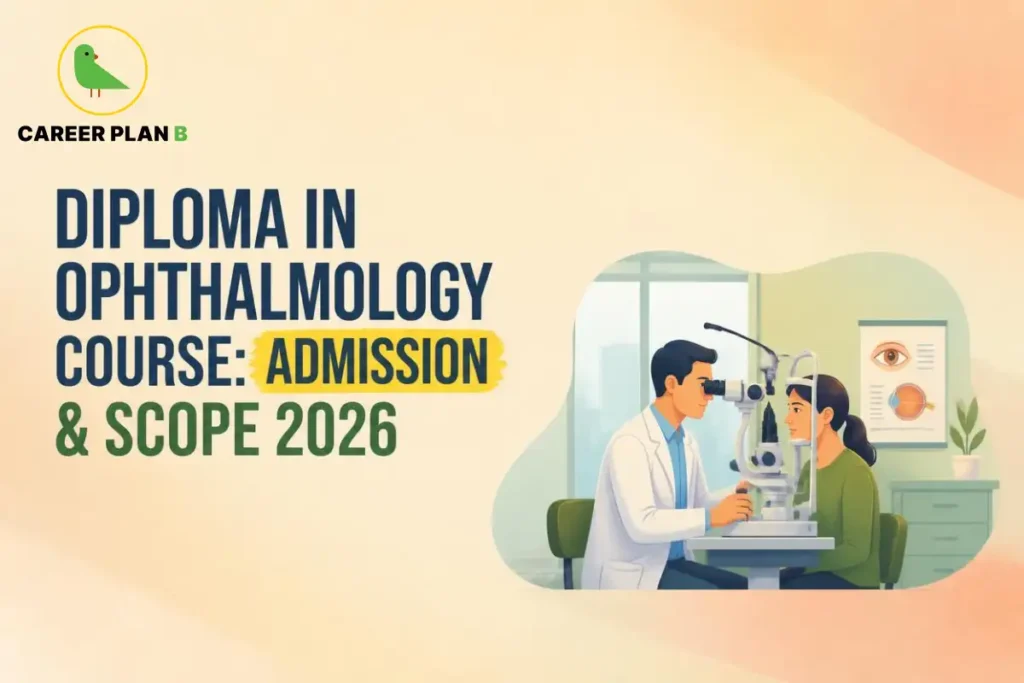
The Diploma in Ophthalmology Course gives MBBS graduates a focused postgraduate route into eye care. The recognized post-MBBS pathway generally runs for two years and uses NEET PG for admission. The course combines clinical learning, diagnostic skills and ophthalmic procedures. This guide covers eligibility, NEET PG 2026, admission, duration, syllabus, fees, colleges and career options after MBBS.
What Is a Diploma in Ophthalmology Course?
A Diploma in Ophthalmology is a postgraduate medical qualification that trains doctors to diagnose and manage eye diseases and provide ophthalmic care. DO Ophthalmology commonly refers to a Diploma in Ophthalmology qualification.
The National Medical Commission’s course database lists Diploma in Ophthalmology (DO) granted by NBE as recognized when granted after August 2020. NBEMS currently administers Post MBBS Diploma programmes through accredited institutions and lists Ophthalmology among its diploma specialties.
NBEMS states that its Post MBBS Diploma course has a two-year duration. The programme combines postgraduate clinical training with supervised work in accredited hospitals or institutions.
Check the official NBEMS Post MBBS Diploma information
Diploma in Ophthalmology Course Highlights
| Particular | Details |
|---|---|
| Course | Diploma in Ophthalmology |
| Level | Postgraduate medical |
| Eligibility | MBBS with applicable internship and registration requirements |
| Entrance | NEET PG |
| Course Duration | 2 years for the NBEMS Post MBBS Diploma route |
| Training | Clinical, diagnostic and practical ophthalmology |
| Admission | NEET PG merit followed by counselling |
| Career areas | Hospitals, eye-care institutions, clinics and further training |
Diploma in Ophthalmology Eligibility After MBBS
Can you pursue this qualification after MBBS? Yes, the recognized postgraduate route is designed for medical graduates who meet the prescribed eligibility conditions.
Diploma in Ophthalmology Eligibility
Candidates generally need:
- A recognized MBBS degree or provisional MBBS pass certificate.
- Permanent or provisional registration for the MBBS qualification from the NMC, erstwhile MCI or a State Medical Council.
- Completion of one year of internship, or completion by the applicable cut-off date.
- Fulfilment of the remaining conditions stated in the relevant NEET PG information bulletin and counselling rules.
NBEMS describes NEET PG as the single eligibility-cum-entrance examination for MD, MS and PG Diploma admissions under the applicable framework. It states that eligible candidates must hold the required MBBS qualification, registration and internship status.
Visit the official NBEMS NEET PG page
Diploma in Ophthalmology NEET PG 2026: Is NEET PG Required?
Diploma in Ophthalmology NEET PG 2026 admissions follow the NEET PG framework for recognized postgraduate diploma seats. NBEMS states that no State Government or private medical college or university can conduct a separate entrance examination for MD, MS or PG Diploma admissions covered by NEET PG.
NEET PG exam scheduled for August 30, 2026, with an internship completion cut-off of September 30, 2026, subject to the official information bulletin. NBEMS published the examination schedule and later issued notices related to the 2026 examination.
Candidates should use the official NEET PG bulletin for the exact eligibility conditions applicable to their admission session.
For Personalized Guidance
Diploma in Ophthalmology Admission Process
The Diploma in Ophthalmology Admission process follows a merit-based postgraduate admission route. Check the official MCC PG Medical Counselling portal
Step 1: Complete MBBS and internship
Candidates must complete the required MBBS qualification and internship conditions.
Step 2: Qualify NEET PG
Candidates take NEET PG and obtain a qualifying result under the applicable rules. NEET PG provides the entrance basis for recognized MD, MS and PG Diploma courses.
Step 3: Register for counselling
Candidates register with the counselling authority that handles their eligible seats. MCC conducts counselling for 50% All India Quota postgraduate seats and specified categories. State authorities conduct counselling for applicable state-level seats.
Step 4: Fill choices
Candidates select eligible Diploma in Ophthalmology colleges or accredited institutions according to the available seat matrix.
Step 5: Receive seat allotment
The counselling authority processes choices according to merit, applicable reservation rules and seat availability.
Step 6: Complete reporting
The candidate reports to the allotted institution, completes document verification and pays the applicable fees.
MCC maintains the official PG counselling portal and publishes counselling notices, schedules and participating-institute information.
For a detailed overview of registration, choice filling, seat allotment and reporting, see Career Plan B’s [PG Medical Counselling Process guide].
Diploma in Ophthalmology Course Duration
The Diploma in Ophthalmology Course Duration depends on the exact qualification. The recognized NBEMS Post MBBS Diploma route carries a two-year duration. NBEMS specifically describes its Post MBBS candidates as undertaking a two-year diploma programme.
Candidates should check the awarding body before applying because websites may list shorter courses under similar names. A post-MBBS postgraduate diploma and a paramedical ophthalmic course do not represent the same qualification.
Diploma in Ophthalmology Syllabus
The Diploma in Ophthalmology Syllabus combines eye anatomy, clinical diagnosis, medical management and practical training.
The NMC curriculum for Diploma in Ophthalmology includes three major examination areas: basic sciences related to ophthalmology, clinical ophthalmology, and principles and practice of eye surgery and related topics. The curriculum also includes theory, clinical and practical assessment during the training period.
Core learning areas include:
- Ocular anatomy and physiology
- Optics and refraction
- Clinical ophthalmology
- Cataract and related management
- Glaucoma
- Retinal disorders
- Corneal and external eye conditions
- Pediatric ophthalmology
- Ocular trauma and emergencies
- Ophthalmic investigations
- Ophthalmic instruments
- Minor procedures and surgical skills
- Community and outreach eye care
Practical exposure matters heavily in ophthalmology. The curriculum uses patient-based, laboratory or skill-based learning, departmental activities, self-directed learning and external or outreach activities.
Diploma in Ophthalmology Fees
Diploma in Ophthalmology Fees do not follow one national fixed amount across every institution. The amount can vary according to the institution, management type, university structure and counselling category.
Candidates should verify the current fee notification before locking a seat. They should check tuition fees, registration charges, examination fees, hostel charges and other institutional expenses separately.
NBEMS maintains official fee-related resources for its accredited programmes and requires candidates to refer to the applicable course and institutional information.
A government institution may follow a fee structure that differs significantly from a private institution. The current counselling notice or institute notification should remain the final source for the payable amount.
Diploma in Ophthalmology Colleges in India
Diploma in Ophthalmology Colleges can include medical institutions and NBEMS-accredited hospitals rather than only traditional standalone colleges.
NBEMS accreditation records provide examples of government and private institutions with Post MBBS Diploma seats in Ophthalmology. The 2026 accreditation records include Civil Hospital Palwal, Haryana, with two Ophthalmology seats; Sher-I-Kashmir Institute of Medical Sciences, Bemina, with one seat; and government hospitals in Andhra Pradesh such as Government General Hospital, Eluru and Government District Hospital, Anakapalli. The same records list private institutions such as Ahalia Foundation Eye Hospital, Palakkad and Comtrust Eye Hospital, Kozhikode.
Verify accredited institutions through the official NBEMS accreditation portal
How should you check a college before choosing it?
Check these points before adding a seat to your choices:
- Verify the current recognition or accreditation status.
- Check the current seat matrix.
- Confirm the awarding body and qualification title.
- Compare clinical patient exposure.
- Check ophthalmic diagnostic and surgical facilities.
- Verify tuition fees and other charges.
- Review the counselling authority and admission rules.
NBEMS itself notes that candidates should check the counselling and registration information before treating an accredited seat as available for a particular admission session.
Candidates seeking state-specific counselling information can also refer to Career Plan B’s [Delhi NEET PG Counselling 2026 guide].
Diploma in Ophthalmology Scope After MBBS
The Diploma in Ophthalmology Scope depends on the qualification, clinical experience, registration status and additional training.
Graduates can build careers in:
- Government hospitals and health services
- Private hospitals
- Eye-care hospitals and centres
- Ophthalmology departments
- Community eye-care programmes
- Clinical support and research settings
- Private clinical practice within applicable professional requirements
A doctor can use the diploma as a foundation for focused ophthalmology practice and further skills training. Fellowship programmes can offer additional exposure in areas such as cataract surgery, glaucoma, retina, cornea, pediatric ophthalmology and oculoplasty.
Candidates who plan a highly specialized surgical or academic career should compare DO Ophthalmology with longer postgraduate degree pathways before making a choice.
Diploma in Ophthalmology vs MS Ophthalmology
| Factor | Diploma in Ophthalmology | MS Ophthalmology |
|---|---|---|
| Qualification | Postgraduate diploma | Postgraduate degree |
| Typical duration | 2 years for recognized Post MBBS Diploma route | 3 years |
| Entry route | NEET PG under applicable framework | NEET PG |
| Focus | Clinical ophthalmology and practical training | Comprehensive postgraduate specialty training |
| Further training | Fellowships and advanced training | Fellowships and advanced training |
| Career planning | Hospital, clinical and further-training pathways | Clinical, surgical, academic and further-training pathways |
The choice depends on the doctor’s preferred training length, career plans, desired clinical exposure and future specialization goals.
How Career Plan B Helps
Career Plan B helps MBBS graduates compare postgraduate pathways through Personalized Career Counselling, PsycheIntel and Career Assessment Tests, Admission and Academic Profile Guidance, and Career Roadmapping.
The team can help candidates understand course options, counselling routes, college choices and long-term career pathways before they finalize their postgraduate plan.
Get In Touch With Us
FAQs
Q1. Is NEET PG required for Diploma in Ophthalmology NEET PG 2026 admission?
Yes, NEET PG serves as the entrance examination for recognized PG Diploma admissions covered under its framework.
Q2. What is the Diploma in Ophthalmology Eligibility after MBBS?
Candidates need a recognized MBBS qualification, required medical registration and the prescribed internship status. They must meet the conditions in the relevant NEET PG bulletin.
Q3. What is the Diploma in Ophthalmology Course Duration after MBBS?
The NBEMS Post MBBS Diploma in Ophthalmology runs for two years.
Q4. How much are Diploma in Ophthalmology Fees in India?
Fees vary by institution and seat type. Candidates should check the current official fee notification before admission.
Q5. What is the Diploma in Ophthalmology Scope after completing MBBS?
Graduates can work in hospitals, eye-care institutions and clinical settings. Further fellowships can provide focused training in ophthalmic subspecialties.
Q6. Can I pursue Diploma in Ophthalmology after MBBS?
Yes, eligible MBBS graduates can pursue the recognized postgraduate diploma route through NEET PG and the applicable counselling process.
Conclusion
The Diploma in Ophthalmology Course gives MBBS graduates a focused two-year postgraduate route into eye care through the applicable NEET PG admission framework. The right course choice depends on recognition, clinical exposure, fees, counselling rules and long-term career goals. Ready to compare your postgraduate options? Explore Career Plan B’s counselling support and build your next step with a clear career roadmap.