Deepti · September 24, 2026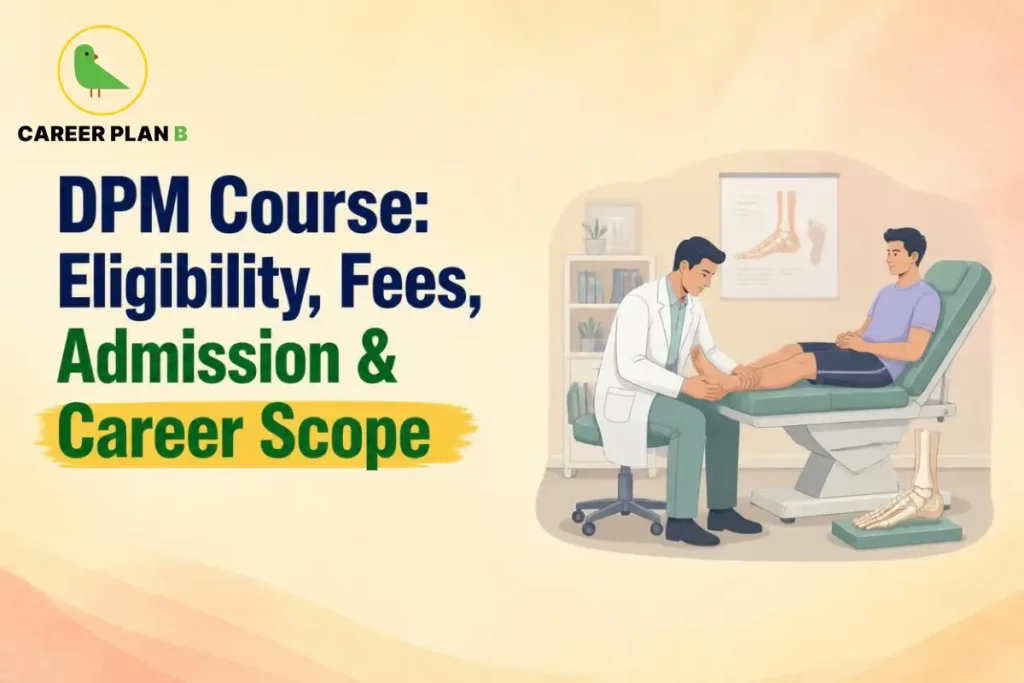
An MBBS degree opens several postgraduate paths, yet doctors who want focused training in psychiatry may look beyond the usual MD route. DPM, or Diploma in Psychological Medicine, offers a postgraduate medical diploma route after MBBS with focused training in psychiatry. DPM admission uses the NEET PG route, and the course generally runs for two years. NMC has introduced an important change for diploma aspirants: the 2026–27 academic year will be the last year for admission to postgraduate diploma courses.
What Is the DPM Course?
DPM stands for Diploma in Psychological Medicine. The qualification focuses on psychiatric assessment, diagnosis, treatment, rehabilitation and community mental-health care. Institutions may use closely related names such as Diploma in Psychiatric Medicine or Psychiatric Medicine (DPM).
The course trains MBBS doctors to manage common psychiatric disorders, assess psychiatric emergencies, understand psychopharmacology, provide patient counselling and work with multidisciplinary mental-health teams. Deccan College of Medical Sciences describes its DPM programme as postgraduate clinical training that prepares doctors to diagnose and treat psychiatric disorders and provide preventive, curative and rehabilitative care.
DPM should not be confused with a general psychology degree. DPM is a postgraduate medical qualification pursued by doctors after MBBS. The academic and clinical framework centres on psychiatry and medical care.
You can verify the terminology through the NMC official website and institutional course records. The Tamil Nadu Dr. M.G.R. Medical University lists Diploma in Psychological Medicine as D.P.M. under its medical courses.
What Is DPM Eligibility After MBBS?
Candidates usually need an MBBS qualification, medical registration and completion of the required one-year compulsory internship to enter a DPM programme through NEET PG.
For the NEET PG 2026 cycle, NBEMS set 30 September 2026 as the internship completion cut-off. NBEMS lists NEET PG as the entrance examination used for admission to postgraduate medical programmes that include PG Diploma courses.
DPM Eligibility Checklist
| Requirement | Requirement for DPM admission |
|---|---|
| Medical qualification | Recognised MBBS degree or applicable provisional qualification |
| Internship | One-year compulsory rotating internship as per applicable rules |
| Registration | Valid medical registration as required by NEET PG and counselling authorities |
| Entrance examination | NEET PG |
| Counselling | Relevant central or state counselling authority |
Candidates should check the current NEET PG information bulletin before applying because the eligibility rules, documents and cut-off dates can change between admission cycles. The official NBEMS NEET PG portal publishes the latest examination information.
For Personalized Guidance
How Does DPM Admission Work?
DPM Admission After MBBS: Step-by-Step
- Complete MBBS requirements – Complete the required internship and obtain the medical registration documents needed for admission.
- Appear for NEET PG – NEET PG provides the common entrance route for MD, MS and PG Diploma admissions. State governments, private medical colleges and universities do not conduct a separate entrance examination for these courses.
- Participate in counselling – Candidates use the counselling platform that covers the seat they wish to pursue. MCC conducts counselling for 50% All India Quota postgraduate seats and several centrally administered categories. State counselling authorities handle applicable state-level seats.
- Check the current seat matrix – DPM has very limited seat availability in comparison with many mainstream PG branches. Candidates should check the latest NMC-approved seat matrix instead of relying on old college lists.
- Fill choices and complete reporting – Enter eligible DPM colleges in the preference list, follow allotment instructions, verify documents and complete admission within the notified deadline.
Candidates can understand the choice-filling and allotment stages through Career Plan B’s guide on NEET PG Counselling Process.
DPM NEET PG 2026: What Should Candidates Know?
NEET PG 2026 carries special importance for DPM aspirants. NBEMS notified 30 August 2026 as the NEET PG 2026 examination date and 30 September 2026 as the internship completion cut-off for eligibility. NBEMS later issued notices relating to the examination conducted for affected candidates at specified Jaipur centres.
The bigger development comes from NMC. In its 22 June 2026 notice, NMC stated that postgraduate diploma courses will be phased out and converted into corresponding postgraduate broad-specialty degree courses. The notice states that AY 2026–27 is the last academic year for admission to PG Diploma courses, with no new PG Diploma admissions from AY 2027–28.
This change makes official seat verification especially important for anyone researching DPM admission after MBBS.
What Is the DPM Course Duration?
The DPM course duration is generally two years. JSS University’s postgraduate regulations identify Psychiatric Medicine (DPM) as a postgraduate diploma course, while its academic records list PG Diploma programmes with a two-year duration.
The course combines academic study with clinical training. JSS’s DPM curriculum expects trainees to develop knowledge of common psychiatric disorders, psychiatric emergencies, social and environmental factors, clinical management, ethical practice, communication and continuing medical education.
DPM Syllabus: What Will You Study?
The syllabus covers the medical and behavioural foundations of psychiatry along with supervised clinical work.
| Subject area | Major topics |
|---|---|
| Basic sciences | Neuroanatomy, neurophysiology, neurochemistry |
| Psychology | General psychology, abnormal psychology, social psychology, psychometry |
| Clinical psychiatry | Assessment, diagnosis and management of psychiatric disorders |
| Therapeutics | Psychopharmacology and psychotherapy |
| Specialities | Child and adolescent psychiatry, geriatric psychiatry |
| Related subjects | Neurology and medicine-related psychiatry |
| Emergency care | Psychiatric emergencies and crisis management |
| Community psychiatry | Prevention, rehabilitation and mental-health programmes |
The Tamil Nadu Dr. M.G.R. Medical University’s official DPM question bank includes basic sciences related to psychiatry, clinical psychiatry, psychiatric specialities, and medicine and neurology-related psychiatry.
Deccan College’s published DPM curriculum includes diagnostic procedures, rational drug therapy, rehabilitation, psychiatric emergencies, child and adolescent psychiatry, geriatric psychiatry, legal issues and ethical practice.
What Are DPM Fees in India?
DPM fees in India do not follow one fixed national amount. Fees vary with the institution, university, quota, state regulations and admission category.
| Institute | Category | Fees (per year) | Stipend year 1 |
|---|---|---|---|
| Guntur Medical college, Guntur | AIQ | ₹25,000/- | ₹60,823/- |
| Lokmanya Tilak Sion, Mumbai | AIQ | ₹1,57,100/- | ₹93,559/- |
| JSS Medical college, Mysore | MNG | ₹14 lakh | ₹45,000/- |
A candidate should check the current fee notification issued by the concerned university, medical college or state authority before paying any amount.
For DPM aspirants, the total cost can include:
- Tuition fee
- University fee
- Examination fee
- Hostel and accommodation charges
- Other institutional charges
Do not use old DPM fee figures as current 2026–27 fees. Colleges can revise fee schedules, and government fee orders can apply to specific states or admission categories.
Which Are the DPM Colleges in India?
The number of active DPM seats remains limited. The NMC postgraduate seat matrix has listed DPM seats at institutions such as JSS Medical College, Mysore, and Deccan College of Medical Sciences, Hyderabad. The NMC matrix records one DPM seat at JSS Medical College and one DPM seat at Deccan College of Medical Sciences in the relevant published seat data.
JSS University’s current academic-programme page lists Psychiatric Medicine (DPM) with an intake of one seat.
KNRUHS lists Diploma in Psychiatric Medicine (DPM) among its two-year medical diploma courses.
The NMC PG seat matrix provides the official reference for recognised postgraduate seats.
What Is the Scope of DPM After MBBS?
The DPM scope after MBBS centres on psychiatry and mental-health care.
A DPM-qualified doctor can build a career in settings such as:
- Hospitals and psychiatric departments
- Mental-health clinics
- De-addiction and rehabilitation services
- Community mental-health programmes
- Institutional psychiatric care
- Medical education and clinical support roles, subject to applicable rules
DPM training can support clinical work involving psychiatric assessment and management. Deccan College’s published objectives include diagnosis, treatment, rehabilitation, psychiatric emergency management and community mental-health care.
Career opportunities depend on the doctor’s registration, qualification recognition, employer requirements and the rules applicable to the position.
Doctors comparing DPM with other NEET PG options can use Career Plan B’s NEET PG Branch Selection Guide to understand how different postgraduate pathways shape training and career planning.
DPM vs MD Psychiatry
DPM and MD Psychiatry both focus on psychiatry, but they represent different postgraduate qualification structures.
| Factor | DPM | MD Psychiatry |
|---|---|---|
| Qualification type | Postgraduate medical diploma | Postgraduate medical degree |
| Entry route | NEET PG | NEET PG |
| Typical duration | 2 years | 3 years |
| Focus | Psychiatry-focused diploma training | Broad-specialty postgraduate psychiatry training |
| Current status | Final PG Diploma admission cycle in AY 2026–27 | Continues under the PG degree structure |
NMC’s June 2026 notice changes the future of PG Diploma admissions. AY 2026–27 remains the last academic year for fresh PG Diploma admissions under the current NMC decision.
How Career Plan B Helps
Choosing a postgraduate medical pathway requires more than checking a course name.
Career Plan B provides Personalized Career Counselling, PsycheIntel and Career Assessment Tests, Admission and Academic Profile Guidance, and Career Roadmapping to help doctors compare options, understand admission requirements and build a practical postgraduate plan.
Get In Touch With Us
FAQs
Q1. What is DPM after MBBS?
DPM is a postgraduate medical diploma focused on psychiatry and psychological medicine. Eligible MBBS graduates can pursue it through the applicable NEET PG admission route. The programme generally provides two years of focused psychiatric training.
Q2. Is NEET PG required for DPM admission after MBBS?
Yes. NEET PG serves as the common entrance examination for admission to PG Diploma courses, including DPM, under the applicable admission framework. Individual state or private medical colleges do not conduct a separate entrance examination for these courses.
Q3. What is the DPM course duration?
The DPM course duration is generally two years. JSS academic regulations classify Psychiatric Medicine (DPM) as a two-year postgraduate diploma pathway.
Q4. What are the DPM fees in India?
DPM fees in India vary by college, university, state, quota and category. Candidates should use the current fee notification issued by the respective institution or government authority before admission.
Q5. Which DPM colleges in India offer the course?
Published NMC seat data includes DPM seats at institutions such as JSS Medical College, Mysore, and Deccan College of Medical Sciences, Hyderabad. Candidates should verify the latest NMC matrix before applying.
Q6. What is the DPM scope after MBBS?
DPM can support careers in psychiatric hospitals, mental-health clinics, rehabilitation services, de-addiction care and community mental-health settings. Job eligibility depends on registration and the requirements of the specific role.
Conclusion
The DPM course gives MBBS graduates focused postgraduate training in psychiatry through a diploma pathway. Eligibility, NEET PG admission, two-year training, syllabus, fees and college availability all need careful verification before choice filling. The 2026–27 cycle carries extra importance because NMC has declared it the final admission year for postgraduate diploma courses.
Planning DPM after MBBS? Check the latest NMC, NBEMS and counselling notifications before submitting your choices, and use structured career guidance to map your next step.