Team Career Plan B · September 30, 2026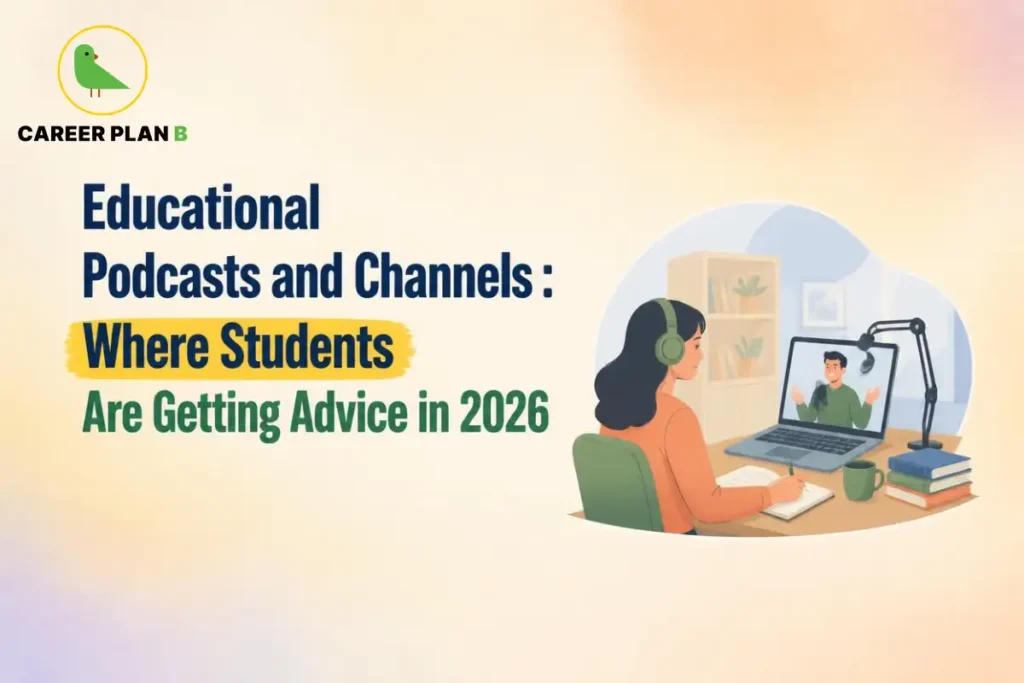
Introduction
Educational podcasts for students have quietly replaced a lot of the career advice that used to come only from parents, teachers, or a single school counsellor. Students today pull genuine career advice for students from YouTube channels, long-form podcast interviews, and creator-led content, often alongside, not instead of, traditional guidance.
This guide covers where students are actually finding this kind of content in 2026, how to tell genuinely useful career advice from generic motivational content, and how to use these resources as a supplement to structured counselling rather than a replacement for it.
Why Students Have Shifted Toward This Kind of Content
Real Conversations Feel More Honest Than Formal Advice
Long-form podcast interviews let professionals speak candidly about their actual career journey, including failures and uncertainty, in a way formal career counselling sessions sometimes don’t capture as naturally. Students often find this candour more relatable than polished, formal guidance alone.
Accessibility Has Genuinely Changed the Landscape
A student in a small town now has the same access to a detailed interview with an industry professional as a student in a major city, purely through YouTube or a podcast app. This accessibility has genuinely democratised exposure to different career paths in a way that wasn’t possible even a decade ago.
Categories of Career-Focused Content Worth Knowing
Dedicated Career and Education Channels
Channels like StudyIQ combine exam preparation content with broader career guidance, interviews with toppers, and discussions of different professional paths, particularly relevant for students preparing for competitive or government exams. Career Launcher’s own podcast similarly focuses specifically on helping students navigate career decisions through expert interviews.
Broader Interview and Conversation-Style Podcasts
Larger interview-style podcasts, such as The Ranveer Show , cover career journeys as part of a wider conversation about self-improvement, entrepreneurship, and personal growth, featuring guests from many different professional backgrounds. This format often gives students exposure to career paths they wouldn’t otherwise encounter directly.
Business and Entrepreneurship-Focused Channels
Channels like Dr. Vivek Bindra’s focus specifically on business strategy, leadership, and entrepreneurship, useful for students genuinely interested in building their own venture rather than a traditional employment path. This content suits a narrower, more specific audience than general career guidance channels.
General Motivational and Self-Improvement Content
Broader motivational content, including channels like Sandeep Maheshwari’s, touches on career-adjacent themes like focus, decision-making, and handling pressure, without necessarily providing specific career-path guidance. This content works best as a supplement to concentration and mindset, not as a substitute for concrete career research.
How to Tell Genuinely Useful Content From Generic Noise
Look for Specific, Verifiable Detail
Genuinely useful career content includes specific, checkable details: named institutions, real entrance exam requirements, or concrete skill-building steps, rather than only broad, inspirational statements. Content that stays vague about actual paths and requirements offers less practical value than it might first appear.
Notice Whether Multiple Perspectives Get Represented
Strong career content acknowledges genuine trade-offs and uncertainty, rather than presenting one single path as universally correct. Be more cautious of content that presents an oversimplified, one-size-fits-all career formula as guaranteed success.
Check How Current the Information Actually Is
Entrance exam formats, specific eligibility criteria, and industry demand all shift over time, so verify any specific factual claim, like an exam pattern or eligibility rule, against an official, current source before relying on it. A podcast or video from even two years ago may reference outdated specifics.
Categories of Career Content at a Glance
| Content Type | What It Offers | What to Watch For |
|---|---|---|
| Dedicated career and education channels | Structured guidance, exam-specific advice, expert interviews | Verify specific exam or eligibility details against current official sources |
| Broad interview-style podcasts | Exposure to varied career journeys and honest personal stories | Useful for perspective, less useful for specific procedural detail |
| Business and entrepreneurship channels | Practical strategy for those building their own venture | Narrower relevance if you’re not specifically entrepreneurial |
| General motivational content | Mindset, focus, and decision-making support | Works as a supplement, not a substitute for concrete career research |
Using This Content Alongside Structured Guidance, Not Instead of It
Why This Content Works Best as a Supplement
Podcasts and YouTube channels excel at exposure and perspective, showing you career paths and real stories you might never otherwise encounter. They’re generally weaker at giving you personalized guidance based on your specific academic background, strengths, and circumstances.
Where to Verify Specific, Official Information
For structured, verified career and job information specifically, the National Career Service portal, run by the Ministry of Labour and Employment, lists role requirements, qualifications, and openings across sectors as an official complement to the broader perspective podcasts and channels offer.
For Personalized Guidance
Building a Genuinely Useful Personal Media Diet
Diversify Across the Categories Above
Rather than relying on one single channel or podcast, sample across dedicated career content, broader interview-style shows, and specific niche content relevant to your interests. This diversity protects you against any single creator’s particular blind spots or biases.
Treat Specific Claims as a Starting Point for Research
When a podcast or video mentions a specific exam, institution, or career statistic, treat that as a starting point for your own verification, not a final, settled fact. Cross-check anything genuinely important against an official or current source before acting on it.
How Career Plan B Helps
Podcasts and YouTube channels offer real perspective, but turning that into a personalised plan takes structured guidance. Career Plan B helps you build that plan through:
- Personalized Career Counselling to turn broad inspiration from podcasts and channels into a plan specific to you.
- PsycheIntel Career Assessment Tests to ground your career exploration in genuine, structured self-assessment.
- Career Roadmapping to combine what you learn from media content with a concrete, staged plan.
- Admission & Academic Profile Guidance to verify and act on specific claims you encounter in career content.
Get In Touch With Us
Frequently Asked Questions
1. Can educational podcasts for students genuinely replace formal career counselling?
No, not entirely. They offer real perspective and exposure to different career paths, but they generally can’t account for your specific academic background, circumstances, or personal strengths the way structured counselling can.
2. How do I find career advice for students that’s actually relevant to my specific field?
Search for content specifically focused on your field of interest rather than only general motivational channels, and prioritise creators who cite specific, verifiable details over those offering only broad inspiration.
3. Are the best educational YouTube channels for students always the most popular ones?
Not necessarily. Popularity often reflects broad appeal or production quality more than specific relevance to your situation. A smaller, niche channel focused precisely on your field of interest may offer more genuinely useful guidance.
4. How do I verify a specific claim I heard in a career podcast or video?
Cross-check any specific exam pattern, eligibility rule, or institutional detail against an official, current source, such as the relevant regulatory body’s own website, rather than assuming the content is fully up to date.
Conclusion
Educational podcasts for students have genuinely reshaped where career advice for students comes from, adding real perspective and exposure that a single school counsellor or family conversation often can’t provide alone. Dedicated career channels, broad interview-style podcasts, and niche content each offer something different worth using deliberately.
Treat this content as a starting point for exploration and verification, not a final source of truth, and pair it with structured, personalised guidance for the decisions that genuinely matter.
Not sure how to turn career inspiration from podcasts and channels into an actual plan? Structured career counselling at Career Plan B can help you build one.