Team6 · October 3, 2026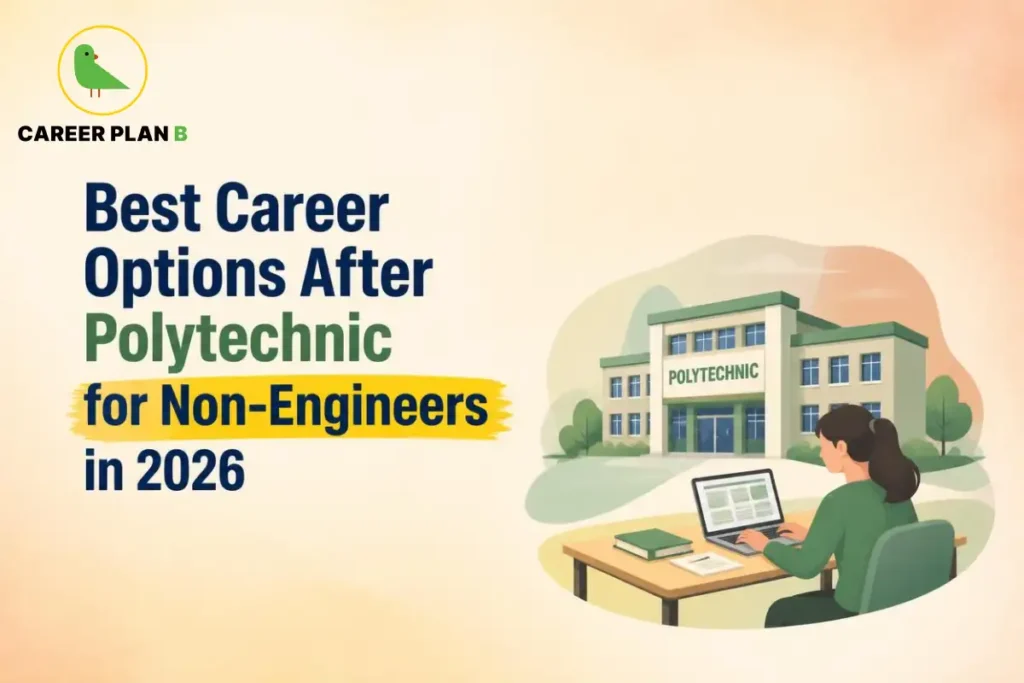
Introduction
You finished your polytechnic diploma, and now everyone assumes you’re headed straight into a workshop or a site office as a junior engineer. But what if that’s not actually what you want? Maybe you discovered along the way that you’re more drawn to management, business, government service, or something entirely different from the technical trade you trained in.
Career Options After Polytechnic for Non-Engineers are more real and more available than most students realize. A polytechnic diploma builds discipline, technical literacy, and problem-solving skills — qualities that translate well beyond a purely engineering role, if you know where to look.
This blog is for every diploma holder who’s quietly wondering, “Is core engineering really my only path from here?” It isn’t. Let’s walk through what else is genuinely open to you in 2026.
Best Courses After Polytechnic (Beyond Core Engineering)
If you’re looking for Best Courses After Polytechnic that move you away from a purely technical trajectory, here are legitimate directions to consider:
- B.Tech via lateral entry (if you want the engineering degree but not necessarily the field job) – The AICTE permits diploma holders to enter the second year of a B.Tech program directly, skipping the first year. This route can also open doors to engineering-adjacent roles like technical sales, project management, or R&D, which are less hands-on than a purely core engineering job.
- BBA or B.Com – Many universities accept polytechnic diploma holders into business and commerce undergraduate programs, opening paths into management, finance, and operations roles that value your technical background as an asset.
- Government exams and public sector roles – Diploma holders are eligible for a range of government job exams (technical and non-technical categories), including roles in railways, public sector undertakings, and state government departments.
- Design and vocational specializations – If your polytechnic branch touches on design, manufacturing, or product-related work, a shift into product design or UX-adjacent fields can be a natural extension without going the traditional engineering-career route.
- Entrepreneurship and vocational skill certification – Many diploma holders use their technical grounding to start small manufacturing, repair, or service businesses, sometimes supported by skill-certification programs aligned with sector skill councils.
The key insight here: your diploma doesn’t lock you into one specific job title. It’s a technical foundation you can build almost any direction from.
Career Opportunities After Polytechnic in Non-Technical Roles
Beyond formal further education, here are direct Career Opportunities After Polytechnic that don’t require you to work as a core engineer:
- Technical sales and business development – Companies value candidates who understand the product technically but want to work in client-facing, sales-oriented roles rather than the workshop.
- Quality assurance and compliance roles – These roles use your technical knowledge for standards, testing, and compliance work, which is often less field-intensive than core engineering.
- Project coordination and operations – Managing timelines, vendors, and logistics for technical projects, without being the one doing hands-on engineering work yourself.
- Teaching and training – With additional certification, experienced diploma holders can move into technical training or vocational teaching roles.
- Government and public sector technical-adjacent posts – Many public sector job categories value diploma-level technical knowledge for supervisory, inspection, or administrative roles rather than pure fieldwork.
If you enjoyed parts of your diploma — problem-solving, understanding how things work — but didn’t enjoy the idea of being on a shop floor or construction site daily, these roles let you keep the technical grounding while shifting the actual day-to-day work.
Polytechnic Career Options After Diploma: A Decision Framework
Choosing your next step can feel overwhelming, so here’s a simple way to think through Polytechnic Career Options After Diploma:
| If you want… | Consider… |
|---|---|
| A recognized engineering degree, but a less field-heavy career | B.Tech (lateral entry) + roles in sales, project management, or R&D |
| A shift into business/management | BBA, B.Com, or a management-focused degree |
| Job security through government service | Diploma-eligible government exams (technical and non-technical) |
| To build something of your own | Entrepreneurship using your technical skills, possibly with skill certification support |
| To keep learning without leaving the workforce | Part-time or distance-mode higher education while working |
There’s no single “correct” answer here — it depends on what parts of your polytechnic experience you actually enjoyed versus tolerated.
Have Any Doubts?
Higher Education After Polytechnic: Your Options Explained
If further study is your priority, Higher Education After Polytechnic branches into a few distinct tracks:
- Lateral entry into B.Tech – The most direct academic extension of your diploma, letting you complete an engineering degree in three years instead of four, entering directly into the second year.
- Cross-stream undergraduate degrees – Many universities allow diploma holders to pursue degrees like BBA, B.Com, or even certain B.Sc. programs, sometimes with bridge courses to cover gaps.
- Distance and open-mode degrees – If you want to start working immediately while still studying, UGC-recognized open and distance-mode universities offer flexible degree options alongside employment.
- Postgraduate diplomas and certifications – Shorter, focused programs in management, quality control, or specific technical specializations can add real value without a full multi-year degree commitment.
Whichever route you choose, verify the specific university or program’s recognition status directly — through AICTE for technical degrees or UGC for general higher education — before enrolling.
Read more :- Empowering Your Future: Setting Career Goals After ITI or Polytechnic
Polytechnic Careers 2026: What’s Changing
Looking at Polytechnic Careers 2026 specifically, a few shifts are worth knowing about:
- Lateral entry remains a well-established, AICTE-recognized pathway, with B.Tech lateral entry degrees treated as equivalent to a regular B.Tech for most employment purposes.
- Government skilling missions continue to expand support for diploma holders looking to combine vocational skills with entrepreneurship or further certification, through recognized sector skill councils.
- Cross-stream admissions are increasingly common, with more universities explicitly welcoming diploma holders into business, design, and management programs, recognizing the value of their technical foundation.
- Government exam eligibility for diploma holders remains a stable, reliable route, particularly for technical-adjacent and supervisory government roles.
The overall direction is positive: institutions and employers increasingly see a polytechnic diploma as a flexible technical foundation, not a narrow track into one specific job.
How Career Plan B Helps
If you’ve finished polytechnic and aren’t sure core engineering is really your path, Career Plan B helps you map out what genuinely fits you instead.
- Personalized Career Counselling: We help you identify which parts of your polytechnic experience you actually want to build on, and which you’d rather leave behind.
- Psychometric & Career Assessment Tests: Our assessments reveal whether you’re better suited to technical, managerial, or entirely different career directions.
- Career Roadmapping: We map out a realistic plan, whether that’s lateral entry, a cross-stream degree, or a government exam route.
- Admission & Academic Profile Guidance: We help you verify recognition status for any degree or program you’re considering, so your next step is genuinely valid and worth your time.
Get In Touch With Us
Frequently Asked Questions
1. Can a polytechnic diploma holder pursue a career outside core engineering?
Yes. Diploma holders can move into business, management, government service, technical sales, and several other fields, either directly or through further education.
2. Is lateral entry into B.Tech only useful if I want to be a core engineer?
No. A B.Tech via lateral entry is also valuable if you want engineering-adjacent roles like project management, technical sales, or R&D, which are less hands-on than core fieldwork.
3. Can I pursue BBA or B.Com after a polytechnic diploma?
Yes, many universities accept polytechnic diploma holders into business and commerce undergraduate programs, sometimes with bridge courses to cover any gaps.
4. Are government jobs a good option for polytechnic diploma holders who don’t want core engineering roles?
Yes. Diploma holders are eligible for various government exams, including technical-adjacent and supervisory roles beyond pure fieldwork.
5. Do I need to give up my technical background if I choose a non-engineering career?
Not at all. Your technical foundation remains valuable in fields like technical sales, project management, quality assurance, and entrepreneurship, even if your day-to-day work isn’t purely technical.
Conclusion
A polytechnic diploma doesn’t have to lock you into a single, narrow career path. Whether it’s lateral entry into engineering, a shift into business and management, government service, or building something of your own, genuine and respected options exist well beyond the traditional core-engineering route.
The real work is figuring out which direction actually fits you, not just which one seems expected. If you’re a polytechnic graduate weighing your next move, Career Plan B is here to help you choose a path that’s genuinely yours.