Team6 · October 3, 2026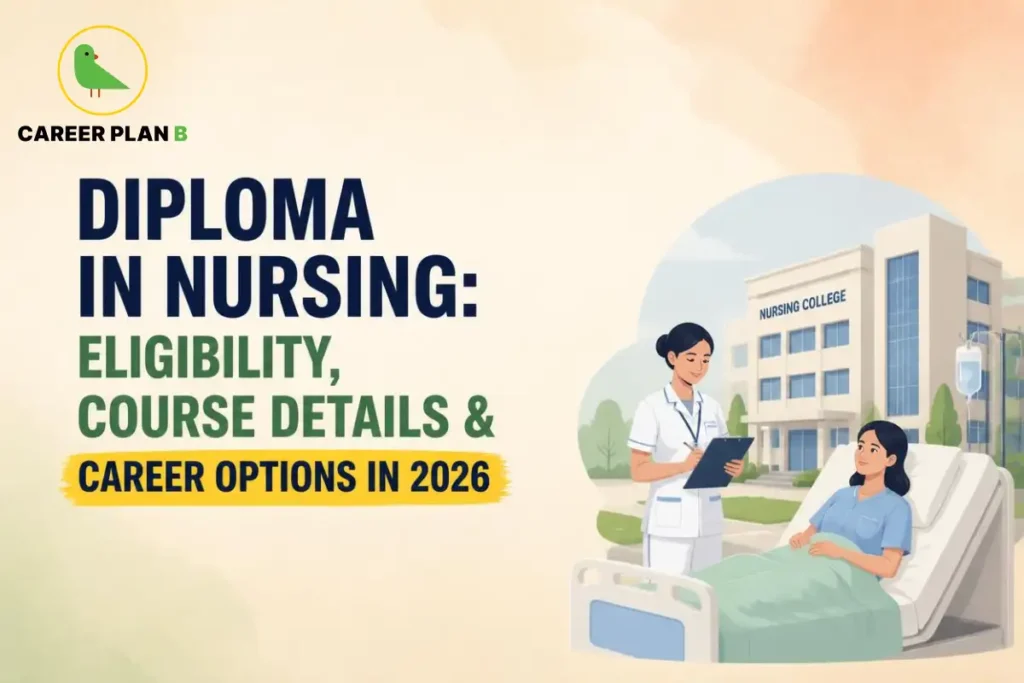
Introduction
There’s a quiet kind of respect reserved for nurses — the people who show up during someone’s hardest day and make it a little more bearable. If that’s the kind of impact you want to have, a Diploma in Nursing could be exactly the path you’re looking for.
In India, the Diploma in Nursing most commonly refers to General Nursing and Midwifery (GNM), a well-established, government-regulated program that trains students for real, hands-on nursing careers. It’s a path known for genuine job stability, steady demand, and the chance to start working sooner than a full degree would allow.
This blog covers everything a student or parent needs to know — eligibility, what the course actually involves, admission steps, and where a nursing diploma can genuinely take your career in 2026.
Diploma in Nursing Eligibility
Before anything else, here’s what you need to know about Diploma in Nursing Eligibility for the GNM programme, as set by the Indian Nursing Council (INC), India’s apex statutory body for nursing education:
- Educational qualification – Class 12 pass with English as a subject, from a recognized board. Unlike many healthcare courses, GNM doesn’t strictly require a Science stream — students from Arts and Commerce backgrounds are generally eligible too, provided they meet the minimum marks criteria.
- Minimum marks – Typically around 40-45% aggregate in Class 12, along with a minimum score in English specifically, though exact percentages can vary slightly by state and institution.
- Age limit – Generally between 17 and 35 years, though this can vary by state nursing council.
- Additional eligible categories – Registered ANMs (Auxiliary Nurse Midwives) and candidates from NIOS or State Open School boards are also generally eligible.
This relatively open eligibility is one of the best things about the Diploma in Nursing — it doesn’t lock out students who didn’t take Science in Class 12, which is unusual among healthcare-adjacent courses.
Read more :- Diploma in Nursing Course in India – Eligibility, Admission 2025, Fees, Syllabus, Jobs
Diploma in Nursing Course Details
Understanding the Diploma in Nursing Course Details helps set realistic expectations before you commit:
- Duration – GNM is a 3.5-year program: three years of academic and clinical training, followed by a mandatory six-month internship.
- Regulatory body – The course is regulated by the Indian Nursing Council (INC) at the national level, with respective State Nursing Councils overseeing implementation and registration.
- Core subjects – Training covers anatomy and physiology, microbiology, nursing foundations, community health nursing, midwifery, mental health nursing, and pharmacology.
- Clinical exposure – A significant part of the programme involves hands-on clinical training in hospital settings, which is essential for building real patient-care skills before you graduate.
- Post-course registration – After completing GNM, graduates register as a Registered Nurse and Midwife (RN/RM) with their State Nursing Council, which is a mandatory step to legally practice.
The structure is intentionally practical — by the time you finish, you’re expected to be genuinely ready for hands-on nursing work, not just academically qualified.
Nursing Diploma After 12th: The Admission Route
If you’re exploring a Nursing Diploma After 12th, here’s how the pathway generally works:
- Government nursing colleges – Admission is typically based on a state-level entrance exam combined with Class 12 merit, followed by a counselling process.
- Private nursing colleges – Many private institutions offer direct admission based on Class 12 marks, without a separate entrance exam, though this varies by college and state.
- INC-approved institutions only – It’s essential to verify that any college you’re considering is INC-approved, since only INC-recognized programmes lead to valid registration as a nurse.
Because eligibility rules, entrance exam requirements, and application timelines vary by state, always check your specific State Nursing Council’s official notification rather than relying on a generic national picture.
Have Any Doubts?
Diploma in Nursing Career Options
This is where the Diploma in Nursing really shines — genuine, stable Diploma in Nursing Career Options across multiple settings:
| Setting | Typical Role |
|---|---|
| Government hospitals | Staff nurse, community health nurse |
| Private hospitals & clinics | Clinical care nurse, ward nurse |
| Community health centres | Public health and community nursing roles |
| Further study | Progression to Post-Basic B.Sc. Nursing |
A few things make this career path genuinely appealing for the right student:
- Government job opportunities – Government hospitals and health institutes regularly recruit GNM-qualified nurses, often with solid job security and benefits.
- Steady demand – Nursing remains one of the most consistently in-demand healthcare roles in India, driven by ongoing hospital expansion and public health needs.
- A genuine pathway to grow further – GNM graduates can pursue a Post-Basic B.Sc Nursing programme later, allowing you to upgrade your qualification without starting from scratch.
If you want to start working sooner rather than committing to a longer degree upfront, while still keeping the door open to further study, GNM offers a genuinely practical middle path.
Diploma in Nursing Admission 2026
Here’s a practical checklist for Diploma in Nursing Admission 2026:
- Check your state’s specific GNM notification – Eligibility percentages, entrance exam formats, and application windows vary by state, so always refer to your State Nursing Council’s official announcement.
- Confirm INC approval of the institute – This step isn’t optional; only INC-approved programmes lead to valid registration as a nurse.
- Prepare required documents early – Class 12 marksheet, age proof, category certificates (if applicable), and other standard admission documents.
- Understand the internship commitment – Remember that GNM includes a mandatory six-month internship as part of the 3.5-year programme, not an optional add-on.
- Ask about hostel and clinical training facilities – Since much of your training happens in hospital settings, understanding the practical training infrastructure matters as much as the classroom curriculum.
How Career Plan B Helps
Choosing nursing as a career is a meaningful decision — Career Plan B helps you make it with clarity and confidence.
- Personalized Career Counselling: We help you understand whether nursing genuinely fits your interests and temperament, beyond just the career stability it offers.
- Psychometric & Career Assessment Tests: Our assessments reveal whether patient-facing, hands-on healthcare work matches your natural strengths.
- Career Roadmapping: We map out your path clearly, including how GNM can lead into further studies like Post-Basic B.Sc Nursing.
- Admission & Academic Profile Guidance: We help you verify INC approval and your specific state’s eligibility criteria, so your admission decision is well-informed.
Get In Touch With Us
Frequently Asked Questions
1. Do I need a Science background to pursue a Diploma in Nursing?
No. GNM eligibility generally allows students from Science, Arts, or Commerce backgrounds, as long as you’ve passed Class 12 with English and meet the minimum marks criteria.
2. How long does the Diploma in Nursing (GNM) course take?
GNM is a 3.5-year programme: three years of academic and clinical training, followed by a mandatory six-month internship.
3. Is NEET required for the Diploma in Nursing?
No, GNM does not require NEET. Admission is typically based on state-level entrance exams or Class 12 merit, depending on the institution and state.
4. Can I pursue further studies after completing GNM?
Yes. GNM graduates are eligible to pursue a Post-Basic B.Sc Nursing programme, allowing you to upgrade your qualification without starting over.
5. How do I know if a nursing college is legitimate?
Always verify that the institute is approved by the Indian Nursing Council (INC) and your respective State Nursing Council before enrolling, since only INC-recognized programmes lead to valid registration as a nurse.
Conclusion
A Diploma in Nursing offers a genuine, respected, and stable entry into healthcare, without requiring a Science background or a national entrance exam. With solid government job prospects and a clear path to further studies, it’s a career choice that rewards both practicality and purpose.
If nursing feels like the right calling for you, or you’re still weighing it against other healthcare paths, Career Plan B is here to help you make a confident, well-informed decision.