Team6 · October 8, 2026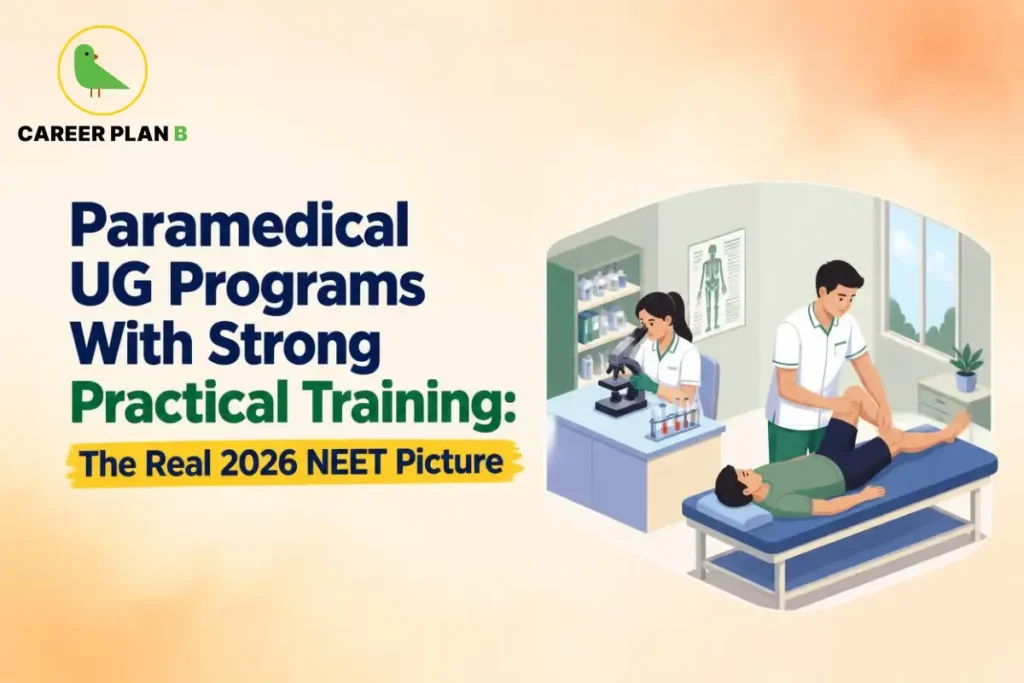
Introduction
Paramedical education has always been genuinely hands-on, built around clinical placements and practical skill-building rather than pure classroom theory, and that structural strength hasn’t changed. What has genuinely changed is the admission requirement sitting in front of that training, and any search suggesting these programmes remain “no NEET needed” needs an update before you plan around it, since the very cycle you’re likely applying to is where this shift takes effect.
This guide covers both halves honestly: the real, currently unfolding NEET requirement shift, and the genuine practical training structure that makes paramedical education valuable once you’re admitted.
The Admission Reality You Need First
Before discussing training structure, here’s the fact that reshapes your entire application timeline: the National Commission for Allied and Healthcare Professions, the statutory regulator under the NCAHP Act, 2021, has confirmed NEET as a mandatory eligibility criterion for most Allied and Healthcare undergraduate programmes starting the 2026-27 academic year, covering physiotherapy, optometry, medical laboratory technology, radiology and imaging technology, and nutrition and dietetics among its currently notified curricula (source: ncahp.abdm.gov.in). If you’re researching these specific fields assuming NEET-free admission, that assumption is genuinely outdated for the cycle you’re likely applying to.
Paramedical Programs NEET Requirement: What’s Confirmed vs. Still Uncertain
Paramedical Programs NEET Requirement currently applies specifically to courses covered under NCAHP’s 13 notified curricula so far. Courses NCAHP hasn’t yet issued a notified curriculum for may continue admitting without NEET, at least for now, though the Commission has explicitly stated it continues releasing additional curricula, meaning today’s uncovered courses could be added at any point. This is precisely why checking your specific target course’s current status directly matters more than trusting any general list, including this one, once enough time has passed.
Paramedical Courses With Clinical Training: What Genuine Practical Structure Looks Like
Paramedical Courses With Clinical Training, regardless of which admission route eventually applies, share a common structural strength: substantial hands-on placement time built directly into the curriculum, typically including hospital rotations, laboratory practicals, and supervised patient interaction under qualified professionals. This practical emphasis is precisely what distinguishes paramedical education from a purely theoretical science degree, and it remains genuinely intact even as the admission process shifts around it.
Have Any Doubts?
Hands-On Paramedical Education India: How Training Structure Typically Works
Hands-On Paramedical Education India generally follows a progressive structure: foundational theory and lab basics in the early terms, followed by increasing clinical exposure through hospital or facility placements in later years, culminating in a supervised internship or practicum before graduation. This progression matters genuinely for skill development, since allied health roles, whether physiotherapy, lab technology, or radiology, require hands-on competency that classroom instruction alone cannot build. When evaluating a specific institution, request details on actual clinical placement partnerships and supervised hours, not just a general claim of “practical training included.”
Practical Training in Allied Health Courses: What to Verify Before Enrolling
Practical Training in Allied Health Courses varies genuinely in depth and quality across institutions, making direct verification essential. Ask specifically which hospitals or facilities host clinical placements, how many supervised hours the curriculum guarantees, and whether faculty overseeing practical components hold genuine, current clinical experience rather than purely academic backgrounds. A strong theoretical curriculum without genuine, substantial clinical placement time produces graduates less prepared for actual allied health practice, regardless of how the admission process worked.
Read more:- Career in Baking & Culinary Arts: No JEE/NEET Needed
Paramedical UG Admission 2026: Your Combined Action Plan
For Paramedical UG Admission 2026, combine both halves of this guide into one practical plan: first, check NCAHP’s current notified curricula list to confirm whether your target course requires NEET, and register for it immediately if so. Second, regardless of admission route, evaluate your shortlisted institutions specifically on genuine clinical placement quality, hospital partnerships, supervised hours, and faculty clinical credentials, since this practical training structure determines how prepared you’ll actually be for allied health practice after graduation.
How Career Plan B Helps
Navigating both the shifting NEET requirement and genuine practical training quality across paramedical programmes takes real, current, and detailed guidance.That’s where Career Plan B comes in.
- Personalized Career Counselling: Helps you evaluate genuine paramedical paths in light of NCAHP’s evolving NEET requirement.
- Psychometric & Career Assessment Tests: Identifies whether hands-on, patient-facing allied health work genuinely suits your strengths.
- Career Roadmapping: Builds a realistic plan accounting for NEET preparation alongside evaluating genuine clinical training quality.
- Admission & Academic Profile Guidance: Supports you in verifying both your target course’s current NCAHP status and its actual practical training structure.
Get In Touch With Us
Frequently Asked Questions
1. Is it still accurate that paramedical UG programs don’t need NEET?
Not universally. NCAHP has confirmed NEET as mandatory for most notified Allied and Healthcare curricula starting 2026-27, though some courses without a notified curriculum yet may still admit without it.
2. Does the NEET requirement change affect the actual quality of clinical training?
No. The admission process and the practical training structure are separate; NCAHP’s changes affect entry requirements, not the genuine clinical placement quality within the programme itself.
3. How do I verify genuine hands-on paramedical education India options?
Ask specifically about hospital placement partnerships, guaranteed supervised clinical hours, and faculty clinical credentials, rather than trusting a general “practical training included” claim.
4. Which paramedical programs NEET requirement currently applies to?
Physiotherapy, Optometry, Medical Laboratory Technology, Radiology and Imaging Technology, and Nutrition and Dietetics are confirmed under NCAHP’s currently notified curricula.
5. Should I prioritize admission ease or genuine practical training quality when choosing a paramedical programme?
Both matter, but practical training quality affects your actual professional competency far more long-term, so don’t let admission ease alone drive your final decision.
Conclusion
Paramedical UG Programs With Practical Training remain genuinely strong on the training side, built around real clinical placement and hands-on skill development, even as the admission landscape shifts significantly with NCAHP’s new NEET mandate for most notified curricula starting 2026-27. Treating these as two separate, equally important verification steps, admission requirement and training quality, protects you from both outdated assumptions and weak practical preparation.
Check your target course’s current NCAHP status and its genuine clinical placement structure before committing. If you’d like help navigating both aspects of this decision, Career Plan B’s counsellors are ready to guide you through it.