Team Career Plan B · October 10, 2026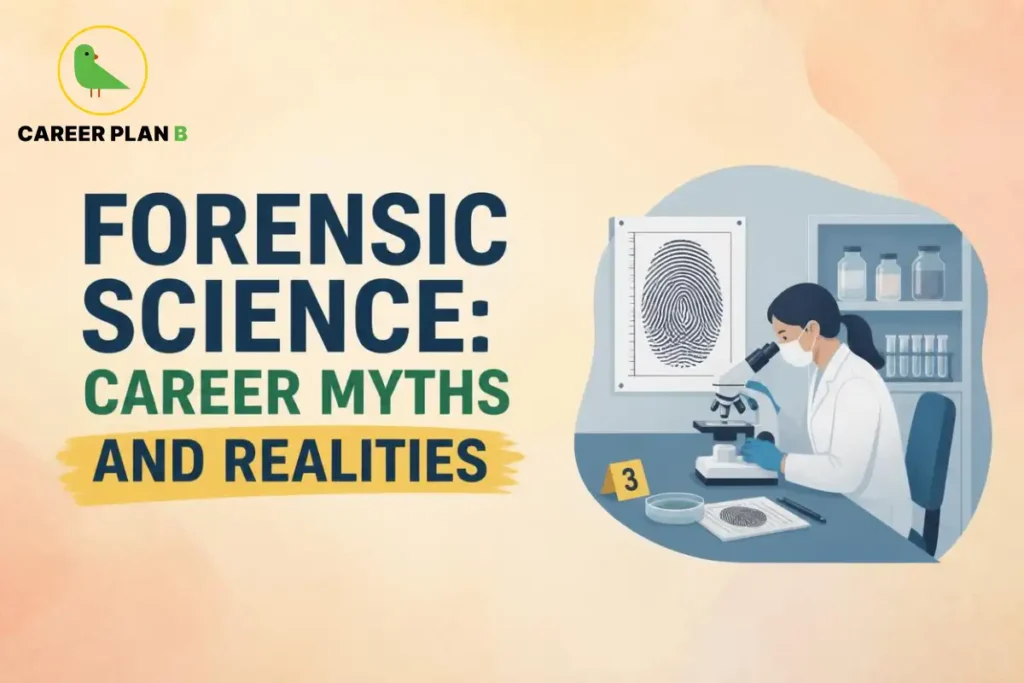
Introduction
Forensic science carries one of the widest gaps between on-screen portrayal and actual daily work of any science career. Crime shows compress weeks of lab analysis into a single dramatic scene, leaving many students with a genuinely distorted picture before they’ve even researched the field properly.
This guide covers the real myths surrounding forensic science as a career, what the work actually involves day to day, and the genuine entry route into this field in India.
Myth One: Forensic Scientists Solve Crimes Single-Handedly
What the Myth Gets Wrong
TV shows typically depict one forensic expert analysing evidence, questioning suspects, and solving an entire case independently within a single episode. Real forensic science involves specialised technicians working within a much larger investigative system, alongside police, legal professionals, and often multiple forensic specialists.
The Actual Reality
A real forensic case usually passes through several distinct specialists, a DNA analyst, a ballistics expert, a digital forensics specialist, each handling one specific piece of evidence within their own expertise. No single person typically handles an entire investigation alone.
Myth Two: Results Come Back Almost Instantly
What the Myth Gets Wrong
Crime dramas routinely show DNA or toxicology results returning within minutes, sometimes seconds, of a sample reaching the lab. This dramatic compression has genuinely shaped public expectations about how forensic analysis actually works.
The Actual Reality
Genuine forensic analysis, particularly DNA profiling and toxicology, takes real time, often days to weeks, depending on lab workload and the complexity of the specific test. This reality frustrates public expectations shaped almost entirely by television timelines.
Myth Three: Forensic Science Is Mostly About Crime Scenes
What the Myth Gets Wrong
Popular portrayal focuses almost entirely on dramatic crime scene visits, suggesting this is where forensic scientists spend most of their working time. In reality, the vast majority of forensic work happens inside a lab, not at a scene.
The Actual Reality
Most forensic professionals spend their time on detailed laboratory analysis, documentation, and report writing, work considerably more methodical and less visually dramatic than television suggests. Crime scene visits happen, but they represent a small fraction of the actual job.
The Genuine Entry Route Into Forensic Science in India
Building the Right Academic Foundation
Students typically enter forensic science through a BSc in Forensic Science directly, or through a core science degree in Chemistry, Biology, or Physics, followed by an MSc in Forensic Science. Both routes lead toward genuine, recognised forensic career paths.
The Flagship Institution Worth Knowing
The National Forensic Sciences University, recognised as an Institution of National Importance under the Ministry of Home Affairs, stands as the world’s first university dedicated entirely to forensic and allied sciences. NFSU runs structured undergraduate and postgraduate programs specifically in forensic science, alongside close collaboration with India’s Central Forensic Science Laboratories.
Forensic Science Career Myths at a Glance
| Myth | What TV Suggests | What Actually Happens |
|---|---|---|
| One expert solves everything | A single forensic scientist handles an entire case. | Multiple specialists each handle one specific type of evidence. |
| Instant results | DNA or toxicology results return within minutes. | Real analysis takes days to weeks, depending on complexity. |
| Mostly crime scene work | Forensic scientists spend most of their time at dramatic crime scenes. | Most work happens in the lab through methodical analysis and documentation. |
Real Career Paths Within Forensic Science
Government Forensic Laboratories
Central and state forensic science laboratories employ forensic professionals across specialisations including DNA analysis, ballistics, toxicology, and questioned document examination. This path offers genuine government career stability alongside meaningful investigative work.
Digital and Cyber Forensics
As digital crime has grown, demand for forensic professionals specifically trained in digital evidence, recovering and analysing data from phones, computers, and networks, has grown considerably too. This specialisation increasingly sits alongside traditional forensic disciplines within the field.
Forensic Research and Academia
Some forensic professionals move toward research and teaching roles, developing new forensic techniques or training the next generation of forensic scientists at institutions like NFSU. This path suits professionals genuinely drawn to advancing the field’s methods, not just applying existing ones.
What Genuinely Makes This Career Worth Considering
Real, Methodical Problem-Solving
Despite the mismatch with its dramatic portrayal, forensic science genuinely rewards careful, methodical problem-solving and attention to detail. This work carries real consequences, since forensic evidence directly shapes legal outcomes.
A Field With Growing, Genuine Demand
As digital crime and complex investigations have grown, genuine demand for trained, qualified forensic professionals has grown alongside it, particularly in specialisations like digital forensics. This creates real opportunity for students entering the field with proper training.
For Personalized Guidance
How to Decide if Forensic Science Fits You
Separate the TV Version From the Real Work
Before committing to this path, research what forensic science genuinely involves day to day, methodical lab analysis and detailed documentation, not dramatic scene investigation. Students drawn only to the TV version often find the actual work considerably different from their expectations.
Talk to Someone Actually Working in the Field
A genuine conversation with a working forensic professional, or a visit to a forensic lab if possible, tells you far more about the real, daily reality of this career than any dramatised portrayal ever could.
How Career Plan B Helps
Deciding whether forensic science genuinely fits you, beyond its dramatised TV image, takes real, grounded research. Career Plan B helps you build that clarity through:
- Personalized Career Counselling to separate genuine interest in forensic science from its TV portrayal.
- PsycheIntel Career Assessment Tests to confirm your aptitude for methodical, detail-oriented lab work.
- Career Roadmapping to plan your path through a forensic science degree and toward your target specialisation.
- Admission & Academic Profile Guidance to strengthen your application to institutions like NFSU.
Get In Touch With Us
Frequently Asked Questions
Q1. Is forensic science really as fast-paced as it looks on TV?
No. Genuine forensic analysis, particularly DNA and toxicology testing, takes real time, often days to weeks, depending on lab workload and test complexity, unlike the instant results TV dramas typically show.
Q2. Do I need a specific degree to enter forensic science in India?
Yes, generally. Most professionals enter through a BSc in Forensic Science directly, or a core science degree followed by an MSc in Forensic Science, rather than through an unrelated academic background.
Q3. Is digital forensics a real, separate specialisation within the field?
Yes, genuinely, and a growing one. As digital crime has increased, demand for professionals trained specifically in recovering and analysing digital evidence has grown considerably alongside traditional forensic disciplines.
Q4. Does forensic science involve a lot of crime scene visits?
Less than TV suggests. Most forensic work happens inside a laboratory through detailed analysis and documentation, with crime scene visits representing a smaller portion of the actual job than dramatised portrayals imply.
Conclusion
Forensic science genuinely rewards careful, methodical work and real attention to detail, though its actual daily reality looks considerably different from its dramatised television portrayal. Real forensic work involves specialised lab analysis, realistic timelines, and collaboration across multiple experts, not one person solving an entire case alone.
Research the genuine entry route through a forensic science degree, talk to someone actually working in the field, and separate your interest in the real work from its TV version before committing to this path.
Curious whether forensic science genuinely fits your interests, beyond its on-screen image? Structured career counsellinG at Career Plan B can help you explore this with real clarity.