Team Career Plan B · October 10, 2026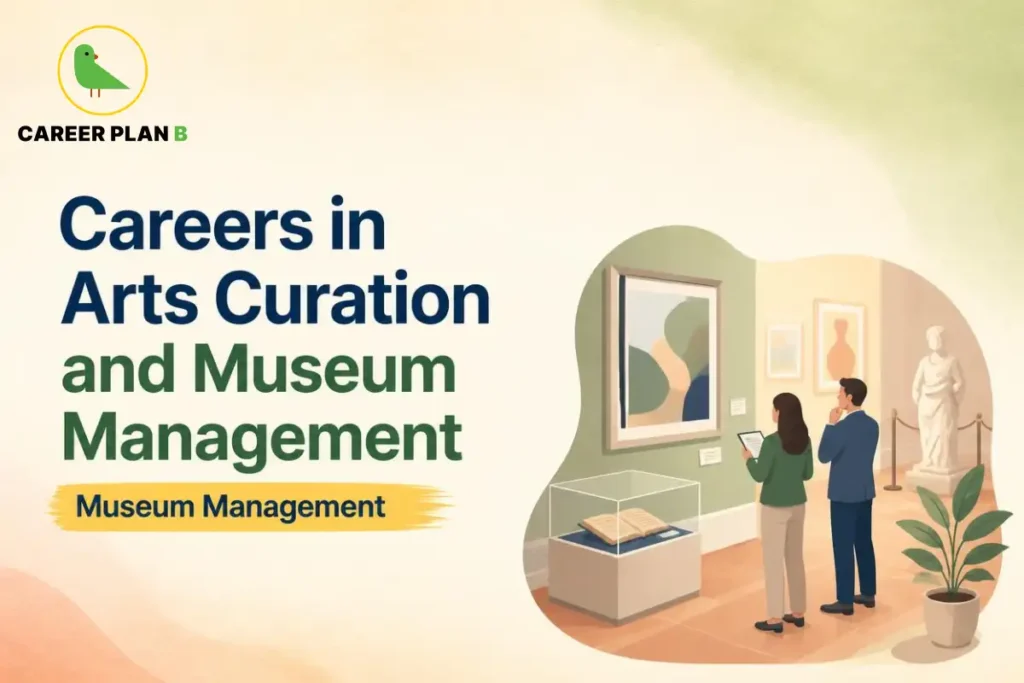
Introduction
Museum management careers rarely come up in standard career conversations, overshadowed almost entirely by more familiar creative and academic paths. Yet India runs a genuinely large, structured heritage and museum sector, backed by real government institutions most students never research seriously.
This guide covers what arts curation and museum management careers actually involve, the specific institutions training and employing professionals in this field, and how to genuinely enter this work in India.
What This Field Actually Involves
More Than Just Displaying Art
Museum management covers curation, conservation, collections research, and public education together, not simply arranging objects for display. A genuine curator researches an object’s history and significance before deciding how to present it meaningfully to the public.
Conservation as a Distinct, Technical Specialisation
Conservation work specifically focuses on preserving and restoring artefacts using scientific and technical methods, distinct from curation’s research and presentation focus. This specialisation demands genuine technical training alongside art historical knowledge.
The Real Institutional Backbone of This Field in India
The Ministry of Culture’s Role
India’s museum and heritage sector runs under the Ministry of Culture, which oversees a genuinely wide network of museums, archaeological bodies, and heritage research institutions across the country. Understanding this institutional structure helps you see the real career breadth this field actually offers.
The Flagship Training Institution
The National Museum Institute, now known as the Indian Institute of Heritage, operates as a deemed university under the Ministry of Culture, offering postgraduate degrees specifically in Museology, Conservation, and Art History. This institute stands as India’s primary dedicated training ground for museum management careers.
The Archaeological Survey of India
The Archaeological Survey of India, the country’s premier body for archaeological research and heritage site protection, employs archaeologists, conservators, and museum specialists across its network of site museums and excavation branches. This organisation offers a genuine path for students drawn specifically to archaeology-linked museum work.
The National Council of Science Museums
For students interested in science communication specifically, the National Council of Science Museums runs the world’s largest single-administration network of science museums and centres, offering roles blending museum management with science education directly.
Career Paths Within Arts Curation and Museum Management
Museum Curator
Curators research, select, and present collections, building the narrative through which the public engages with a museum’s holdings. This role rewards deep subject knowledge alongside genuine skill in communicating complex history accessibly.
Conservator
Conservators use scientific and technical methods to preserve, clean, and restore artefacts, often working with chemistry and material science alongside art historical training. This specialisation suits students genuinely interested in the technical, hands-on side of heritage work.
Museum Educator
Museum educators design programs and tours that make collections accessible and engaging to different audiences, from school groups to specialist researchers. This role rewards genuine communication skill alongside solid subject expertise.
Heritage Researcher
Heritage researchers investigate the history, provenance, and cultural context of artefacts and sites, work that directly informs how museums present their collections. This path suits students drawn to deep, genuine historical research specifically.
Museum Management Careers at a Glance
| Career Path | Core Focus | Where It Happens |
|---|---|---|
| Museum Curator | Researching and presenting collections meaningfully | National and state museums, private galleries |
| Conservator | Scientific preservation and restoration of artefacts | Museums, conservation labs, heritage sites |
| Museum Educator | Making collections accessible through programs and tours | Museums, science centres, heritage sites |
| Heritage Researcher | Investigating history and provenance of artefacts | Research institutions, museums, archaeological bodies |
How to Actually Enter This Field
Build the Right Academic Foundation
Most museum management careers require a postgraduate degree specifically in Museology, Conservation, or Art History, built on top of a relevant undergraduate background in History, Fine Arts, or a related humanities subject. Research your target specialisation’s exact academic requirements directly.
Seek Genuine Museum or Heritage Site Experience Early
Reach out to local museums or heritage sites for internship opportunities during your degree, even informal ones. Real, hands-on exposure to collections and conservation work teaches skills classroom study alone cannot fully replicate.
Explore the National Portal for Museums
The Museums of India national portal, a digital repository maintained under the Ministry of Culture, lets you research India’s museum network directly, a genuinely useful starting point for understanding the field’s real scope before committing to a specific specialisation.
For Personalized Guidance
Why This Field Deserves More Attention Than It Gets
Genuine Institutional Scale
India’s museum and heritage sector runs through a genuinely large network of national, state, and specialised institutions, from the Archaeological Survey of India’s site museums to the National Council of Science Museums’ nationwide centres. This scale supports real, structured career opportunities most students simply never research.
A Field That Rewards Genuine Depth
Museum management rewards sustained, genuine subject expertise more than many faster-moving fields, suiting students who enjoy deep research and long-term engagement with a specific area of history or culture.
How Career Plan B Helps
Exploring museum management and arts curation as a genuine career path takes real, specific research most students never do. Career Plan B helps you build that clarity through:
- Personalized Career Counselling to evaluate whether curation, conservation, or heritage research genuinely fits you.
- PsycheIntel Career Assessment Tests to confirm your aptitude for this field’s specific blend of research and communication.
- Career Roadmapping to plan your path toward institutions like the Indian Institute of Heritage.
- Admission & Academic Profile Guidance to strengthen your application for museology or conservation postgraduate programs.
Get In Touch With Us
Frequently Asked Questions
1. Do I need a history degree to enter museum management careers?
Generally, a background in History, Fine Arts, or a related humanities subject helps considerably, followed by a specific postgraduate degree in Museology or Conservation from an institution like the Indian Institute of Heritage.
2. Is conservation work more scientific than curation work?
Yes, genuinely. Conservation relies heavily on scientific and technical methods for preserving artefacts, while curation focuses more on research, selection, and presenting collections meaningfully to the public.
3. Are museum management careers only available at large national museums?
No. Opportunities exist across a wide range of institutions, including the Archaeological Survey of India’s site museums, science museums under NCSM, and various state and specialised museums across the country.
4. How do I get genuine experience in this field before committing to a postgraduate degree?
Seek internships or volunteer opportunities at local museums or heritage sites during your undergraduate years, even informal ones, since hands-on exposure teaches skills classroom study alone cannot replicate.
Conclusion
Museum management and arts curation careers in India rest on a genuinely large, structured institutional foundation, from the Ministry of Culture’s broad oversight to specialised bodies like the Archaeological Survey of India and the National Council of Science Museums. Curation, conservation, museum education, and heritage research each offer a distinct, real career path within this underexplored field.
Research your target specialisation’s specific academic route, seek genuine hands-on experience early, and explore India’s actual museum network before assuming this field lacks real structure or opportunity.
Curious whether a career in arts curation or museum management genuinely fits you? Structured career counselling at Career Plan B can help you explore this field with real clarity.