Team6 · October 12, 2026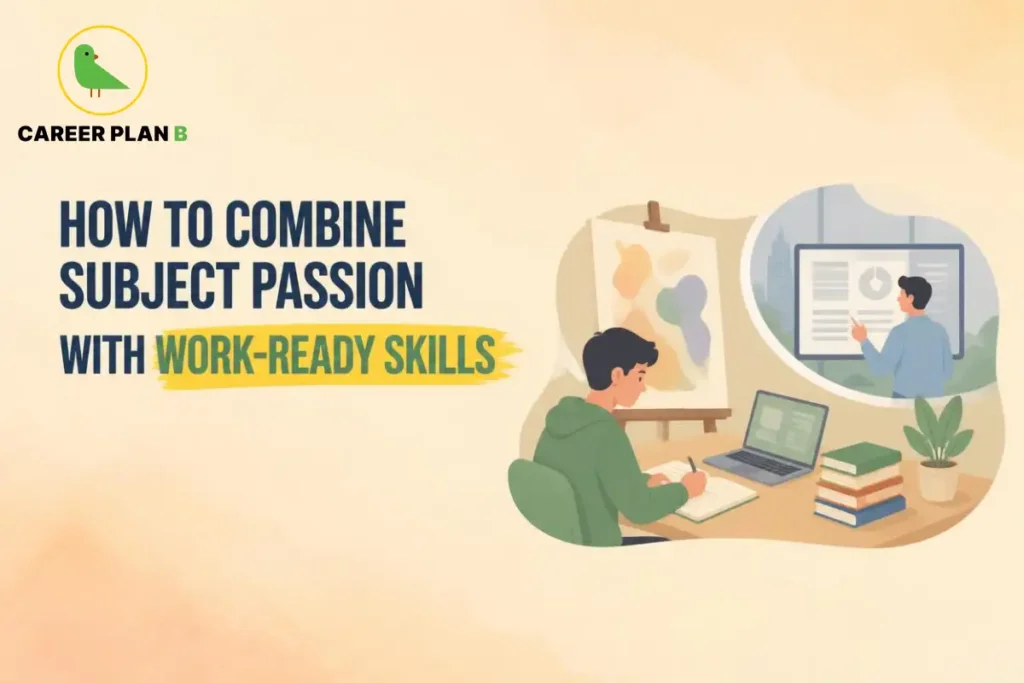
Introduction
Work ready skills and genuine subject passion get treated as opposites far too often. Students hear that passion doesn’t pay the bills, while pure employability skills feel hollow without any real interest behind them. Neither framing is quite right.
This guide covers how to combine subject passion with work ready skills properly, using a practical framework rather than vague encouragement. It walks through what employability skills actually are, why transferable skills matter regardless of your subject, and how to layer both onto genuine interest instead of sacrificing one for the other.
Why This Feels Like a Trade-Off in the First Place
The False Choice Most Students Absorb Early
Many students grow up hearing that studying what you love is risky, while studying “practical” subjects guarantees employability. This framing pushes students toward false binary thinking, as though passion and employability genuinely can’t coexist within the same path.
What Actually Determines Employability
Employability rarely depends on the subject alone. It depends on whether you’ve deliberately built demonstrable, work-ready skills on top of your subject knowledge, regardless of which specific subject you chose to study.
What Employability Skills Actually Are
Beyond Just Technical Knowledge
Employability skills cover the practical capabilities that let you apply your subject knowledge in a real work setting. This includes communication, problem-solving, basic digital literacy, and the ability to manage tasks independently under real deadlines.
Why These Skills Matter Regardless of Subject
A History student and an Engineering student both need genuine employability skills to succeed at work, just applied differently. History demands strong research and argumentation skills applied to workplace writing, while Engineering demands technical precision applied to team-based project delivery.
Understanding Transferable Skills Specifically
What Makes a Skill Genuinely Transferable
Transferable skills are capabilities that remain valuable regardless of the specific role or industry you eventually enter. Clear written communication, structured problem-solving, and the ability to synthesise complex information all qualify as genuinely transferable, no matter your subject.
Every Subject Builds Some Transferable Skills Already
Studying Literature builds genuine analytical and interpretive skill. Studying Physics builds structured, quantitative reasoning. Studying Economics builds comfort with data and real-world systems thinking. The subject you’re passionate about is already building transferable skill, often without you realising it explicitly.
Why Subject Passion Still Matters Genuinely
Passion Sustains the Effort Employability Alone Cannot
Students who study a subject purely for its perceived employability, without any genuine interest, often struggle to sustain the depth of engagement that actually produces strong, demonstrable work. Passion fuels the sustained curiosity that builds genuine expertise over time.
Passion Also Shows Up as a Genuine Hiring Signal
Employers and admissions committees can generally distinguish between someone who studied a subject out of genuine interest and someone who simply completed the coursework. Real depth of engagement, driven by subject passion, often reads as more compelling than credentials alone.
A Practical Framework for Combining the Two
Step One: Identify What You’re Actually Passionate About
Be honest about your genuine subject interest, not what sounds impressive or practical on paper. This honesty matters, since the entire framework depends on real, sustained engagement rather than a performance of interest you don’t actually feel.
Step Two: Identify the Employability Skills Your Passion Already Builds
Look closely at what your specific subject naturally develops. A Political Science student already builds research and argumentation skills. A Design student already builds visual communication and client-facing presentation skills. Name these explicitly rather than assuming they don’t count as real employability skills.
Step Three: Add Deliberate, Practical Layers on Top
Identify the specific gaps between what your subject naturally builds and what employers explicitly look for. This often means adding basic data literacy, a relevant software tool, or a short certification that complements your subject rather than replacing it.
Step Four: Demonstrate the Combination Through Real Work
Build a small, real project that showcases both your subject passion and your added work ready skills together. A History student passionate about a specific era might build a well-researched digital exhibit, combining genuine subject depth with digital presentation skill.
Subject Passion and Work Ready Skills: A Combined Framework
| Step | What to Do | Why It Matters | Estimated Earning Potential / ROI (2026) |
|---|---|---|---|
| Identify genuine passion | Be honest about real interest, not perceived prestige | Sustains the depth of engagement employability alone cannot | Foundation for long-term career compounding |
| Map existing transferable skills | Name what your subject already builds | Reveals employability skill you likely underestimate | ₹5.0 – ₹10.0 LPA (Base entry-level pivot) |
| Add deliberate skill layers | Fill specific gaps with practical tools or certifications | Bridges passion and explicit employer expectations | ₹10.0 – ₹20.0 LPA (Hybrid specialist scale) |
| Demonstrate through real work | Build a project combining both elements visibly | Proves the combination rather than just claiming it | ₹25.0 – ₹50.0+ LPA (Advanced portfolio premium) |
Common Mistakes When Trying to Combine Passion and Employability
Abandoning Passion Entirely for Perceived Safety
Some students switch away from a genuine interest purely because it seems less employable, without first trying to layer practical skills onto it. This often produces weaker outcomes than committing to genuine passion with deliberate skill-building alongside it.
Adding Skills Randomly Without a Clear Connection
Collecting unrelated certifications without connecting them to your actual subject passion tends to produce a scattered, unconvincing profile. Every added skill should genuinely complement your core interest, not exist as an disconnected addition.
Have Any Doubts?
Why This Combination Genuinely Works Long-Term
Sustained Engagement Produces Better Work
People who combine genuine passion with practical skill tend to produce meaningfully better work over time than those pursuing either element alone. The passion sustains effort through difficulty, while the practical skill makes that effort visible and usable to employers.
This Combination Also Protects Against Burnout
Work that connects to genuine interest, supported by real, practical capability, tends to feel more sustainable long-term than work chosen purely for employability without any real engagement behind it.
How Career Plan B Helps
Combining your genuine subject passion with real work ready skills takes deliberate planning, not vague encouragement to “follow your passion.” Career Plan B helps you build this combination through:
- Personalized Career Counselling to map your genuine passion against real, in-demand employability skills.
- PsycheIntel Career Assessment Tests to clarify which transferable skills your specific strengths already support.
- Career Roadmapping to sequence the practical skills that complement your subject passion deliberately.
- Admission & Academic Profile Guidance to help you demonstrate this combination effectively in your applications.
Get In Touch With Us
Frequently Asked Questions
Q1. Should I choose a subject based on passion or employability if I have to pick one?
You genuinely don’t have to choose one exclusively. Most subjects already build real transferable skill, so the better question is how to layer additional, deliberate work ready skills onto whatever you’re genuinely passionate about.
Q2. What are examples of transferable skills that work across almost any subject?
Clear written communication, structured problem-solving, and the ability to synthesise complex information all qualify as genuinely transferable, valuable regardless of your specific subject or eventual career direction.
Q3. How do I know which employability skills to add to my specific subject passion?
Research real job postings and requirements in fields connected to your interest, then identify the specific gap between what your subject already builds and what employers explicitly ask for.
Q4. Is it too late to add work ready skills if I’m already partway through my degree?
No. Most work ready skills, from basic data tools to specific certifications, can be built through short courses or self-directed projects at any stage of your degree, not just before you start.
Conclusion
Work ready skills and genuine subject passion aren’t opposing forces you have to choose between. Every subject already builds real, transferable skill, and layering deliberate, practical employability skills on top strengthens rather than dilutes your genuine interest.
Identify what you’re honestly passionate about, name the transferable skills it already builds, add specific practical layers where real gaps exist, and demonstrate the combination through genuine, visible work.
Not sure how to combine your own subject passion with real employability skills? Structured career counselling at Career Plan B can help you build a deliberate, practical plan.