Team Career Plan B · October 12, 2026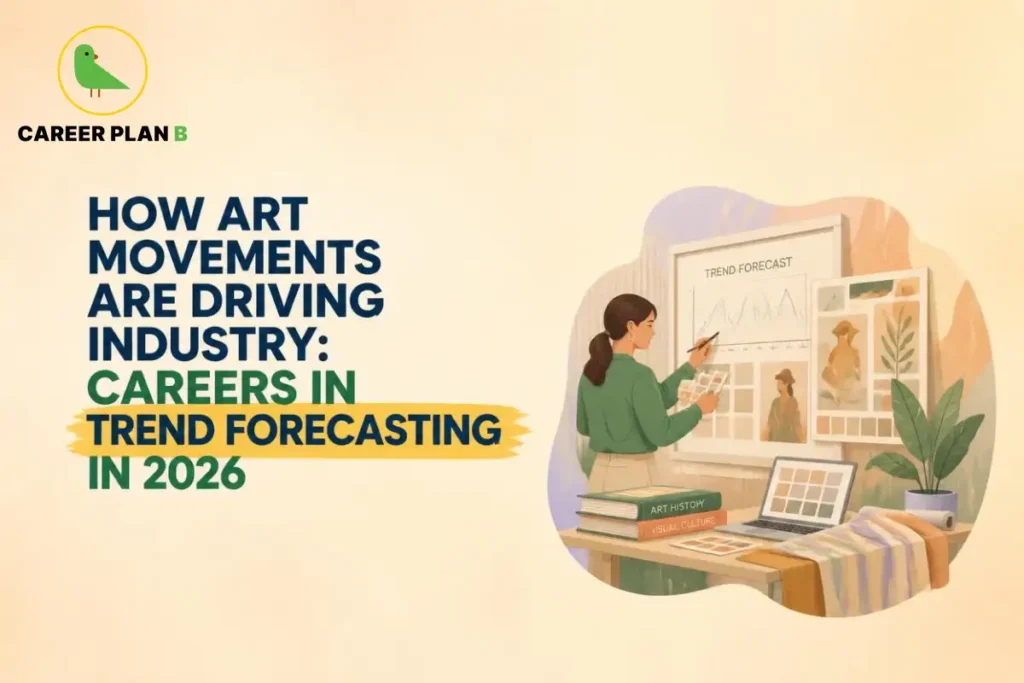
Introduction
The global consumer economy in 2026 relies on far more than basic market surveys to predict next season’s best-selling products. Today, multinational fashion houses, tech giants, and interior design firms actively decode historical and contemporary art movements to anticipate global consumer preferences.
By translating artistic shifts like Brutalism, Cyber-Surrealism, and Bio-Art into commercial product lines, trend forecasters serve as irreplaceable corporate strategists. Industry leaders such as WGSN demonstrate daily how raw creative expression directly dictates multi-billion dollar manufacturing decisions across international retail markets.
Consequently, ambitious humanities, fine arts, and design scholars are aggressively pursuing trend forecasting careers in art and design. Academic frameworks supported by the University Grants Commission (UGC) ensure that modern forecasting curriculums integrate cultural sociology with advanced data analytics.
Furthermore, national initiatives backed by the Ministry of Culture have successfully elevated traditional artistic movements into modern commercial assets. Decoding this powerful bridge between fine art history and consumer psychology is now the ultimate prerequisite for creative executive leadership.
Why Art Movements and Trend Forecasting Are Surging in 2026
The primary driver behind this hiring surge is the rapid acceleration of digital visual culture across social media and virtual retail environments. Brands can no longer afford to launch outdated product aesthetics in an era where visual trends evolve globally in real time.
Furthermore, integrating cultural sociology with backend predictive data tools allows companies to minimize inventory waste. By identifying visual macro-trends early, corporate planners align manufacturing schedules strictly with real consumer demand.
Core Pillars: Merging Art Movements with Commercial Strategy
Thriving as a trend forecaster requires building a deep, interdisciplinary bridge between raw artistic history and corporate product development.
Decoding Fine Art Movements for Commercial Products
Forecasters analyze how historical art movements—such as Bauhaus functionalism or Impressionist color palettes—re-emerge in modern consumer psychology. They evaluate how societal moods inspire artistic expression, translating those visual motifs into industrial designs, footwear, and digital interfaces.
Predictive seasonal intelligence published by global research authorities dictates material selection and color direction for thousands of multinational brands.
Color Theory, Material Science, and Macro Trends
Beyond visual patterns, forecasters master color psychology, sustainable material innovation, and macro-socioeconomic shifts. They work alongside artisan clusters and industrial textile mills to engineer sustainable fabrics that mirror modern ecological art movements.
Pioneering academic hubs like the National Institute of Fashion Technology (NIFT) train scholars to translate cultural art shifts into actionable commercial color direction and material palettes.
Strategic Brand Communication and Public Relations
Trend strategists collaborate directly with corporate marketing executives to align brand storytelling with emerging visual movements. They ensure that advertising campaigns, luxury launch events, and e-commerce UI designs feel culturally relevant to modern consumers.
Prominent industry bodies like the Fashion Design Council of India (FDCI) actively feature trend forecasting insights during major fashion weeks to guide commercial collection curation.
In-Demand Capabilities for Trend Forecasters
Thriving in this specialized niche requires building a strong combination of visual literacy, cultural empathy, and backend data analysis.
Qualitative Cultural Sociology and Art History
Forecasters must possess a deep, rigorous understanding of global art history, architectural styles, and subculture movements. Analyzing museum exhibitions, independent art galleries, and digital street style allows researchers to spot weak visual signals before they enter the commercial mainstream.
Predictive Data Analytics and AI Modeling
Modern trend forecasting extends beyond pure artistic intuition. Researchers leverage AI-assisted image recognition algorithms and search data analytics to track how fast an artistic movement is gaining commercial traction.
For Personalized Guidance
Salary Expectations and ROI in 2026
The financial return on investment for trend forecasting careers is exceptionally strong in 2026, reflecting the high corporate value of predictive product design.
| Trend Forecasting Role | Core Corporate Focus | Entry-Level Salary (2026) | Senior Salary Scope (8+ Yrs) |
|---|---|---|---|
| Trend Forecaster & Analyst | Predictive visual analytics, color direction | ₹6.5 – ₹11.0 LPA | ₹22.0 – ₹45.0+ LPA |
| Commercial Art Strategist | Brand alignment, art movement curation | ₹6.0 – ₹10.5 LPA | ₹20.0 – ₹40.0+ LPA |
| Color & Material Developer | Sustainable textiles, industrial palettes | ₹5.5 – ₹9.5 LPA | ₹18.0 – ₹35.0+ LPA |
| Creative Category Director | Product line planning, consumer research | ₹8.0 – ₹14.0 LPA | ₹30.0 – ₹60.0+ LPA |
(Source: Aggregated data from 2026 Indian fashion retail, trend agency recruitment, and placement reports).
How Career Plan B Helps
Navigating interdisciplinary stream selection, competitive portfolio evaluations, and specialized design institute admissions requires immense strategic precision. Career Plan B assists ambitious creative aspirants in securing the absolute best academic pathway.
- Personalised Career Counselling: We thoroughly evaluate your artistic and analytical profile to ensure a trend forecasting degree aligns with your long-term financial goals.
- Psycheintel & Career Assessments: Scientifically backed psychometric tests that accurately map your unique strengths for macro cultural research versus technical material development.
- Customized Admission Guidance: Strategic, end-to-end support to help you crack entrance gateways for premier design management and art history institutes across India and globally.
- Career Roadmapping: Tailored, decade-long pathways that guarantee your academic investments perfectly align with executive creative director roles in 2026.
Get In Touch With Us
Frequently Asked Questions
Q1. What does a trend forecaster in art and design do?
A trend forecaster analyzes art movements, cultural shifts, and consumer behavior to predict future colors, materials, and visual styles for commercial product manufacturers.
Q2. Which degree is best for a career in trend forecasting?
Degrees in Fashion Communication, Design Management, Art History, or Textile Design from premier institutes like NIFT provide the optimal foundation for trend forecasting.
Q3. What is the starting salary for a trend forecaster in India in 2026?
In 2026, fresh postgraduates entering trend forecasting and visual strategy typically secure starting packages ranging from ₹6.5 Lakhs to ₹11.0 Lakhs per annum.
Q4. Do tech and automotive companies hire trend forecasters?
Yes. Automotive manufacturers, consumer electronics brands, and digital app developers actively hire trend forecasters to decide interior material finishes, device colors, and UI design themes.
Conclusion
Analyzing the modern corporate sector reveals exactly why pursuing trend forecasting careers in art and design is a brilliant move in 2026. By bridging critical art history knowledge with predictive consumer analytics, trend strategists transform themselves into indispensable corporate architects behind major global product lines.
Organizations like the Fashion Design Council of India (FDCI) continuously prove that creative visual culture directly dictates commercial retail success during major fashion weeks. Meanwhile, premier academic hubs such as the National Institute of Fashion Technology (NIFT) supply the corporate world with data-literate visual strategists.
Ultimately, thriving in the modern creative economy requires proving you can decode human culture to drive high-stakes commercial product decisions. Bypassing crowded traditional design roles opens immediate access to executive creative director positions, flexible global consulting, and exceptional starting salaries.
If you are ready to identify the exact trend forecasting pathway that fits your unique ambitions, consult Career Plan B today. Our team will help you build a meticulously personalized roadmap to achieve long-term executive creative leadership in 2026.