Team6 · November 3, 2026
Introduction
If you’re choosing between engineering branches, chemical engineering and petroleum engineering might both be on your radar. They sound similar, both deal with processes, and both connect to the energy sector, and many students assume they’re almost the same thing.
But when it comes to chemical vs. petroleum engineering, which pays better, the answer isn’t as simple as picking one over the other. Salaries, job roles, and career paths differ in important ways.
In this blog, we’ll break down what each field actually involves, compare salaries at different career stages, look at job prospects, and explore higher education options so you can make a more informed decision.
Chemical Engineering vs Petroleum Engineering: The Basic Difference
At first glance, these two fields can seem like two sides of the same coin, but they’re not quite the same.
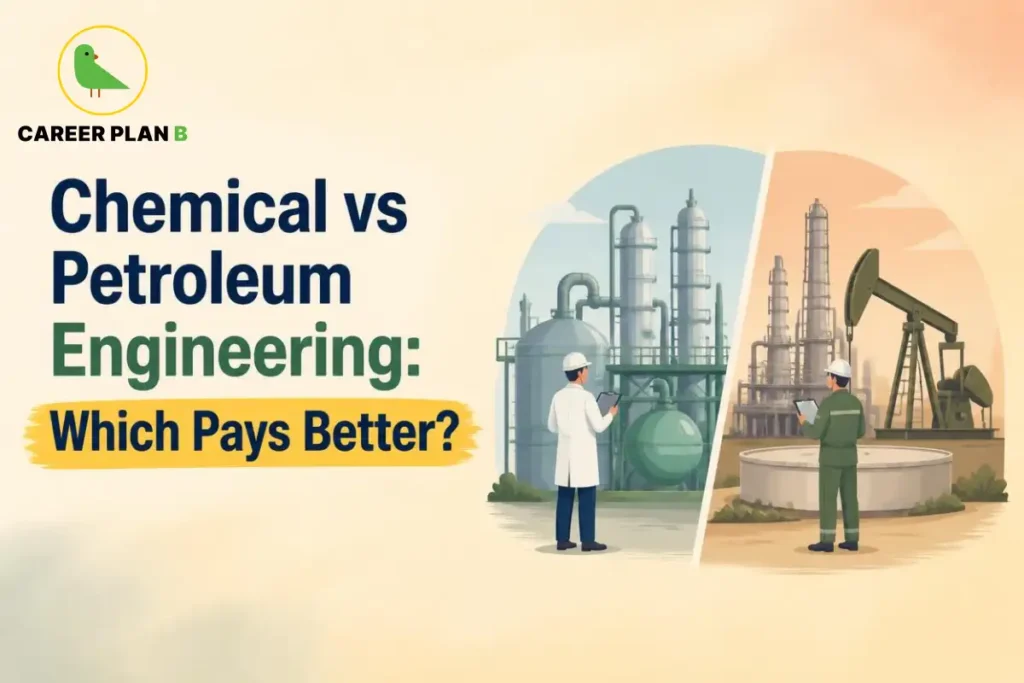
Chemical engineering is a broad field that deals with designing and operating processes to convert raw materials into useful products; this includes fuels, plastics, fertilizers, pharmaceuticals, and more. Petroleum engineering, on the other hand, is more specialized and focuses specifically on the exploration, extraction, and production of oil and natural gas.
The difference between chemical and petroleum engineering essentially comes down to scope. Chemical engineers can work across many industries, while petroleum engineers are more concentrated in the oil and gas sector from upstream operations like drilling to reservoir engineering.
Salary Comparison: Chemical vs Petroleum Engineering in India
Now, let’s get to the part everyone’s curious about the money.
| Experience Level | Chemical Engineering (INR/year) | Petroleum Engineering (INR/year) | 2026–2027 Salary & Sectoral ROI Analysis |
|---|---|---|---|
| Entry-level (0–2 years) | ₹3.5 – 6 lakh | ₹5 – 9 lakh | Petroleum engineering commands a higher entry premium due to specialized oil & gas sector margins and ONGC/PSU or multinational drilling recruitment structures. |
| Mid-level (3–7 years) | ₹7 – 14 lakh | ₹10 – 20 lakh | Mid-career scaling accelerates rapidly in petroleum roles involving on-site rig operations, reservoir management, or international offshore secondments. |
| Senior-level (8+ years) | ₹15 – 28 lakh+ | ₹20 – 40 lakh+ | Senior petroleum professionals managing global asset portfolios, exploration projects, or senior technical consulting outpace standard chemical engineering manufacturing caps. |
The chemical engineering salary in India tends to be more consistent across industries, since chemical engineers can work in petrochemicals, FMCG, pharmaceuticals, and manufacturing. The pay depends a lot on the specific industry and company.
On the other hand, the petroleum engineering salary in India is often higher, especially in upstream oil and gas roles. However, this comes with a smaller number of specialized employers, mostly PSUs and a few private exploration companies, which means fewer overall job openings compared to chemical engineering.
Job Prospects and Industry Demand
When it comes to job availability, chemical engineering job prospects are generally broader. Chemical engineers can find roles in petrochemicals, pharmaceuticals, FMCG, fertilizers, food processing, and core manufacturing, giving them flexibility across multiple industries.
The petroleum engineer career scope, while potentially more lucrative, is narrower. Most opportunities are concentrated around oil and gas exploration, drilling operations, and refining primarily through PSUs like ONGC and OIL (Oil India Limited), along with a handful of private players.
Which Field Offers More Job Stability?
This is worth thinking about carefully. Chemical engineering offers more job stability simply because of the sheer variety of industries that need chemical engineers. Petroleum engineering can offer higher pay, but it’s also more sensitive to global oil prices and industry cycles. When oil prices drop, hiring in this sector can slow down significantly.
PSU and Government Job Opportunities
For many engineering graduates in India, PSU jobs for engineers represent the gold standard: stable salaries, good benefits, and prestige.
Both chemical and petroleum engineers can find opportunities in PSUs like ONGC, IOCL, BPCL, and HPCL. Most of these recruitments happen through GATE (Graduate Aptitude Test in Engineering), making it an important exam for anyone aiming for a government job in either field. You can find detailed information on the official GATE portal.
For chemical engineers specifically, recruitment processes and educational standards are also governed by bodies like AICTE, which approves and regulates engineering programmes across India. For petroleum-related PSU opportunities, ONGC’s official careers page is a useful resource to track openings and recruitment notifications.
Have Any Doubts?
Higher Studies and Specialization Options
If you’re thinking about going beyond a bachelor’s degree, both fields offer solid options for further study.
The higher studies in chemical and petroleum engineering typically include M.Tech programmes with specializations for chemical engineering; this could mean process engineering, petrochemical technology, or environmental engineering. For petroleum engineering, specializations often include reservoir engineering, drilling engineering, or petroleum production.
GATE scores are usually required for admission into M.Tech. programmes at top institutions like the IITs. For those who want to build foundational knowledge or explore specific topics before committing to higher studies, the official NPTEL platform offers free courses covering both chemical process engineering and petroleum-related subjects.
How Career Plan B Helps
Choosing between chemical and petroleum engineering isn’t just about comparing salary numbers; it’s about understanding which field aligns with your interests, risk tolerance, and long-term goals. Career Plan B offers personalised career counselling to help you think through these factors clearly. Through PsycheIntel and career assessment tests, you can understand whether you’re drawn toward broader industrial roles or specialized oil and gas careers. With admission and academic profile guidance and career roadmapping, Career Plan B helps you choose the right specialization and plan your path with confidence.
For Latest Information
Frequently Asked Questions
1. Which pays more, chemical or petroleum engineering?
Petroleum engineering often offers higher salaries, especially in upstream oil and gas roles, but chemical engineering offers more consistent opportunities across a wider range of industries.
2. Is petroleum engineering riskier as a career choice?
It can be, since the field is closely tied to global oil prices and industry cycles, which can affect hiring trends. Chemical engineering tends to be more stable due to its broader application.
3. Do both fields require GATE for PSU jobs?
Yes, most PSU recruitments for both chemical and petroleum engineers, such as those at ONGC, IOCL, and similar organizations, are conducted through GATE scores.
4. Which field has better scope for working abroad?
Petroleum engineering often has strong demand in oil-producing countries in the Middle East, while chemical engineers have opportunities across a wider range of global industries.
5. Can a chemical engineer switch to petroleum engineering later, or vice versa?
Some overlap exists, especially in areas like refining and process engineering, but a switch usually requires additional specialization through higher studies or on-the-job training.
Conclusion
When comparing chemical vs. petroleum engineering, which pays better, petroleum engineering often comes out ahead in terms of raw salary numbers, but chemical engineering offers broader job stability and flexibility across industries. The right choice depends on whether you prioritize higher pay in a specialized field or wider opportunities with consistent demand.
If you’re still weighing your options, Career Plan B can help you assess your interests and strengths and guide you toward the engineering path that fits your goals best.