Shenaz · May 24, 2025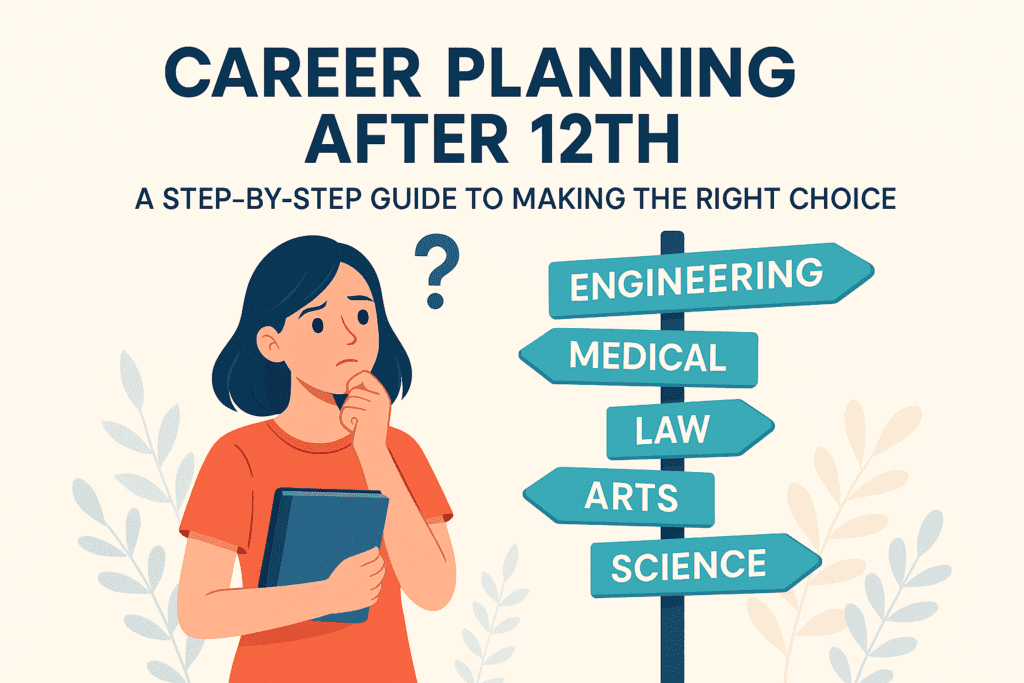
Introduction
Completing Class 12 is a major milestone—but it also brings one big question:
“What should I do next?”
In India, lakhs of students finish their 12th every year and are pushed into career paths without clarity, guidance, or real planning. The result?
Confusion. Frustration. Career switches. Wasted years.
That’s why this blog is your ultimate step-by-step guide to career planning after 12th—whether you’re from science, commerce, or arts.
You’ll learn:
-
How to plan your career in a smart, strategic way
-
What mistakes to avoid
-
Career options based on your stream
-
How to choose the right course or degree
-
Future-proof careers and trends
-
FAQs for Indian students
Let’s make sure you choose your path—not follow someone else’s.
🔍 Why Career Planning After 12th Is So Critical
Once you complete Class 12, you face hundreds of options—from engineering and law to design, entrepreneurship, and freelancing.
Choosing without planning can lead to:
-
Career regret
-
Course dropouts
-
Loss of confidence
-
Financial and emotional strain
A proper plan ensures:
-
You pick a career that suits your strengths, interests, and goals
-
You stay aligned with future job market demands
-
You don’t waste years in the wrong path
Remember: Choosing your career is not about picking the “most popular” one—it’s about picking the right one for YOU.
🧭 Step-by-Step Guide to Career Planning After 12th
✅ Step 1: Know Yourself
Start with self-discovery:
-
What are your interests?
-
What are your natural strengths?
-
What subjects do you enjoy?
-
Are you introverted or extroverted?
-
Do you like structure or creativity?
Use tools like:
-
Psychometric Tests (CareerPlanB offers one)
-
Personality assessments (MBTI, Holland Code)
-
Career quizzes and aptitude tests
Goal: Identify your ideal career personality type.
✅ Step 2: Explore Career Options Based on Your Stream
📘 If You’re From Science (PCM/PCB):
-
Engineering (B.Tech, B.E)
-
Medicine (MBBS, BDS, BAMS, BHMS)
-
BSc (Physics, Chemistry, Maths, Biotechnology, etc.)
-
Forensic Science
-
Data Science
-
Computer Applications (BCA)
-
Aviation
-
Architecture (B.Arch)
-
Defence (NDA)
💼 If You’re From Commerce:
-
B.Com (General/Honours)
-
Chartered Accountancy (CA)
-
Company Secretary (CS)
-
Cost and Management Accounting (CMA)
-
Bachelor of Business Administration (BBA)
-
Finance & Investment Banking
-
Digital Marketing
-
E-commerce & Entrepreneurship
🎨 If You’re From Arts/Humanities:
-
BA (Psychology, History, Sociology, etc.)
-
Mass Communication
-
Hotel Management
-
Fashion Design
-
Law (5-year integrated)
-
Fine Arts
-
Social Work
-
Civil Services Preparation
✅ Step 3: Research Courses and Colleges
Once you have a list of career options:
-
Shortlist relevant degrees/certifications
-
Research the top colleges and entrance exams
-
Check placement stats, fees, course duration, and reviews
-
Consider online/distance options if needed
Use platforms like:
-
Shiksha.com
-
NIRF Ranking (Govt. of India)
-
CollegeDunia
-
CareerPlanB Blogs & Tools
✅ Step 4: Understand Job Roles and Salaries
Don’t just choose a course—choose a career.
Understand what you’ll actually do in your job after completing that course.
For example:
-
A BBA graduate can become a sales manager, digital marketer, or entrepreneur.
-
A B.Sc. Physics graduate can go into research, data analysis, or UPSC.
Research:
-
Job roles
-
Entry-level salary
-
Growth opportunities
-
Future demand
Use LinkedIn, AmbitionBox, Glassdoor, or CareerPlanB’s job insights.
✅ Step 5: Match With Future Trends
The job market is evolving fast. Choose careers that are:
-
Future-proof
-
Technology-aligned
-
Creative or analytical (depending on your strength)
Trending Career Fields (2025 & beyond):
-
Data Science & AI
-
Digital Marketing
-
Health & Wellness
-
Cybersecurity
-
Green Tech & Sustainability
-
UI/UX & Product Design
-
Finance & Crypto
-
Content Creation & Freelancing
✅ Step 6: Talk to a Career Counselor
Why it helps:
-
Get personalized advice
-
Avoid confusion and stress
-
Build a step-by-step action plan
-
Clarify doubts about colleges, courses, exams
Platforms like CareerPlanB.co offer career counseling, aptitude tests, resume guidance, and course suggestions specifically for Indian students.
✅ Step 7: Plan Skill-Building Early
Don’t wait until college ends.
Start building job-ready skills during your degree:
-
Learn tools like Excel, Canva, Python, Figma, etc.
-
Take free/paid courses on Coursera, Udemy, Skillshare
-
Do internships via Internshala or LinkedIn
-
Join clubs, competitions, online communities
📊 Top Mistakes to Avoid
| Mistake | Why It’s Harmful |
|---|---|
| Following others blindly | Doesn’t match your strengths or passion |
| Choosing a “safe” career for parents | Can lead to years of regret |
| Not researching colleges/courses | Waste of time and money |
| Ignoring skill-building during college | Makes you unemployable after graduation |
| Avoiding career counseling | Leads to misaligned career choices |
🔥 High-Potential Careers That Don’t Need Traditional Degrees
Not interested in 3–5 year college degrees? Explore:
-
Digital Marketing
-
UI/UX Design
-
Content Creation
-
Coding Bootcamps
-
Cloud Computing
-
Stock Trading
-
Animation & VFX
-
Blogging/YouTube/Podcasting
-
Sports & Fitness Careers
Many of these require certifications + portfolio instead of degrees.
🙋♀️ Real-Life Student Example
Name: Rhea (Class 12, Arts Stream)
Problem: Pressured to do BA + Civil Services, but she wanted something creative.
Solution: Took a psychometric test on CareerPlanB.
Outcome: Discovered her natural inclination toward design. Now studying Fashion Communication at NIFT and already interning with a brand.
✅ Conclusion
Career planning after 12th isn’t about following trends—it’s about knowing yourself, understanding the world of work, and choosing a path that fits both.
With proper research, tools, and guidance, you can make a confident decision that pays off for life.
🎯 Don’t leave your future to chance.
Start your personalized career journey today with CareerPlanB.co — Take the free career test, explore career paths, and talk to a certified counselor!