Team5 · August 7, 2026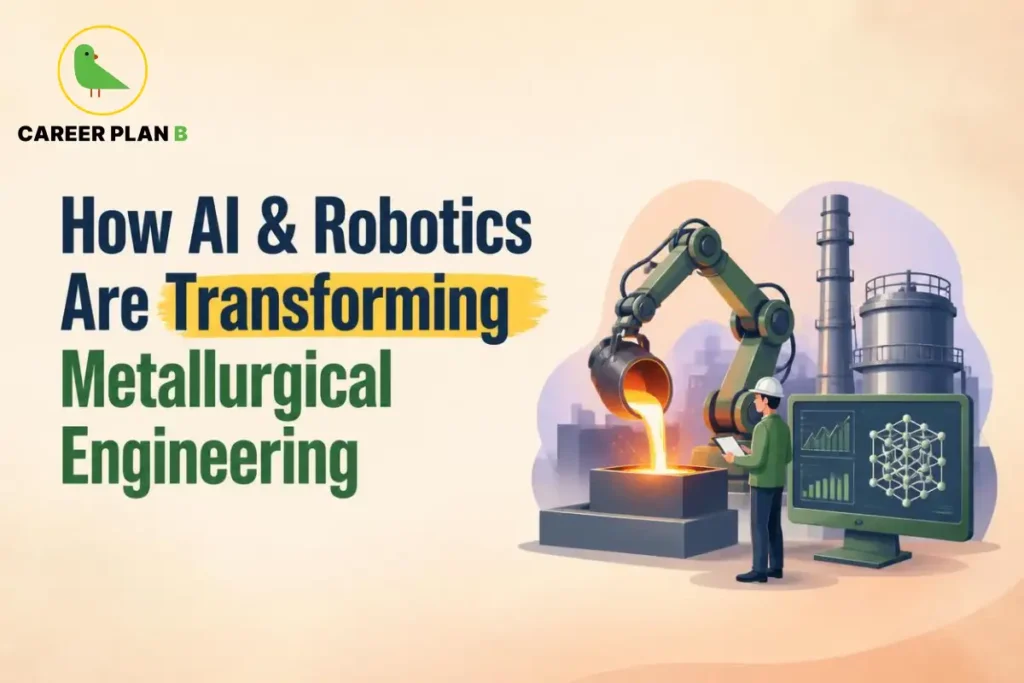
Introduction
Metallurgy has always been a hands-on, furnace-and-lab discipline. However, technology is quietly rewriting how metals get processed, tested, and even discovered. Understanding how AI & robotics are transforming metallurgical engineering starts with recognizing that this shift touches nearly every stage of the materials pipeline, not just one narrow corner of it.
The National Institute of Standards and Technology’s Materials Genome Initiative promises to expedite materials discovery through data from high-throughput computation and experiments, applying artificial intelligence tools like machine learning to accelerate the process significantly. Let’s break down exactly where this transformation is happening.
Why Metallurgy Is Becoming a Data-Driven Discipline
Metallurgical research once relied almost entirely on manual testing, physical trial and error, and years of accumulated intuition. That approach is changing quickly.
From Manual Testing to Predictive Models
AI in metallurgy now increasingly relies on computational models that predict material behaviour before physical testing even begins. According to NIST’s Data and AI-Driven Materials Science Group, much of their work focuses on developing autonomous methods that form the core decision-making capability of self-driving laboratories, alongside automated data and AI-based quantitative analysis. This kind of smart manufacturing metallurgy approach genuinely speeds up research that once took years into a matter of months.
How Robotics Is Changing Metal Processing Floors
Metal processing environments are physically demanding and often hazardous, involving extreme heat, heavy machinery, and repetitive, precise tasks. This makes them a natural fit for robotic automation.
Automation in High-Heat, High-Risk Environments
Robotics in metal processing increasingly handles tasks like material handling, precision cutting, and quality inspection in environments too dangerous or repetitive for constant manual work. According to Manufacturing.gov, advanced manufacturing increasingly relies on production activities that depend on information, automation, computation, and sensing rather than purely mechanical processes. This kind of automation in metal production reduces both safety risks and human error in high-stakes processing environments.
Predictive Maintenance: Catching Failures Before They Happen
Equipment failure in a metal processing facility can be enormously costly, both in downtime and safety risk. AI is changing how engineers anticipate these failures before they happen.
Sensors, Data, and Downtime Reduction
Predictive maintenance metallurgy relies on sensor data and machine learning models that flag potential equipment failures before they actually occur. Rather than waiting for a furnace or rolling mill to break down, engineers now use continuous data monitoring to schedule maintenance proactively. Consequently, this approach significantly reduces unplanned downtime, a major cost driver in traditional metal processing operations.
AI-Driven Materials Discovery: Designing New Alloys Faster
Perhaps the most significant shift is happening in research itself, where AI is compressing years of trial-and-error into a fraction of the time.
How Machine Learning Speeds Up Research
NIST’s Materials Genome Initiative directly supports this shift toward AI-driven materials discovery, using high-value datasets and computational techniques to accelerate the discovery and design of novel materials. This work involves developing well-curated, diverse datasets and choosing effective representations for materials, allowing researchers to screen thousands of potential alloy combinations computationally before ever running a physical test.
Have Any Doubts?
The New Skills Metallurgical Engineers Need for an AI-Powered Future
Meeting this shift requires building on traditional metallurgical training with a genuinely new set of technical capabilities.
| Traditional Skill | AI-Era Skill | Relevance |
|---|---|---|
| Manual material testing | Predictive modeling and simulation | Speeds up material selection and validation |
| Scheduled maintenance | Sensor-based predictive maintenance | Reduces costly unplanned downtime |
| Trial-and-error alloy design | AI-assisted materials discovery | Accelerates new material development |
| Manual quality inspection | Robotics-assisted inspection | Improves precision and safety |
This shift means metallurgical engineering skills for AI now include data literacy, familiarity with computational modelling tools, and comfort working alongside automated systems, in addition to core metallurgical knowledge. Overall, the U.S. Bureau of Labour Statistics reports materials engineers earning a median annual wage of $108,310 in 2024, with 6% growth projected through 2034, faster than the average for all occupations. This strong underlying growth suggests engineers who build these AI-adjacent skills will find themselves particularly well positioned in the years ahead.
How Career Plan B Helps
Career Plan B helps students and professionals make informed career decisions in emerging fields like AI-enabled metallurgical engineering by providing personalized guidance, assessments, and structured career planning.
Personalized Career Counselling: Provides expert guidance to help students explore career opportunities combining metallurgy with AI, robotics, automation, and smart manufacturing based on their interests and professional goals.
Psychometric & Career Assessment Tests: Helps identify strengths, technical preferences, and suitable career paths by evaluating whether students are better suited for materials research, AI-driven material discovery, robotics integration, predictive maintenance, or automated manufacturing roles.
Career Roadmapping: Creates a structured career plan covering AI tools, programming skills, certifications, internships, research opportunities, and specialization areas required to build a future-ready metallurgical engineering career.
Admission & Academic Profile Guidance: Helps students select the right courses, colleges, and academic pathways while improving their profiles for opportunities in smart manufacturing, AI in metallurgy, robotics-based production, and advanced materials engineering sectors.
Get In Touch With Us
Frequently Asked Questions
- Will AI replace metallurgical engineers?
Unlikely. AI is speeding up research and reducing manual testing, but engineers are still needed to interpret results and make final material decisions.
- What is predictive maintenance in metallurgy?
It uses sensor data and machine learning to identify potential equipment failures before they happen, reducing costly unplanned downtime.
- Do metallurgical engineers need to learn programming?
Increasingly, yes. Basic data analysis and familiarity with computational tools are becoming valuable additions to traditional metallurgical training.
- How is AI speeding up the discovery of new alloys?
AI models can screen thousands of potential material combinations computationally, dramatically reducing the trial-and-error time needed for new alloy development.
- Are robotics jobs replacing traditional metallurgy roles?
Not replacing, but reshaping them. Robotics handles repetitive, hazardous tasks, freeing engineers to focus on higher-level analysis and decision-making.
Conclusion
Understanding how AI & robotics are transforming metallurgical engineering comes down to one core shift: technology is compressing years of manual testing and trial-and-error into faster, data-driven processes. From predictive maintenance to AI-assisted alloy discovery, this transformation touches nearly every stage of how metals get processed and studied.
If this evolving, technology-forward field sounds like where you want to build your career, Career Plan B can help you map out a realistic path forward. With strong projected growth and genuinely new tools reshaping the field, there’s real, lasting opportunity for engineers ready to grow alongside this shift.