Careerplanb · June 9, 2026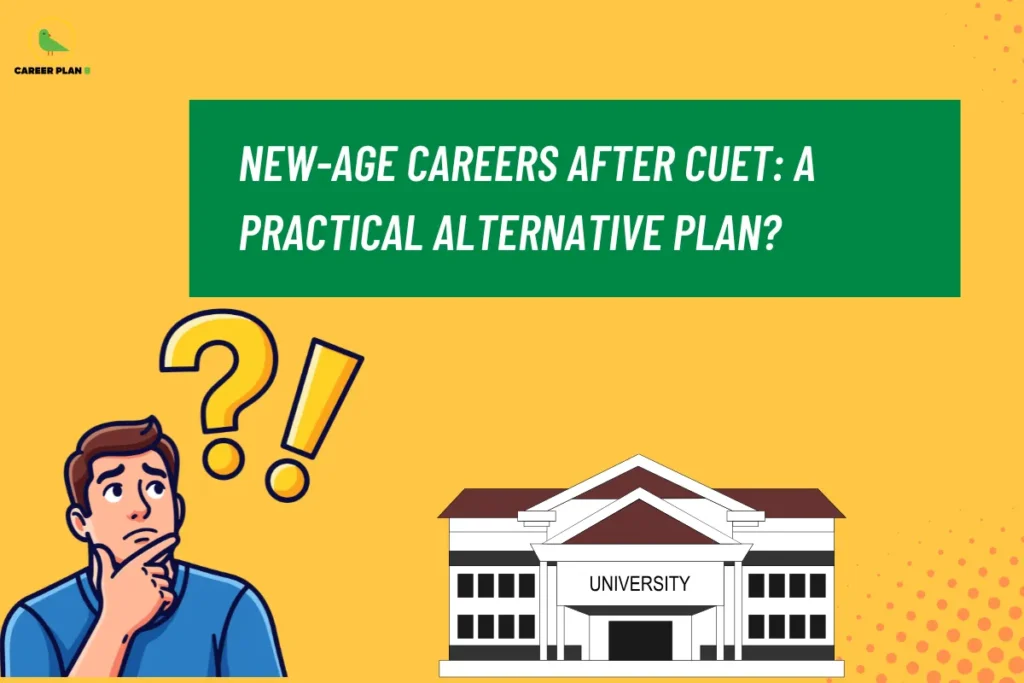
Introduction
Every year, thousands of students prepare for CUET hoping to secure admission to top universities. But what happens if things don’t go exactly as planned? The good news is that the career landscape today is evolving rapidly. New-Age Career Options are creating exciting opportunities for students who want to build meaningful careers beyond traditional degree paths. These New-Age Career Options focus more on skills, creativity, and practical experience rather than only academic qualifications.
In fact, industries driven by technology, digital media, and innovation are expanding faster than ever. Many successful professionals today have built their careers by exploring New-Age Career Options that were barely known a decade ago. This blog explores emerging opportunities, practical alternatives, and how students can confidently consider New-Age Career Options after CUET.
Why Students Are Exploring New-Age Career Options Today
The career world has changed dramatically over the past decade. Traditional jobs still exist, but the fastest-growing roles today are often found in the digital economy.
According to the Government of India’s Digital India initiative, the country is rapidly building a digital ecosystem that creates new employment opportunities across technology, digital media, and online services.
Visit the official portal for more information: https://www.digitalindia.gov.in
Several factors explain why students are increasingly considering New-Age Career Options:
- Rapid growth of the digital economy
- Increasing demand for specialized skills
- Remote work and global job opportunities
- Startup culture and entrepreneurship
- Availability of online learning platforms
The question many students now ask is simple: Do I really need to follow the same career path as everyone else?
For Personalized Guidance
What Are New-Age Career Options?
New-Age Career Options refer to modern professions that have emerged due to technological innovation, digital transformation, and changing consumer behavior. These careers often prioritize practical skills, creative thinking, and adaptability.
Skills Over Degrees
Many modern industries are moving toward skill-based hiring. Employers are increasingly looking for candidates who can demonstrate real abilities rather than only academic qualifications.
India’s National Skill Development Corporation (NSDC) actively promotes skill-based education and training programs across sectors to prepare youth for evolving careers.
Visit the official source: https://www.nsdcindia.org
Some industries where skills matter more than traditional degrees include:
- Digital marketing
- Software and data analytics
- Content creation and media
- Design and user experience
- Online entrepreneurship
This shift is opening doors for students to explore emerging career opportunities even if they do not follow conventional academic routes.
Top New-Age Career Options Students Can Explore
1. Digital Marketing Specialist
Digital marketing has become one of the fastest-growing career fields globally. Businesses of all sizes now depend on online platforms to reach customers.
Key areas within digital marketing include:
- Search Engine Optimization (SEO)
- Social media marketing
- Content marketing
- Online advertising and analytics
Students can develop these skills through government-supported platforms such as Skill India Digital. Visit the official portal for more detail: https://www.skillindiadigital.gov.in
Digital marketing represents one of the most promising New-Age Career Options because businesses constantly need professionals who can build online visibility.
2. Data Analyst and AI Support Roles
Data is often called the “new oil” of the digital economy. Organizations rely on data analysts to interpret information and support decision-making.
According to NASSCOM’s FutureSkills Prime initiative, India is focusing heavily on developing digital skills in areas like data analytics, artificial intelligence, and cybersecurity.
Visit the official platform: https://futureskills.nasscom.in
Key responsibilities in this field include:
- Analyzing data trends
- Creating reports and dashboards
- Supporting AI-driven tools
- Improving business performance through insights
For students interested in mathematics, technology, or problem-solving, this is one of the most exciting New-Age Career Options.
3. UX/UI Designer
Every website or mobile app you use has been designed by professionals who focus on user experience. UX/UI designers ensure that digital products are easy to use and visually appealing.
Common tasks include:
- Designing mobile app interfaces
- Improving website usability
- Conducting user research
- Creating prototypes for digital products
As India’s digital ecosystem grows through initiatives like Digital India, demand for skilled designers continues to rise.
4. Content Creator and Media Professional
Social media platforms have transformed the way people consume information and entertainment. Today, content creators are building full-time careers through videos, podcasts, blogs, and online education.
Students exploring digital and creative careers may consider roles such as:
- Video creator or YouTuber
- Podcast host
- Social media strategist
- Online educator
The Ministry of Information and Broadcasting oversees India’s media and broadcasting ecosystem. With creativity, consistency, and the right strategy, content creation can become a sustainable career path.
5. Entrepreneurship and Startup Careers
India’s startup ecosystem is among the fastest growing in the world. Young entrepreneurs are launching businesses in technology, education, e-commerce, and sustainability.
Government programs such as Startup India actively support new entrepreneurs by providing guidance, funding opportunities, and policy support.
Official platform: https://www.startupindia.gov.in
Entrepreneurship allows students to transform ideas into businesses. While it involves risks, it also offers independence and innovation.
Can Skills-Based Careers Replace Traditional Degrees?
This is one of the most common questions students and parents ask. The reality is that careers today are becoming more flexible.
Traditional degrees still provide strong foundations in many professions. However, skill-based careers are increasingly becoming viable alternatives.
The University Grants Commission (UGC) has also introduced initiatives encouraging skill-based education and vocational learning to complement academic programs.
Official website: https://www.ugc.gov.in
Instead of choosing one path over the other, many students now follow hybrid approaches such as:
- Degree programs combined with skill certifications
- Online courses alongside college education
- Freelancing or internships during studies
- Portfolio-based career development
This blended approach helps students remain adaptable in a changing job market.
How Students Can Prepare for New-Age Career Options
Exploring New-Age Career Options requires proactive effort. The earlier students begin building skills, the stronger their career prospects become.
1. Identify Your Interests
Start by understanding what truly excites you. Do you enjoy technology, design, communication, or business?
2. Build Digital Skills
Many modern careers rely on digital literacy. Learning tools such as analytics platforms, design software, or coding languages can open doors.
3. Take Certified Courses
Government-supported learning portals like the National Career Service provide information on career training and opportunities.
4. Create a Portfolio
A portfolio demonstrates real work. Designers, writers, marketers, and developers can showcase projects to potential employers.
5. Gain Practical Experience
Internships, freelancing, and part-time projects help students develop real-world skills and professional networks.
Challenges of Choosing New-Age Career Options
While New-Age Career Options are exciting, they also come with certain challenges.
Some common concerns include:
- Lack of awareness about emerging careers
- Family expectations toward traditional professions
- Initial income uncertainty
- Requirement for continuous learning
However, these challenges can be managed with the right planning, guidance, and skill development.
Students should remember that every career path involves risks. The key is making informed decisions and staying committed to growth.
How Career Plan B Helps
Career Plan B supports students exploring new-age career options through structured guidance:
- Personalized Career Counselling: Helps students explore emerging career fields based on their interests, strengths, and long-term goals.
- Psycheintel & Career Assessment Tests: Identifies aptitude, personality traits, and learning patterns to guide informed career decisions.
- Admission & Academic Profile Guidance: Assists students in understanding admission requirements and building a strong academic profile.
- Career Roadmapping: Provides a clear long-term plan that helps students understand new industries and build a realistic pathway for future career success.
Get In Touch With Us
Frequently Asked Questions
1. What are New-Age Career Options after CUET?
New-Age Career Options are modern professions driven by technology, digital platforms, and creative industries. These include digital marketing, data analytics, design, content creation, and entrepreneurship.
2. Can students succeed without a traditional degree?
Yes. Many industries today focus on skills and experience. However, combining education with practical skills often creates stronger career opportunities.
3. Which digital skills are most valuable today?
Some high-demand skills include data analytics, digital marketing, programming, UX design, and content creation.
4. Are New-Age Career Options stable in the long term?
Many emerging careers are growing rapidly. Stability depends on continuously upgrading skills and adapting to industry trends.
5. How can parents support students choosing modern careers?
Parents can help by encouraging exploration, supporting skill development, and understanding that the job market is evolving beyond traditional professions.
Conclusion
The world of work is changing faster than ever. While CUET and traditional college admissions remain important pathways, they are no longer the only route to a successful future. New-Age Career Options have opened doors to exciting industries where creativity, digital skills, and innovation matter just as much as academic qualifications.
For students, the key is curiosity and adaptability. By exploring emerging opportunities, building practical skills, and seeking the right guidance, they can design career paths that match their interests and strengths. Sometimes, the most rewarding careers are found not by following the crowd—but by discovering new directions.