Careerplanb · August 3, 2026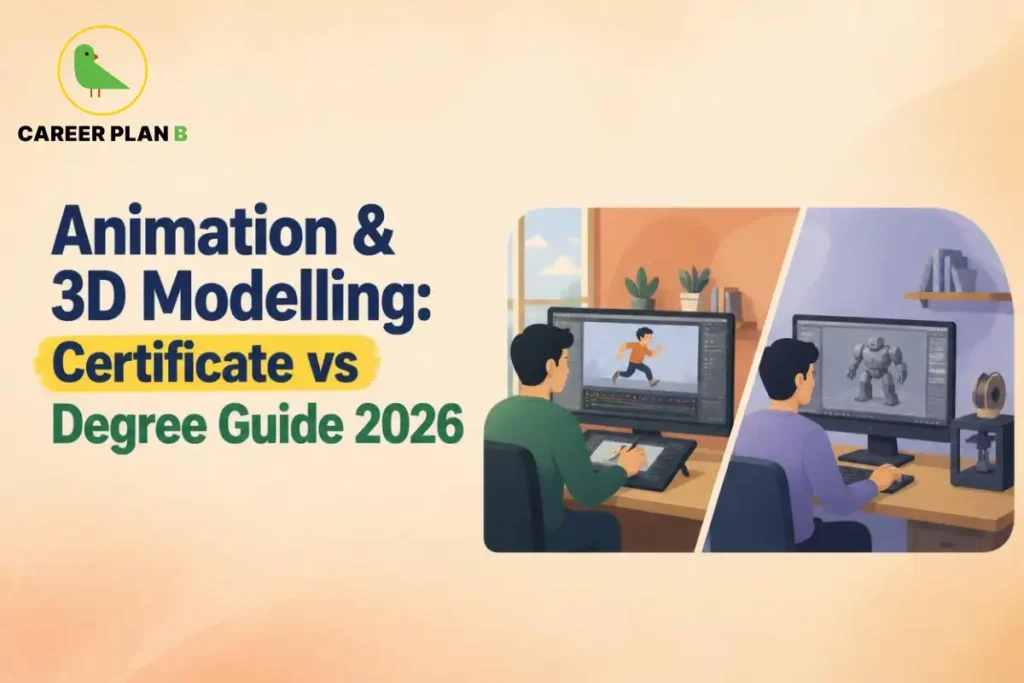
Introduction
Two students, same excitement, same dream. One signs up for a six-month certificate. The other commits four years and twelve lakh rupees. Both can genuinely succeed, but their journeys look nothing alike, and that’s exactly the crossroads every Animation and 3D Modelling Course decision forces you to face.
So which path actually makes more sense for your wallet and your career ceiling? This guide compares real costs, honest timelines, and genuine outcomes across every Animation and 3D Modelling Course option available. Read on, because guessing your way into a twelve-lakh decision is exactly what we’re here to prevent.
Why Does This Choice Matter So Much in 2026?
India’s animation market was valued at over eighteen hundred million dollars in 2023 and is projected to reach roughly twenty-five thousand million dollars, growing at a staggering rate. Consequently, genuine opportunity exists across every training level, making the certificate-versus-degree decision less about access and more about depth and career ceiling.
Furthermore, the government’s AVGC initiative, covering Animation, Visual Effects, Gaming, and Comics, is actively pushing this sector forward, with projections of over two million jobs created within the next decade. Therefore, this genuinely is not a shrinking or risky field, regardless of which training path you choose.
For Personalized Guidance
Does a Formal Degree Actually Matter in a Skill-First Industry?
Not strictly, though it genuinely helps. A degree is not compulsory, and a strong portfolio matters more than academic marks throughout this field. However, a degree does significantly improve placement opportunities, starting salary, and credibility with top studios, particularly for competitive, large-scale productions.
3D Animation Course Options: Comparing Certificate, Diploma, and Degree
Each training level genuinely differs in depth, duration, and career readiness. Here is a direct comparison to help you decide.
| Course Type | Duration & Fees | Best Suited For |
|---|---|---|
| Certificate Course | Few months to 1 year, ₹2,000 to ₹2 lakh | Testing genuine interest and learning specific software quickly |
| Diploma / PG Diploma | 1 to 2 years, ₹23,000 to ₹3 lakh | Faster, industry-ready technical entry |
| B.Des / BSc Animation Degree | 3 to 4 years, ₹3 lakh to ₹14 lakh | Long-term career growth, top studio placements, and creative leadership |
Notably, certificate courses focus specifically on basic skills or single software tools, while diploma programmes offer genuinely deeper technical training across 3D modelling, texturing, rigging, and VFX basics. Therefore, the right choice depends heavily on your specific goal and timeline.
What Does a Full Degree Actually Add That a Diploma Doesn’t?
A B.Des in Animation typically progresses through increasingly technical, industry-facing training across four years, culminating in a complete short film built from script to screen. Consequently, this final-year project genuinely demonstrates end-to-end production capability, something shorter programmes rarely replicate at the same depth.
Suggested blog :- Animation & Motion Graphics Careers Without a Full Degree
Career in Animation: How Does Salary Actually Compare by Training Level?
Compensation genuinely varies based on training depth, specialisation, and portfolio strength. However, current data offers a realistic picture across all three paths.
How Does Starting Salary Actually Differ by Path?
Freshers with certificate-level training typically start between two and a half and four and a half lakh rupees annually. Meanwhile, diploma graduates often see similar starting ranges but with faster access to specialised roles. Notably, degree graduates from strong programmes can start considerably higher, with some B.Des pathways yielding five to eight lakh rupees within the first two years, alongside stronger long-term growth potential.
Does the Investment Actually Pay Back Quickly?
Generally yes, across all training levels. Payback periods for animation education typically range between six months and three years, depending on course cost and starting salary. Therefore, even the more expensive degree route genuinely offers a reasonable return, provided graduates build strong portfolios alongside their formal training.
What Skills Do Employers Actually Prioritise?
Regardless of your training path, certain core skills genuinely determine your employability and long-term salary growth.
- 3D Modelling and Texturing – building and detailing digital objects and characters
- Rigging and Character Animation – creating movable skeletons and believable motion
- Lighting and Rendering – finishing scenes with professional visual polish
- VFX and Compositing – blending effects and layers into final, production-ready output
- Industry Software Mastery – genuine fluency in Maya, Blender, and Unreal Engine
Consequently, formal training can genuinely boost your CV, but it is not a replacement for portfolio quality. Therefore, regardless of which path you choose, prioritise programmes and personal projects that build a genuinely strong, diverse demo reel.
Which Career Paths Does Each Training Level Actually Open?
This field offers genuinely diverse roles across film, gaming, advertising, and digital media. Understanding where each specialisation leads helps set realistic expectations.
- 3D Animator or Modeler – working across film studios, television, and advertising agencies
- VFX Artist – contributing to Bollywood, Hollywood outsourcing projects, and OTT platforms
- Game Animator – creating interactive, physically-based character movement for gaming studios
- Motion Graphics Designer – producing content for digital marketing, brand films, and YouTube
- Storyboard Artist or Creative Director – typically requiring stronger, degree-level creative training
Is Freelancing Actually a Realistic Path Regardless of Training Level?
Yes, genuinely so. Freelancers can earn between fifty thousand and three lakh rupees per project, depending on client base and specialisation, often surpassing full-time salaries once genuinely established. Consequently, freelancing rewards strong portfolio quality considerably more than formal credentials alone.
How Should You Actually Decide Between Certificate and Degree?
This decision genuinely depends on your specific goals, timeline, and financial situation. Here is a practical framework to guide your choice.
- Choose a certificate if you want to test genuine interest quickly, or master one specific software tool affordably
- Choose a diploma if you want faster, industry-ready technical entry without a full four-year commitment
- Choose a degree if you know you want a long-term career, top studio placement, or eventual creative leadership roles
- Regardless of path, prioritise portfolio-building, since employers consistently hire based on demonstrated skill over credentials alone
A Word of Caution Before You Enrol
Always verify an institute’s genuine placement record and faculty industry experience before committing significant fees. Additionally, remember that certifications work best when layered on top of strong project-based training, not used as a substitute for it.
How Career Plan B Helps
Deciding between a certificate, diploma, or full degree for an Animation and 3D Modelling Course takes more than comparing fees alone.This is where Career Plan B can help by offering:
- Personalised Career Counselling: Provides expert guidance based on individual interests, skills, and career goals, helping you decide between a quick certificate and a longer, deeper degree path.
- Psychometric & Career Assessment Tests: Identifies strengths, personality traits, and suitable career opportunities, useful for confirming genuine creative and technical aptitude before committing years of study.
- Career Roadmapping: Creates a clear step-by-step plan to achieve academic and professional goals, including which animation specialisation to pursue.
- Admission & Academic Profile Guidance: Helps in selecting the right courses and colleges and improving academic profiles, so your training investment stays genuinely outcome-driven.
Get In Touch With Us
Frequently Asked Questions
1. Is a degree actually necessary for a career in animation?
Not strictly. A strong portfolio matters more than a formal degree, though a degree does genuinely improve placement opportunities and credibility with top studios.
2. What is the average starting salary after an animation certificate course?
Freshers with certificate-level training typically start between two and a half and four and a half lakh rupees annually, depending on specialisation and city.
3. How much more does a degree actually cost compared to a certificate?
Certificate courses range from roughly two thousand to two lakh rupees, while full degree programmes can cost between three and fourteen lakh rupees depending on the institute.
4. Does a diploma offer a genuine middle ground between certificate and degree?
Yes, diplomas typically offer deeper technical training than certificates, at a fraction of degree-level cost and time, making them a popular, balanced choice.
5. Can freelancers actually out-earn full-time employees in this field?
Yes, experienced freelancers with a strong client base often earn more than full-time employees, particularly when working with international clients.
Conclusion
Neither a certificate nor a full degree is universally “better” in animation and 3D modelling, since the right choice genuinely depends on your specific goals, timeline, and budget. With India’s animation industry growing rapidly and government initiatives actively supporting the sector, genuine opportunity exists at every training level for students willing to build real, portfolio-ready skills.
If you are still weighing which path suits your creative ambitions, thoughtful guidance can bring real clarity before you commit time and money. The right training investment, chosen deliberately, can turn genuine creative passion into a sustainable, well-paying career. Talk to a Career Plan B counsellor today to see which animation path is right for you.