Team Career Plan B · October 12, 2026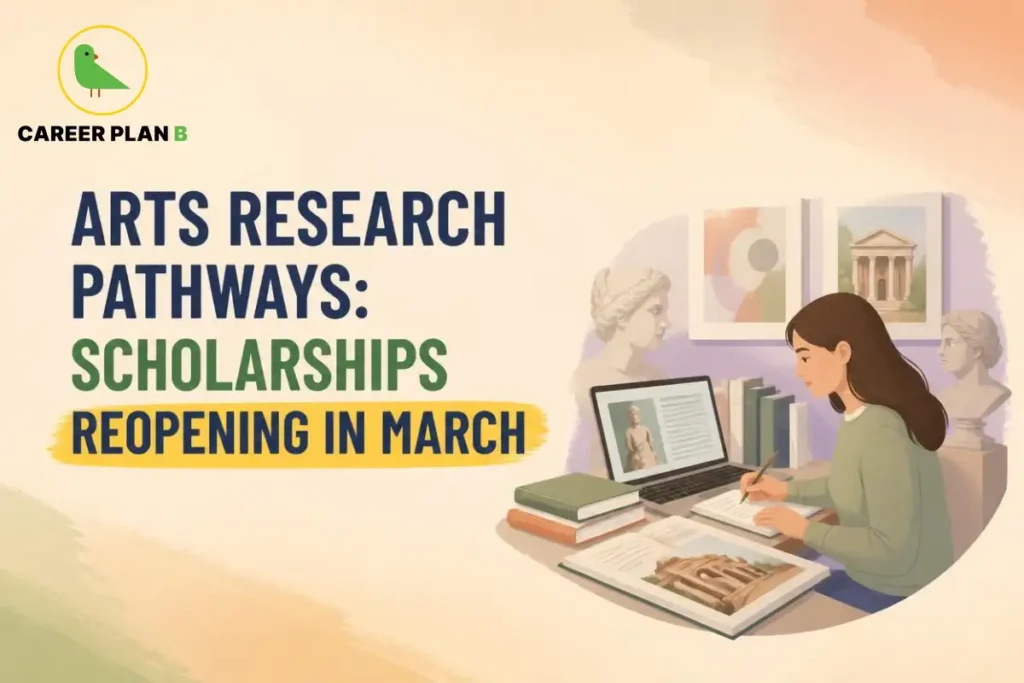
Introduction
Arts research pathways in India depend heavily on a small set of funded fellowship programs that most undergraduate students never research seriously until they’re already applying for a PhD. Understanding how these cycles actually work, well before you need them, changes how realistically you can plan a research career in the humanities and social sciences.
This guide covers the genuine fellowship structures behind Arts research pathways in India, how their application cycles actually function, and exactly how to verify current, accurate dates rather than relying on a fixed month that can shift year to year.
Why Research Funding Matters So Much in the Arts
PhD Study Rarely Pays for Itself Without Funding
Unlike some professional degrees, a humanities or social sciences PhD typically demands full-time, multi-year commitment with limited outside income. Genuine research fellowships make this path financially viable for students who couldn’t otherwise sustain years of unfunded doctoral work.
Why Timing Genuinely Matters
Fellowship cycles open and close on specific windows each year, and missing one often means waiting a full year for the next opportunity. Understanding this rhythm early lets you plan your application well ahead of any actual deadline.
The Core Funding Body for Social Sciences and Humanities
What ICSSR Actually Does
The Indian Council of Social Science Research, operating under the Ministry of Education, runs the primary doctoral funding structure for humanities and social science research in India. Its Doctoral Fellowship supports full-time PhD scholars across disciplines including Sociology, Political Science, Gender Studies, Cultural Studies, and related humanities fields.
The Real Cycle Behind This Fellowship
ICSSR’s own current announcements show its Doctoral Fellowship deadline for the 2026-27 financial year was extended to August 4, 2026, while its Senior Fellowship Scheme for 2026-2027 was separately announced around the same period. These specific dates shift from year to year, so always verify the current cycle directly on ICSSR’s own site rather than assuming a fixed month applies every year.
Who Can Actually Apply
Applicants must be registered PhD scholars at a UGC-recognised university, deemed university, or an Institute of National Importance, generally under 40 years of age with relaxations for reserved categories. Candidates already receiving certain other major fellowships, including UGC JRF or specific national fellowships, aren’t eligible to apply for this one simultaneously.
The Core Funding Body for Historical Research Specifically
What ICHR Actually Does
The Indian Council of Historical Research, a body under the Ministry of Education, provides fellowships, grants, and research support specifically for historians and history scholars. This body runs a genuinely separate funding structure from ICSSR, focused specifically on historical research rather than the broader social sciences.
Why This Distinction Matters for Your Application
Students researching history specifically should apply through ICHR rather than ICSSR, since each body evaluates proposals within its own specific disciplinary scope. Research both bodies’ current fellowship categories directly to confirm which one genuinely fits your specific research area.
Arts Research Pathways: A Quick Reference
| Funding Body | Disciplinary Focus | Fellowship Types |
|---|---|---|
| ICSSR | Social sciences and humanities broadly | Doctoral, Postdoctoral, Senior Fellowship |
| ICHR | Historical research specifically | Research fellowships and grants for historians |
Exact application windows shift annually for both bodies. Treat any specific month mentioned online, including in this guide’s title, as a general seasonal pattern worth checking, not a fixed, guaranteed date.
How to Actually Track These Cycles Properly
Check Official Announcements Directly, Not Secondhand Summaries
Both ICSSR and ICHR publish their own current call for applications directly on their official websites. Bookmark these pages and check them periodically during your final undergraduate or master’s year, rather than relying on a blog post that may reference an outdated cycle.
Build Your Application Well Before Any Deadline
Given how competitive and detailed these fellowship applications tend to be, start drafting your research proposal months before your target cycle’s deadline. A rushed application submitted right before a deadline rarely reflects your genuine research potential.
For Personalized Guidance
What a Strong Fellowship Application Actually Needs
A Genuinely Specific Research Proposal
Fellowship committees favour focused, well-defined research questions over broad, vague research interests. Spend real time narrowing your proposal to a specific, answerable question within your discipline before submitting.
A Clear Institutional Affiliation
Both ICSSR and ICHR generally require applicants to be registered at a recognised university or research institution. Confirm your specific institution’s eligibility and any required departmental endorsement well before your application deadline.
Why This Path Deserves More Attention From Undergraduate Students
Most Students Discover This Too Late
Many Arts undergraduates only learn about ICSSR or ICHR funding once they’re already deep into a master’s program, leaving little time to plan a genuine research career around it. Understanding this funding landscape early gives you real time to build a strong academic profile toward it.
This Path Offers Genuine, Structured Career Support
Unlike informal or self-funded research, these fellowships provide structured financial support specifically designed to sustain full-time doctoral research. This genuinely lowers the barrier to pursuing a serious academic or research career in the humanities.
How Career Plan B Helps
Planning a genuine Arts research career, and tracking funding cycles accurately, takes structured, ongoing attention. Career Plan B helps you build that clarity through:
- Personalized Career Counselling to evaluate whether a funded research career genuinely fits your goals.
- PsycheIntel Career Assessment Tests to confirm your aptitude for sustained, independent research work.
- Career Roadmapping to plan your academic profile toward a strong future fellowship application.
- Admission & Academic Profile Guidance to strengthen your research proposal and institutional affiliation.
Get In Touch With Us
Frequently Asked Questions
1. Do ICSSR and ICHR fellowships genuinely reopen in March every year?
Not necessarily on a fixed schedule. Verified announcements show ICSSR’s most recent doctoral fellowship cycle extended into August 2026, so exact timing shifts annually. Always check each body’s official website for the current cycle’s actual dates.
2. Can undergraduate students apply for ICSSR or ICHR fellowships directly?
Generally, no. These specific fellowships require registered PhD status at a recognised institution. Undergraduate and master’s students should use this period to build the academic profile and research direction these fellowships eventually require.
3. What’s the difference between applying to ICSSR versus ICHR?
ICSSR covers social sciences and humanities broadly, including sociology, political science, and cultural studies, while ICHR focuses specifically on historical research. Choose based on your specific discipline and research focus.
4. How competitive are these fellowship programs genuinely?
They’re genuinely competitive, given limited funding relative to the number of qualified applicants each cycle. A specific, well-defined research proposal submitted well ahead of the deadline meaningfully improves your chances.
Conclusion
Arts research pathways in India run through specific, funded fellowship structures, primarily ICSSR for social sciences and humanities broadly, and ICHR for historical research specifically. These cycles shift in timing from year to year, so verify current, exact dates directly through each body’s official announcements rather than assuming a fixed month applies every cycle.
Start building your academic profile and research direction early, well before you need to submit an actual application, and track official sources directly rather than relying on secondhand timing claims.
Curious how to plan your own path toward a funded Arts research career? Structured career counselling at Career Plan B can help you build a clear, realistic timeline.