Team Career Plan B · July 17, 2026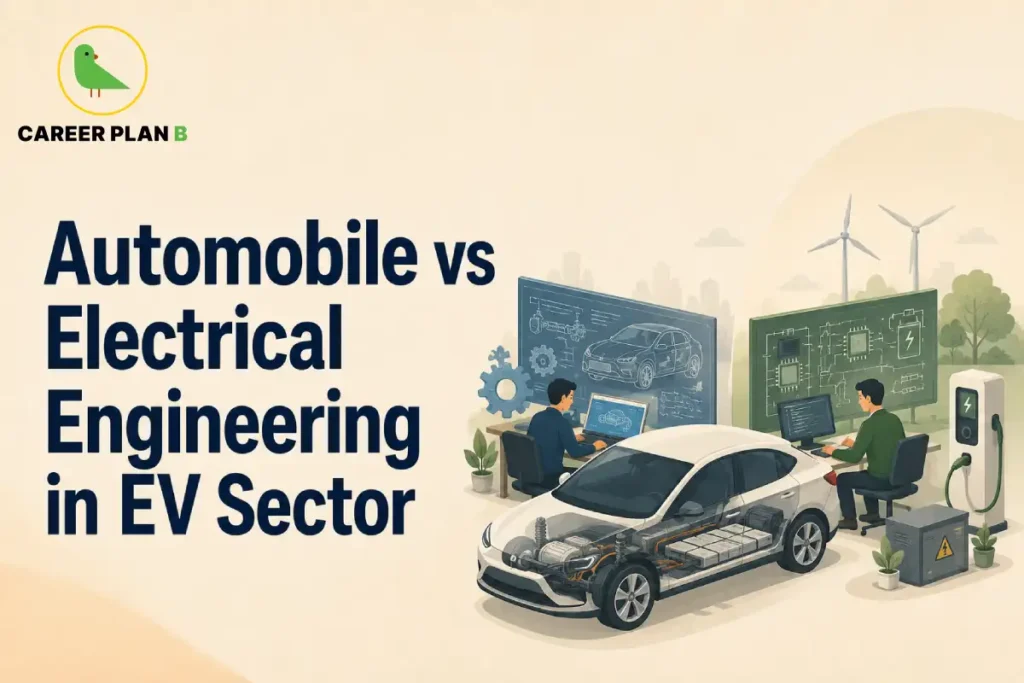
Introduction
If you’re choosing your engineering branch with an eye on the electric vehicle boom, you’ve probably asked yourself this question: automobile vs electrical engineering in the EV sector which one actually leads to better opportunities? It’s a fair question. EVs have blurred the lines between traditional mechanical work and electrical systems, making this decision harder than it used to be. This blog breaks down what each branch actually covers in the EV world, where they overlap, and how you can decide based on your own interests and strengths.
Why This Comparison Matters in the EV Era
A few years ago, automobile engineering and electrical engineering were fairly separate fields. Automobile engineers focused on vehicle structure and mechanics, while electrical engineers worked on power systems, circuits, and electronics. Electric vehicles have changed that. Since an EV runs on a battery-powered electric drivetrain instead of a combustion engine, it requires deep collaboration between mechanical and electrical systems. This is exactly why so many students are now comparing these two branches because the EV sector needs both, often working closely together.
What Automobile Engineers Do in the EV Sector
Automobile engineers still play a central role in EV development, though their focus has expanded. Their work typically includes:
- Vehicle chassis and structural design
- Thermal management systems, especially for battery cooling
- Vehicle dynamics, handling, and safety systems
- Integrating the electric powertrain into the overall vehicle architecture
This shows that the automobile engineering scope in EVs hasn’t shrunk; it has evolved to include new areas like battery placement, weight distribution, and thermal design specific to electric drivetrains.
What Electrical Engineers Do in the EV Sector
Electrical engineers, on the other hand, focus on the systems that actually power and control the vehicle. Common responsibilities include:
- Battery management systems (BMS)
- Power electronics and inverters
- Electric motor design and control
- Charging system design and integration
Electrical engineering in electric vehicles has become a critical specialization, especially as vehicles rely more heavily on software-controlled electrical systems for performance and safety.
Have Any Doubts?
Automobile vs Electrical Engineering Key Differences in the EV Context
| Aspect | Automobile Engineering | Electrical Engineering |
|---|---|---|
| Core Focus | Vehicle structure, mechanics, dynamics | Power systems, circuits, motor control |
| Key EV Contribution | Chassis design, thermal management, integration | Battery systems, power electronics, charging |
| Core Subjects | Mechanics, thermodynamics, vehicle dynamics | Circuit theory, power electronics, control systems |
| Typical Roles | Vehicle design engineer, thermal engineer | BMS engineer, power electronics engineer |
| Skill Overlap | Basic electrical/electronics knowledge helps | Basic mechanical understanding helps |
This EV sector career comparison shows that while the two branches have distinct core areas, there’s growing overlap, especially in roles that require understanding both vehicle mechanics and electrical systems.
Which Branch Is Better for EV Careers?
There’s no single right answer here; it depends on what kind of work excites you more.
Skills for Electrical Engineers in EVs
If you enjoy working with circuits, power systems, and control logic, electrical engineering may suit you better. Useful skills include power electronics, embedded systems, battery chemistry basics, and control system design.
Skills for Automobile Engineers in EVs
If you’re more interested in vehicle design, structural systems, and mechanical integration, automobile engineering remains a strong path. Skills like thermal management, vehicle dynamics, and understanding of electric drivetrain integration are valuable here. In fact, many EV companies now look for engineers who understand both sides, even if their core degree is in one branch. This is why mechanical vs. electrical roles in automotive are increasingly seen as complementary rather than competing paths. According to AICTE, technical curricula are being updated to reflect these evolving, interdisciplinary skill needs in emerging sectors like electric mobility. The Ministry of Heavy Industries has also supported EV-focused skilling and manufacturing initiatives that draw on both mechanical and electrical expertise. Additionally, ARAI‘s vehicle testing and certification standards reflect this overlap, since EV testing involves both mechanical safety and electrical system performance.
How Career Plan B Helps
Still unsure which branch fits you better for an EV career? Career Plan B can help you figure that out. Through personalised career counselling, PsycheIntel and career assessment tests, and admission and academic profile guidance, we help you understand which branch aligns with your interests and strengths. Our Career Roadmapping process also helps you plan the right electives, projects, and skills to build a strong EV-focused career, whichever branch you choose.
For Latest Information
Frequently Asked Questions
- Can automobile engineers work on EV battery technology?
Yes, especially in areas like thermal management and battery pack integration, though deep battery chemistry work often involves electrical or chemical engineering knowledge too.
- Is electrical engineering a safer choice for EV jobs?
Not necessarily safer; both branches have strong demand in the EV sector. The right choice depends on your interest in mechanical systems versus electrical and electronic systems.
- Do I need to switch branches to work in EVs?
No. Both automobile and electrical engineers are needed in the EV sector. Building relevant electives or certifications in the other domain can help, but switching isn’t necessary.
- Which branch has more EV-specific job roles right now?
Both branches have growing EV-specific roles. Electrical engineering often leads in battery and power electronics roles, while automobile engineering leads in vehicle design and integration roles.
- Are hybrid roles common in the EV industry?
Yes, many companies value engineers who understand both mechanical and electrical aspects of EVs, especially for integration-focused roles.
- What if I’m still unsure which branch to choose?
Comparing your interests, whether you enjoy hands-on mechanical work or circuits and electronics, is a good starting point, along with professional guidance.
Conclusion
When it comes to automobile vs electrical engineering in EV sector careers, there isn’t a clear winner; both branches play essential, complementary roles in building the vehicles of the future. Automobile engineers shape the vehicle’s structure and integration, while electrical engineers power and control its core systems. The right choice depends on where your interests lie. If you’re still weighing your options, Career Plan B can help you make a well-informed decision based on your strengths and goals.