Team6 · October 7, 2026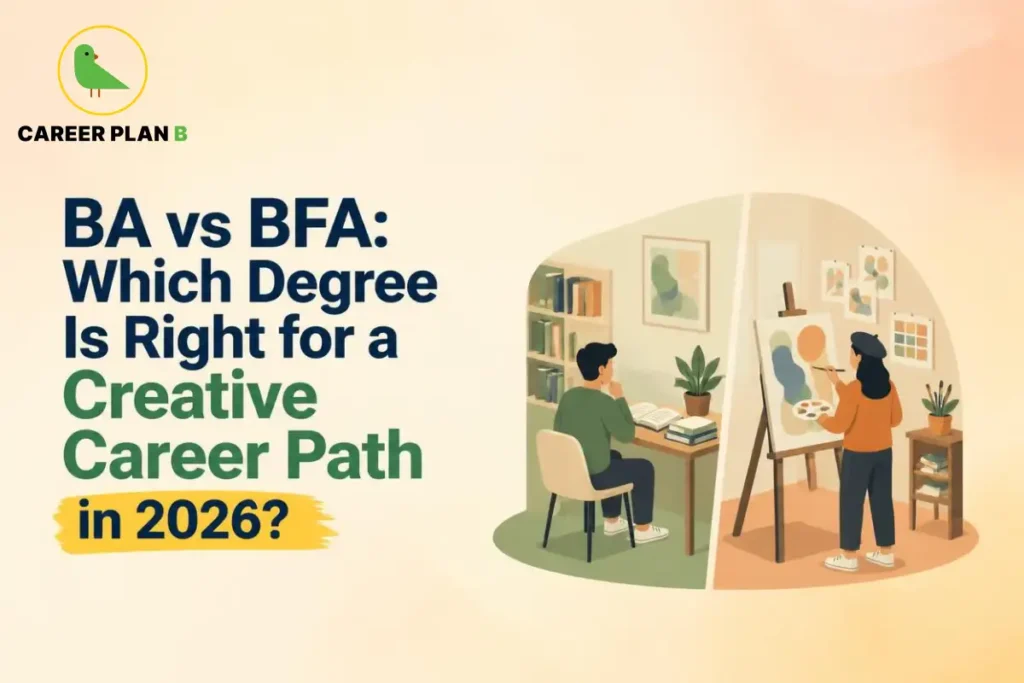
Introduction
If you’re creatively inclined and choosing your undergraduate path, you’ve probably run into this exact fork: should you do a BA — maybe in fine arts, literature, or a related humanities subject — or should you go all-in with a dedicated BFA (Bachelor of Fine Arts)? They sound similar on the surface, but they’re structured quite differently, and that difference genuinely matters for your creative career.
BA vs BFA isn’t just a naming difference. A BFA is a specialized, studio-intensive degree built almost entirely around your craft, while a BA (even one with an arts or creative focus) tends to be broader, blending creative study with other academic subjects. Neither is automatically “better” — the right choice depends on how singularly focused you want your undergraduate years to be.
This blog breaks down the real structural and career differences, so you can choose based on genuine fit rather than assumption.
BA vs BFA Career Scope
Let’s start with BA vs BFA Career Scope, since this is where the practical differences become clearest.
BA (Bachelor of Arts, including arts-adjacent specializations):
- Broader academic structure, often combining a creative major with other humanities or interdisciplinary subjects
- Career paths spanning creative fields, writing, education, media, and further academic study
- More flexibility to pivot into non-creative fields later, given the broader academic base
BFA (Bachelor of Fine Arts):
- Intensive, studio-based training focused specifically on visual or performing arts — painting, sculpture, photography, applied arts, dance, theatre, depending on specialization
- Career paths concentrated in professional creative practice — working artist, art director, animator, designer, performing artist
- A degree structure built almost entirely around building a strong creative portfolio from day one
If your goal is to become a working professional artist or designer with a strong technical foundation, BFA’s concentrated, hands-on structure serves that goal directly. If you want to keep broader academic and career options open while still engaging seriously with a creative subject, a BA offers more built-in flexibility.
BA or BFA Which Is Better: Reframing the Question
Here’s the honest answer to BA or BFA Which Is Better: neither is universally better — they serve genuinely different goals. Ask yourself these questions instead:
- Do I want to specialize intensively in one creative discipline right now, or explore more broadly first? BFA commits you early to focused craft training; BA lets you explore alongside other subjects.
- Am I certain about which creative field I want to pursue? If you already know you want to be a painter, animator, or performing artist specifically, BFA’s structure supports that certainty well.
- Do I want built-in flexibility to pivot away from a purely creative career later? A BA’s broader academic structure, especially under India’s multidisciplinary NEP 2020 framework, makes it easier to combine creative study with other subjects or pivot direction.
- How important is a strong, portfolio-heavy foundation to my goals? BFA programs are typically much more intensive in building a professional-grade portfolio than a general BA.
Creative Career Courses After 12th: The Full Landscape
Beyond just BA and BFA, it’s worth knowing the broader landscape of Creative Career Courses After 12th:
- BFA (Bachelor of Fine Arts) – Specialized, studio-intensive training in visual or performing arts.
- BA in Fine Arts / Applied Arts / related creative majors – A broader academic degree with a creative focus, often combined with other subjects.
- Design-specific degrees (B.Des) – Offered by institutes like NID, more industry and product-application focused than a traditional BFA.
- B.Voc in creative/vocational specializations – A skill-focused, industry-linked route under UGC’s vocational degree framework, blending creative training with practical, job-ready skills.
Each of these serves a slightly different creative career goal — fine art practice, applied design, or vocational/industry-ready creative skills — so it’s worth clarifying your specific interest before choosing between them.
Read more:- 10 High-Demand Careers in 2026 Across All Streams
BA vs BFA Salary: What We Can Honestly Say
As with the other fields we’ve covered, there’s no single official, centrally published salary database comparing BA vs BFA Salary outcomes in India. Creative careers, in particular, see enormous pay variation based on your specific niche, portfolio strength, client base or employer, location, and reputation — far more than most conventional career fields.
What’s genuinely more useful than an unverified number:
- Portfolio quality tends to matter more than degree title – In creative fields, what you can show often outweighs which specific degree you hold, especially in freelance and client-based creative work.
- Sector matters significantly – A BFA graduate working in animation/gaming industries, one in independent fine art practice, and one teaching art will see very different, largely unpredictable income patterns.
- Talk to working professionals directly – For creative fields especially, real income insight comes from professionals in your specific target niche, not aggregated averages that blend wildly different creative careers together.
Have Any Doubts?
BA vs BFA Admission 2026
For BA vs BFA Admission 2026, here’s what the general process looks like for both:
- Eligibility – Both generally require Class 12 pass in any stream from a recognized board, though some BFA programs may ask for a portfolio or basic aptitude assessment.
- Duration – BFA programs typically run three to four years, often with a strong studio/practical component built into every semester. BA programs are commonly three years (or four years under NEP 2020’s multidisciplinary structure), balancing creative and broader academic coursework.
- Portfolio and interview components – Many BFA programs, especially at reputed institutes, include a portfolio review or aptitude test as part of admission — verify this specifically for your shortlisted colleges.
- Distance and online options – BFA is also available through UGC-DEB approved distance-mode programs, useful if you want flexibility, though always verify the specific program’s approval status directly on the UGC-DEB portal before enrolling.
- Internship and practical exposure – Under UGC’s current framework, both BA and BFA-type undergraduate programs now typically include mandatory, credit-linked internship components, giving structured real-world exposure regardless of which degree you choose.
How Career Plan B Helps
Choosing between BA and BFA is a genuinely personal decision — Career Plan B helps you make it based on your actual creative goals, not assumptions.
- Personalized Career Counselling: We help you understand whether intensive specialization (BFA) or broader creative-academic flexibility (BA) genuinely fits your goals.
- Psychometric & Career Assessment Tests: Our assessments reveal how committed you are to a specific creative discipline versus wanting broader exploration.
- Career Roadmapping: We map out a realistic plan, including how each path can lead to further specialization (MFA, M.Des, or other postgraduate options).
- Admission & Academic Profile Guidance: We help you evaluate specific programs’ portfolio requirements and recognition status before you commit.
Get In Touch With Us
Frequently Asked Questions
1. Is a BFA more valuable than a BA for a creative career?
Not inherently. A BFA offers intensive, specialized craft training, while a BA offers broader flexibility. The right choice depends on how focused or exploratory you want your undergraduate years to be.
2. Do BFA programs require a portfolio for admission?
Many do, particularly at reputed institutes, though this varies by college. Some accept students based on Class 12 marks alone. Always verify the specific program’s admission process.
3. Can I pursue an MFA after a BA instead of a BFA?
Generally, yes, though some MFA programs may prefer or require a BFA or equivalent portfolio-based background. Check the specific postgraduate program’s eligibility requirements.
4. Is BFA available through distance or online learning?
Yes, some UGC-DEB approved universities offer BFA through distance mode. Always verify the specific university and program’s current approval status directly on the UGC-DEB portal.
5. What’s the real difference in career outcomes between BA and BFA?
BFA graduates tend to move directly into specialized creative practice with a strong portfolio foundation, while BA graduates often have more flexibility to pivot into related creative, academic, or even non-creative fields.
Conclusion
BA and BFA both offer genuine, respectable paths into a creative career — the real difference lies in specialization versus flexibility, not one being objectively superior. Understanding your own certainty about your creative direction is the clearest way to choose between them.
If you’re weighing BA against BFA and want help matching the right path to your creative goals, Career Plan B is here to guide that decision with real clarity.