Team6 · September 19, 2026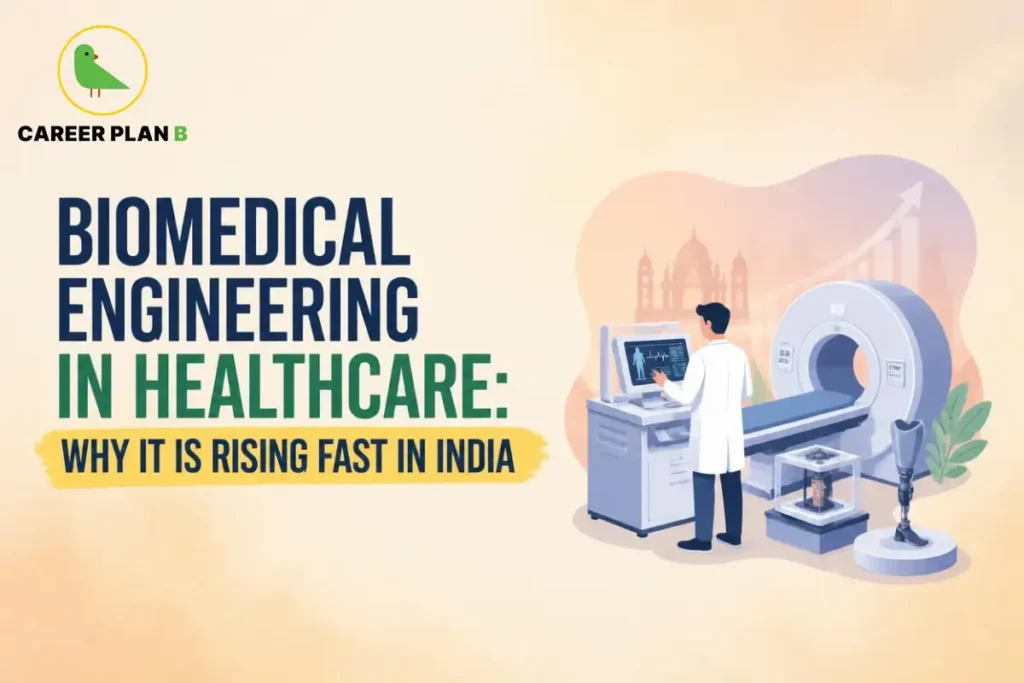
Introduction
Imagine a paralysed patient regaining mobility through a robotic exoskeleton, or a rural doctor diagnosing heart conditions using a pocket-sized ECG device. This is not science fiction. This is biomedical engineering in healthcare, and it is happening right now across India.
India’s medical devices market, valued at approximately $11 billion in 2022, is projected to reach $50 billion by 2030, according to the Ministry of Commerce and Industry. Driving this transformation are biomedical engineers, professionals who sit at the exciting intersection of engineering, biology, and medicine.
So why is this field growing so rapidly? And what does it mean for you as an engineering student or aspiring professional? This blog breaks it all down from what biomedical engineers actually do to career opportunities, required skills, and how to get started on the right path.
What Exactly Does a Biomedical Engineer Do?
Biomedical engineering is the application of engineering principles to medicine and biology. Think of biomedical engineers as the people who design the tools doctors depend on, from MRI machines and pacemakers to artificial limbs and hospital software systems.
Their work spans several specialised domains:
Key Areas of Work in Biomedical Engineering
- Medical Devices and Technology: Designing, testing, and maintaining devices such as ventilators, dialysis machines, surgical robots, and implantable sensors.
- Biomechanics and Prosthetics: Developing artificial joints, limbs, and exoskeletons that help patients with physical disabilities regain movement and independence.
- Clinical Engineering: Working within hospitals to manage and maintain medical equipment, ensuring devices meet safety and performance standards.
- Diagnostic Imaging: Contributing to MRI, CT scan, X-ray, and ultrasound systems that allow doctors to visualise the human body with precision.
- Bioinformatics and Health Tech: Using data, AI, and software to build health monitoring apps, wearable devices, and electronic health record systems.
Why Is Biomedical Engineering in Healthcare Growing So Fast?
Several powerful forces are accelerating the rise of biomedical engineering in healthcare in India. Here are the most significant ones.
India’s Growing Medical Device Industry and CDSCO Regulation
India is among the top five medical device markets in Asia. The Central Drugs Standard Control Organisation (CDSCO), the national regulatory body for medical devices under the Ministry of Health and Family Welfare, has been strengthening its regulatory framework through the Medical Devices Rules, 2017. This has created a more structured and investor-friendly environment for manufacturing and innovation.
The National Medical Devices Policy 2023, approved by the Government of India, aims to position India as a global leader in medical device manufacturing. This policy directly and significantly increases demand for trained biomedical engineers across the country.
Post-Pandemic Healthcare Investment
The COVID-19 pandemic exposed critical gaps in India’s healthcare infrastructure, such as a shortage of ventilators, ICU equipment, and diagnostic tools. In response, the Union Budget 2021-22 raised health sector spending by 137%. Continued investment in subsequent years has sharply accelerated healthcare innovation and the demand for technical talent.
Ageing Population and Rising Chronic Disease Burden
India’s population above 60 years of age is expected to reach 347 million by 2050, according to UNFPA India. An ageing population means growing demand for orthopaedic devices, cardiac monitoring equipment, hearing aids, and rehabilitation technology all areas where biomedical engineers play a central role.
The Rise of AI and Wearable Health Technology
Smartwatches that track ECG readings, AI tools that detect cancer in pathology slides, and remote patient monitoring systems are becoming mainstream. This convergence of healthcare innovation and technology is creating entirely new job categories that did not exist even a decade ago.
Have Any Doubts?
What Are the Career Opportunities in Biomedical Engineering?
The scope of biomedical engineering is broader than most students realise. Here is a snapshot of the key roles and sectors open to graduates.
Key Roles:
- R&D Engineer (Medical Devices)
- Clinical Applications Specialist
- Regulatory Affairs Executive (CDSCO compliance)
- Biomedical Equipment Technician / Hospital Engineer
- Quality Assurance Engineer
- Bioinformatics Analyst
- Health Technology Consultant
Sectors That Hire Biomedical Engineers:
- Multinational medical device companies such as Siemens Healthineers, Philips Healthcare, and GE Healthcare
- Indian medical device startups
- Government hospitals and defence medical services
- Research institutions like IITs, AIIMS, and CSIR labs
- Healthcare IT firms
Approximate Salary Range in India (Entry to Mid-Level):
| Role | Approximate Annual Salary (INR) |
|---|---|
| R&D Engineer | 4 – 8 LPA |
| Clinical Applications Specialist | 4 – 7 LPA |
| Regulatory Affairs Executive | 4 – 6 LPA |
| Hospital Biomedical Engineer | 3 – 6 LPA |
| Bioinformatics Analyst | 5 – 10 LPA |
Figures are indicative and vary by employer, location, and experience.
What Skills and Qualifications Do You Need?
To build a strong career as a biomedical engineer in India, you need a combination of technical knowledge, domain understanding, and interpersonal skills.
Technical Skills:
- Electronics and instrumentation
- Basic human anatomy and physiology
- CAD (Computer-Aided Design) for device modelling
- Programming in Python or MATLAB for signal and data processing
- Familiarity with regulatory standards such as ISO 13485 and IEC 60601
Soft Skills:
- Clear communication with doctors and clinical staff
- Attention to detail in safety-critical environments
- Practical problem-solving under real hospital constraints
Academic Pathways:
Most biomedical engineering programmes in India are accredited by AICTE. Students can also pursue postgraduate specialisations or appear for GATE (Biomedical Engineering BM paper) for admission to M.Tech programmes at IITs and NITs. GATE also qualifies candidates for PSU recruitment in relevant roles.
For research-orientated careers, programmes supported by the Department of Biotechnology (DBT) and the Department of Scientific and Industrial Research (DSIR) offer excellent funding and institutional backing.
How Career Plan B Helps
Choosing the right specialisation within biomedical engineering is not easy. Career Plan B offers personalised career counselling, PsycheIntel psychometric assessments to match your natural strengths to the right engineering niche, and expert guidance on M.Tech admissions, GATE preparation, and long-term career roadmapping so every decision you make is informed and purposeful.
Get In Touch With Us
Frequently Asked Questions
1. Is biomedical engineering a good career in India?
Yes, it is a strong and growing field. With India’s medical device industry expanding rapidly and government policies like the National Medical Devices Policy 2023 pushing domestic manufacturing, demand for trained biomedical engineers is rising steadily and is expected to continue doing so.
2. What is the scope of biomedical engineering after B.Tech?
Graduates can work in medical device R&D, clinical engineering, regulatory affairs, hospital equipment management, or health tech startups. They can also pursue M.Tech via GATE, an MBA in healthcare management, or research fellowships at institutions like CSIR and ICMR.
3. Does GATE have a paper for biomedical engineering?
Yes. GATE introduced the Biomedical Engineering (BM) paper. Clearing it opens doors to M.Tech admissions at IITs and NITs, as well as recruitment in public sector undertakings.
4. What role does CDSCO play in biomedical engineering careers?
CDSCO regulates medical devices in India under the Medical Devices Rules, 2017. Biomedical engineers working in regulatory affairs help companies obtain device licences and maintain compliance, making it one of the most in-demand roles in the industry today.
5. Which government institutions support biomedical research in India?
Key institutions include CSIR, DBT, ICMR, AIIMS, and several IITs with dedicated biomedical engineering departments.
Conclusion
Biomedical engineering in healthcare is no longer a niche or experimental field; it is a career at the heart of India’s most urgent national priority. From designing smarter diagnostic tools to building regulatory frameworks for safe medical devices, the opportunities are wide, meaningful, and growing every single year.
If you are an engineering student wondering whether to explore this path, the answer is clear: the demand is real, the roles are diverse, and the impact is deeply tangible. Start early, build the right skills, and get proper guidance so you do not leave your career to chance.
Your health-tech future begins with the right plan. Make it Plan B.