Team6 · October 8, 2026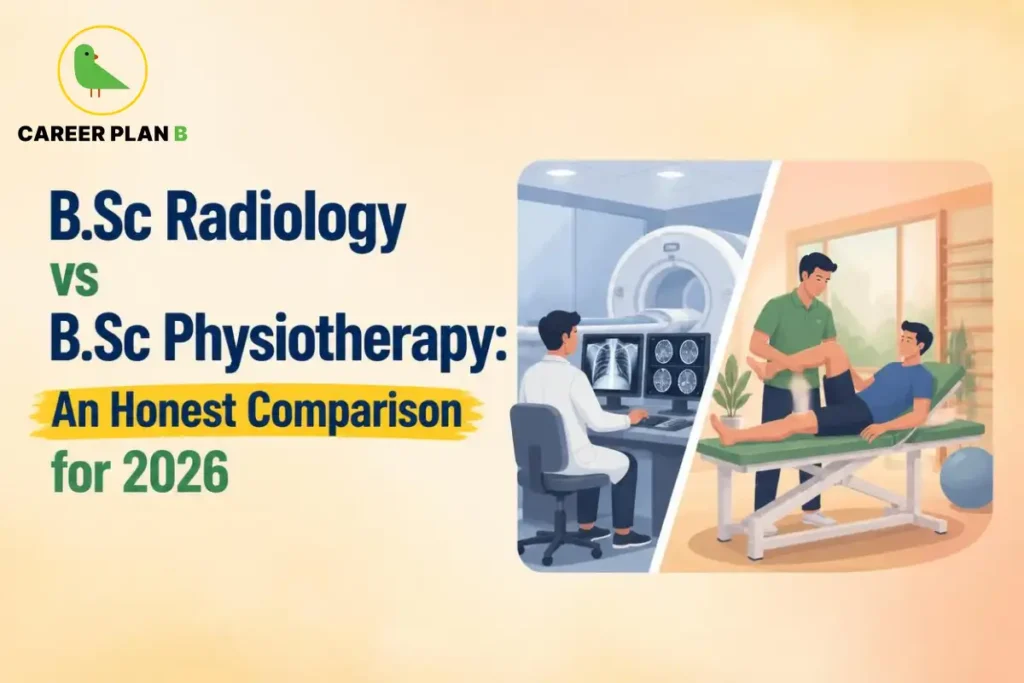
Introduction
Radiology and Physiotherapy are two of the most commonly compared allied healthcare degrees, and for good reason — both offer genuine, respected careers without requiring the intensely competitive MBBS route. But “which is better” isn’t really the right question, since they train you for fundamentally different kinds of work. What’s more useful — and what’s changed significantly this year — is understanding exactly how each field’s admission rules, structure, and career scope actually differ.
This blog gives you that honest comparison, including an important, recent regulatory distinction between the two fields that many older articles online haven’t caught up with yet.
BSc Radiology vs BSc Physiotherapy: The Critical 2026 Distinction
Here’s the single most important, currently accurate fact in this comparison: Radiology and Physiotherapy no longer follow the same admission rules for 2026-27, even though they used to be treated similarly as NEET-free allied health fields.
- Medical Radiology and Imaging Technology (the formal name for the Radiology degree) is among the allied healthcare curricula where NCAHP has made NEET UG mandatory from the 2026-27 academic year, with no deferral granted.
- Physiotherapy (BPT), by contrast, had its NEET requirement specifically deferred by NCAHP to the 2027-28 academic year, meaning for 2026-27 specifically, physiotherapy admission remains NEET-free.
This is a genuinely important, recent distinction. If you’re choosing between these two fields partly based on admission difficulty, Radiology currently requires clearing NEET, while Physiotherapy — for this one admission cycle only — doesn’t.
Read more:- Best Job-Oriented Courses After BSc: Top Picks to Supercharge Your Career
BSc Radiology NEET Requirement 2026: What’s Confirmed
Here’s what’s confirmed about BSc Radiology NEET Requirement 2026:
- NEET UG is mandatory for admission to Medical Radiology and Imaging Technology programs under NCAHP’s notified curriculum, effective from the 2026-27 academic year.
- This applies alongside the standard Class 12 Science eligibility (Physics, Chemistry, Biology), meaning NEET is an additional requirement on top of, not instead of, your board qualification.
- No deferral was granted for this specific field, unlike physiotherapy — so if you’re targeting Radiology this cycle, NEET preparation isn’t optional.
BSc Physiotherapy NEET Requirement 2026: The Temporary Exception
Here’s the honest, time-sensitive picture for BSc Physiotherapy NEET Requirement 2026:
- NEET is not required for the 2026-27 admission cycle – NCAHP formally deferred this requirement for BPT (and BOT) programs specifically, citing logistical challenges with incorporating this new candidate group into an already advanced NEET-UG exam cycle.
- This deferral is explicitly temporary – The requirement is expected to take effect from the 2027-28 academic year, so this NEET-free window applies specifically to students admitting in the current cycle, not indefinitely.
- Eligibility remains Class 12 Science-based in the interim, admitted through standard marks-based processes.
Radiology vs Physiotherapy Career Scope
Beyond admission, Radiology vs Physiotherapy Career Scope reflects genuinely different day-to-day work:
| Aspect | Radiology (Medical Radiology & Imaging Tech) | Physiotherapy |
|---|---|---|
| Core Work | Operating imaging equipment (X-ray, CT, MRI, ultrasound), producing diagnostic images | Assessing and treating movement, pain, and rehabilitation needs through physical techniques |
| Patient Interaction Style | Shorter, procedure-focused interactions | Longer-term, relationship-based treatment over multiple sessions |
| Work Setting | Diagnostic centers, hospital imaging departments, radiology clinics | Hospitals, rehabilitation centers, sports facilities, private clinics, home care |
| Physical Demands | Moderate; primarily equipment operation and patient positioning | Higher; hands-on treatment techniques, demonstrating exercises |
| Career Progression | Specialization in specific imaging modalities (CT, MRI, ultrasound) | Specialization in sports physiotherapy, neuro-rehab, pediatrics |
| Average Starting Salary (2026) | ₹4.0 – ₹7.5 LPA | ₹3.5 – ₹6.5 LPA |
| Senior Salary Scope (5+ Yrs) | ₹12.0 – ₹22.0+ LPA | ₹10.0 – ₹20.0+ LPA |
Neither field is objectively “better” — Radiology suits students drawn to technical, equipment-based diagnostic work with more procedural, shorter patient interactions. Physiotherapy suits students drawn to hands-on, relationship-based rehabilitative care with longer-term patient engagement.
BSc Radiology Course Details
Here’s what to expect from BSc Radiology Course Details:
- Duration – Generally structured as a three-year academic program followed by a mandatory internship period, aligned with NCAHP’s standardized curriculum approach for allied health degrees.
- Core subjects – Radiographic technique, imaging physics, radiation safety and protection, anatomy and physiology, and patient care fundamentals.
- Practical training emphasis – Heavy hands-on exposure to imaging equipment, given the highly technical, equipment-dependent nature of the field.
- Post-qualification requirements – As with other NCAHP-regulated allied health fields, registration with the relevant state or national allied health registry is typically required for professional practice.
Have Any Doubts?
BSc Physiotherapy Course Details
Here’s what to expect from BSc Physiotherapy Course Details:
- Duration – Typically a 4.5-year program, including a mandatory clinical internship, reflecting physiotherapy’s more extensive practical training requirements.
- Core subjects – Anatomy, physiology, kinesiology, therapeutic exercise techniques, electrotherapy, and rehabilitation science.
- Practical training emphasis – Extensive clinical placements, given that physiotherapy is fundamentally a hands-on, patient-treatment discipline.
- Post-qualification requirements – Registration as a licensed physiotherapist is required for independent practice, similar to other regulated allied health professions.
How to Choose Between Them
Given the genuine differences, here’s how to think through your choice:
- Consider the current admission difference honestly – If avoiding NEET this specific cycle matters to you, Physiotherapy currently offers that (temporarily), while Radiology doesn’t.
- Think about your comfort with direct, hands-on patient treatment versus technical/procedural work – This is really the core distinction between these fields, more important long-term than the admission process.
- Consider your interest in equipment and technology versus movement science and rehabilitation – Radiology leans technical and diagnostic; Physiotherapy leans therapeutic and movement-focused.
- Don’t choose based on NEET-avoidance alone – Since Physiotherapy’s NEET-free status is explicitly temporary (changing 2027-28), build your decision around genuine interest in the work itself, not just this cycle’s admission convenience.
How Career Plan B Helps
Choosing between Radiology and Physiotherapy is a genuinely significant decision — Career Plan B helps you make it based on real fit and accurate, current information.
- Personalized Career Counselling: We help you understand whether technical, diagnostic work or hands-on, rehabilitative care genuinely suits your interests and temperament.
- Psychometric & Career Assessment Tests: Our assessments confirm which field’s day-to-day work style matches your natural strengths.
- Career Roadmapping: We map out your specific admission timeline, including current NEET requirements for each field.
- Admission & Academic Profile Guidance: We help you verify current, institute-specific admission requirements before you commit to either path.
Get In Touch With Us
Frequently Asked Questions
1. Does BSc Radiology require NEET in 2026?
Yes. NCAHP has made NEET UG mandatory for Medical Radiology and Imaging Technology programs from the 2026-27 academic year, with no deferral granted for this field.
2. Does BSc Physiotherapy require NEET in 2026?
No, not for this specific cycle. NCAHP deferred the NEET requirement for BPT and BOT programs to the 2027-28 academic year, so 2026-27 admission remains NEET-free.
3. Which field has better career prospects, Radiology or Physiotherapy?
Neither is objectively better — they lead to genuinely different careers. Radiology suits technical, diagnostic-focused interests, while Physiotherapy suits hands-on, rehabilitative care interests.
4. How long is the BSc Physiotherapy program compared to Radiology?
Physiotherapy is typically a longer program (around 4.5 years including internship) compared to Radiology’s typical three-year academic structure plus internship, reflecting physiotherapy’s more extensive clinical training requirements.
5. Should I choose Physiotherapy just to avoid NEET?
Not advisable as your sole reason, since this NEET-free status is explicitly temporary and changes from 2027-28. Choose based on genuine interest in the field’s actual day-to-day work.
Conclusion
Radiology and Physiotherapy are both genuine, respected allied healthcare careers, but they differ meaningfully in their 2026 admission requirements — Radiology now requires NEET, while Physiotherapy has a temporary, one-cycle exemption. Beyond this admission distinction, the real choice should come down to whether you’re drawn to technical, diagnostic work or hands-on, relationship-based rehabilitative care.
If you’re weighing these two fields and want help making a well-informed, currently accurate decision,Career Plan B is here to guide that choice with real clarity.