Team6 · September 25, 2026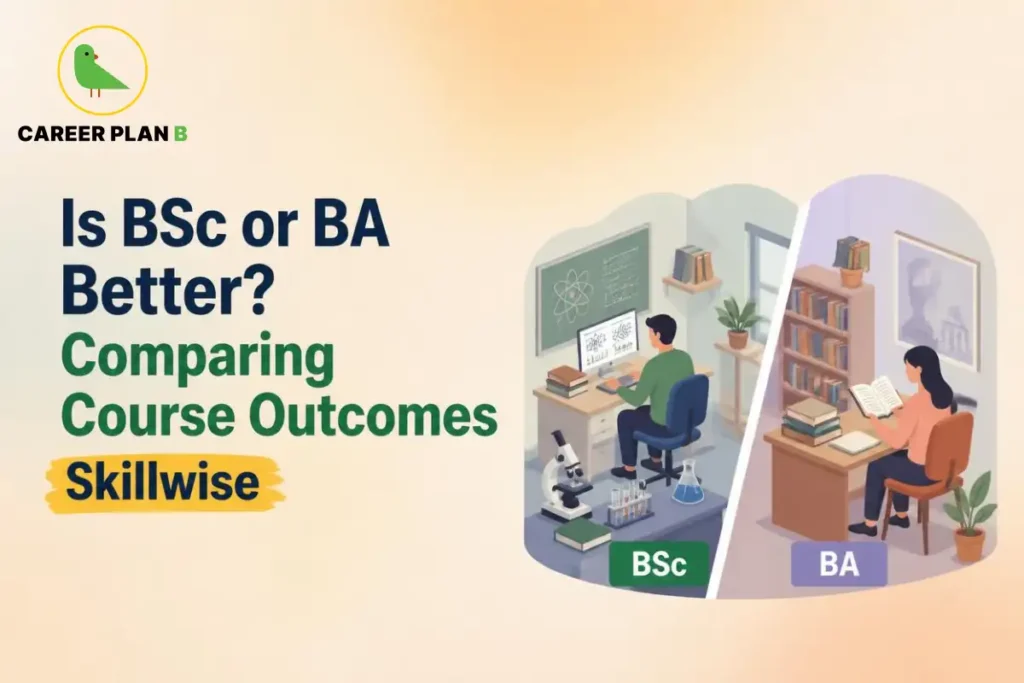
Introduction
BSc or BA gets debated constantly, usually framed as a contest between a “serious” technical degree and a “soft” humanities one. That framing misses the actual point of comparison entirely.
The real question isn’t which degree is harder. It’s which specific skills each one builds, and which of those skills genuinely matches how you want to work. This guide covers BSc or BA skillwise, comparing analytical thinking, communication, research methods, and career flexibility directly, rather than relying on outdated assumptions about prestige.
Why “Which Is Harder” Is the Wrong Question
Difficulty Isn’t the Same as Value
A BSc’s lab work and mathematical rigour can feel objectively harder in the moment than writing a humanities essay. That difficulty doesn’t automatically make the resulting skill set more valuable in every career context.
What Actually Matters More
Employers and postgraduate programs care about specific, demonstrated skills, not which degree required more visible effort. BSc or BA both build genuine, transferable skills, just different ones entirely.
Skill Comparison One: Analytical and Quantitative Thinking
What BSc Typically Builds
A BSc degree consistently builds strong quantitative reasoning, hypothesis testing, and structured problem-solving through lab work and mathematical coursework. Students graduate comfortably working with data, formulas, and step-by-step logical processes.
What BA Typically Builds
A BA degree builds analytical thinking too, just applied differently, often through evaluating arguments, interpreting texts, and identifying patterns in qualitative information. This is genuine analytical skill, though it looks less numerical on the surface.
Skill Comparison Two: Written and Verbal Communication
What BA Typically Builds
A BA degree consistently builds strong written and verbal communication through essay writing, debate, and extended argumentation across a full degree. Students graduate comfortably constructing a persuasive case and communicating complex ideas clearly.
What BSc Typically Builds
A BSc degree builds communication too, though usually in a more compressed, technical form, through lab reports and structured scientific writing. This skill matters genuinely, but it develops less extensively than the sustained argumentative writing a BA degree demands.
Skill Comparison Three: Research Methods
What BSc Typically Builds
A BSc degree trains students in empirical research methods: hypothesis formation, controlled experimentation, and quantitative data analysis. This research approach suits fields where measurable, repeatable results matter most.
What BA Typically Builds
A BA degree trains students in qualitative and interpretive research methods: textual analysis, case studies, and contextual reasoning. This research approach suits fields where meaning, context, and interpretation matter more than pure measurement.
Have Any Doubts?
Skill Comparison Four: Career Flexibility
Where BSc Graduates Have an Edge
BSc graduates often have a more direct path into specific technical roles, particularly in fields requiring licensed or certified expertise like lab work or applied sciences. This directness comes with a narrower default range of roles straight out of graduation.
Where BA Graduates Have an Edge
BA graduates often have broader initial flexibility, since skills like communication, argumentation, and research apply across a wider range of entry-level roles. This breadth can mean a less obvious, more self-directed path toward specialisation later.
A Structural Point Worth Knowing
The Common University Entrance Test now allows largely stream-neutral entry into most undergraduate programs, based on specific subject tests rather than your Class 12 stream alone. This has genuinely narrowed the practical gap between BSc or BA as starting points, more than most families realise.
BSc or BA: A Skill-by-Skill Comparison
| Skill Area | B.Sc. Strength | B.A. Strength |
|---|---|---|
| Quantitative reasoning | Strong, built through labs and mathematics | Present, but less central to the degree |
| Written communication | Present, often compressed and technical | Strong, built through extended essay writing |
| Research method | Empirical, hypothesis-driven | Qualitative, interpretive, and contextual |
| Initial career directness | Higher, toward specific technical roles | Lower, but broader entry-level flexibility |
| Postgraduate flexibility | Strong within science and technical fields | Strong across humanities, policy, and management |
How to Actually Decide Between BSc or BA
Start With How You Prefer to Think
If you consistently prefer working through defined problems toward a single correct answer, BSc likely fits your natural thinking style better. If you consistently prefer interpreting ambiguous material and constructing an argument, BA likely fits better.
Then Check Your Target Career’s Actual Requirements
Research the specific skills your target career values most, rather than assuming based on degree reputation alone. Many careers, from policy work to product management, genuinely value the skills either degree builds, provided you develop them deliberately.
What Neither Degree Guarantees on Its Own
The Degree Alone Isn’t Enough
Neither BSc or BA alone guarantees strong outcomes without deliberate skill-building layered on top. A BSc graduate who never builds communication skills, or a BA graduate who never builds analytical rigour, limits their own outcomes regardless of degree choice.
Building the Skills Your Degree Doesn’t Emphasise
Deliberately seek out coursework, electives, or projects that build the skills your core degree underemphasises. A BSc student can take on debate or writing-heavy electives, while a BA student can build data literacy through basic statistics or analytics courses.
How Career Plan B Helps
Deciding between BSc or BA based on genuine skill fit, not outdated assumptions, takes real self-assessment. Career Plan B helps you make this decision with clarity through:
- Personalized Career Counselling to match your natural thinking style to the right degree choice.
- PsycheIntel Career Assessment Tests to reveal whether analytical, quantitative, or interpretive skills genuinely suit you best.
- Career Roadmapping to plan how you’ll build the skills your chosen degree doesn’t emphasise.
- Admission & Academic Profile Guidance to strengthen your application for either path.
Get In Touch With Us
Frequently Asked Questions
1. Is BSc genuinely harder than BA, or is that just a common assumption?
Difficulty is subjective and depends on your natural strengths. BSc coursework often feels more rigorous due to lab work and mathematics, while BA coursework demands equally intense sustained argumentation and research, just in a different form.
2. Which degree, BSc or BA, offers better job prospects immediately after graduation?
This depends heavily on your specific target field rather than the degree broadly. BSc often offers more direct technical entry points, while BA often offers broader initial flexibility across communication-heavy entry-level roles.
3. Can a BA graduate build strong analytical or quantitative skills later?
Yes, genuinely. Structured courses in statistics, data analysis, or business analytics can build this skill set meaningfully after a BA, especially when paired with real, demonstrated project work.
4. Does choosing BSc or BA limit my postgraduate options?
Less than most students assume, particularly with CUET’s largely stream-neutral admission model at many institutions. Specific postgraduate programs may have prerequisites, so always check your target program’s exact eligibility criteria directly.
Conclusion
BSc or BA isn’t really a contest between a harder degree and an easier one. Each builds a genuinely different, valuable skill set: BSc strengthens quantitative reasoning and empirical research, while BA strengthens communication and interpretive analysis.
Choose based on how you naturally prefer to think and work, then deliberately build the skills your chosen degree doesn’t emphasise on its own.
Still weighing BSc or BA for your own strengths and goals? Structured career counselling can help you decide with real clarity, not just assumptions.