Team2 · June 11, 2026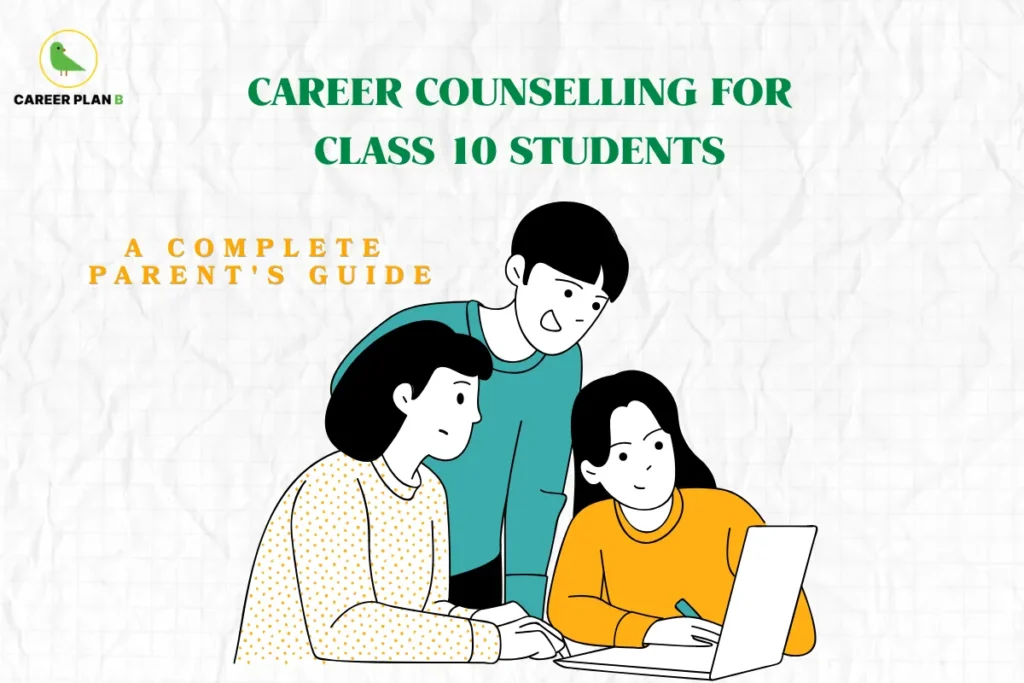
Introduction
Your child is in Class 10. And suddenly, the school is asking them to choose a stream for Class 11-12. Science. Commerce. Arts.
It sounds simple. But you know it’s not. This is one of the biggest decisions of their life. And they have no idea what they’re doing.
So you’re trying to help. You are giving advice. You’re sharing your experience. You’re maybe pushing them a bit toward what you think is “smart” or “safe.” And your child is getting frustrated because you don’t understand their hesitation.
Here’s what nobody tells parents: Your job is not to decide. Your job is to help them decide.
This guide is for you — the parent who wants to support their child through this decision without pushing them toward the wrong path. We’ll walk through what career counselling for Class 10 students actually involves, when to get it, how it helps, and how you can be the supportive parent without being the controlling parent.
Why Career Counselling for Class 10 Matters (More Than You Think)
Let’s start with the stakes.
Your child is choosing between streams. This choice determines:
- The Subjects They Study for Two Years: If they choose Science and they hate Physics, they’re stuck. For two years. That affects their engagement, their grades, their confidence.
- Their College Options: Different streams lead to different colleges and programs. Science opens engineering/medicine doors. Commerce opens business doors. Arts has diverse options. The choice shapes where they can apply.
- Their First Career Direction: Not their only career, but their starting point. Most graduates work in fields related to their college major.
- Their Peer Group: The people in their stream become their classmates, their friends, their network. That shapes their school experience.
The thing is: Most students choose based on nothing solid. What their friends are doing. What their parents did and what “sounds smart.” Not based on their actual strengths and interests.
Then they spend two years in the wrong stream, struggling, depressed, thinking they’ve made a terrible mistake.
Career counselling prevents that. It gives them actual data about themselves. And it gives you confidence that the choice is right, not just a guess.
When to Start Career Counselling for Class 10 Students
The Short Answer: Not in Class 12. Not after board exams. In Class 10, before they choose.
The Timing: Ideally between April-June of Class 10 (before stream selection forms are due).
Why This Timing:
- They haven’t committed yet, so they’re more open to assessment
- They have time to process results and make a good decision
- You avoid last-minute panic and wrong choices
- If they need support (coaching, skill-building), you have time to plan
If It’s Already Later: Don’t stress. Career counselling still helps. Even in September of Class 11, if they’re already in the wrong stream and miserable, we can help fix it (though changing streams mid-year is harder).
What Class 10 Career Counselling Actually Involves
It’s not just “Which stream should you choose?” It’s much deeper.
The Assessment Phase
Your child takes PsycheIntel, our psychometric assessment designed for 14-16 year olds. It takes about 20 minutes. They answer questions about:
- How they naturally think (logical, verbal, creative, numerical)
- What genuinely interests them (not what they think they should like)
- How they prefer to work and learn
- Their personality traits relevant to career choices
- How they handle pressure
There are no “right” answers. It’s just data about who they are.
The Results Interpretation
Your counsellor sits down with your child and explains the results. Not in psychological jargon. In plain language.
“Based on this assessment, your strengths are logical thinking and creative expression. You’re interested in solving real problems and you work best in collaborative environments. Here’s what that tells us about stream selection…”
This is where it gets practical.
The Stream Selection Discussion
Based on the assessment results, the counsellor discusses:
What Each Stream Actually Involves: Not the Instagram version. The real day-to-day.
“If you choose Science, here’s what you’ll study. Here’s what colleges expect. Here’s what careers you could pursue. Here is what students in Science actually like and dislike.”
Same for Commerce and Arts.
How Their Profile Matches Each Stream: “Your strengths suggest you’d thrive in X stream, but you’d struggle in Y stream. Here’s why…”
Addressing Their Concerns: “You’re worried about math in Science. Let’s talk about what that actually means. Are you worried about the difficulty, or about the subject itself? Because those are different problems.”
The Plan
At the end, they have clarity. Not just “choose Science,” but “Here’s why this stream fits you. Here’s what to expect. Here’s how to prepare.”
Have Any Doubts?
How to Have the Stream Selection Conversation With Your Child
This is where a lot of parents mess up. They come from a place of love, but they end up controlling instead of supporting.
What NOT to Do
- Don’t Project Your Own Path: “I did engineering and it worked out for me, so you should too.” Your child is not you. What worked for you might be wrong for them.
- Don’t Dismiss Their Concerns: “Oh, everyone worries about math. Just study harder.” You’re dismissing real information about themselves. Listen instead.
- Don’t Force a Choice: “You’re choosing Science. Final answer.” This might seem efficient, but you’re setting them up for resentment and poor performance.
- Don’t Make It About External Validation: “What will people think if you choose arts?” No. What matters is what works for your child.
- Don’t Use Shame or Guilt: “After everything we’ve done for you, you’re not even choosing the smart stream?” This damages your relationship and doesn’t help the decision.
What TO Do
- Listen First: Before giving advice, ask your child what they’re thinking. “What are you leaning toward? What are your concerns?” Actually listen.
- Share Your Experience (But Not Your Expectation): “I did engineering and I loved it. But that’s my path. You need to find your own.” This opens doors instead of closing them.
- Support Assessment: “Let’s get a professional assessment so we have actual data instead of guessing. Are you okay with that?”
- Help Them Process Results: When they get assessment results, help them understand what the data means. “The assessment says you’re strong in verbal and analytical skills. What do you think that means for stream choice?”
- Ask Questions, Don’t Give Answers: “Based on the assessment, Science seems like a good fit. But you seemed hesitant. What’s holding you back?” Let them discover their own answers.
- Make It Safe to Change Your Mind: “If you choose Science and after two months you hate it, we can talk about changing. It’s not irreversible. Let’s just try to get it right the first time.”
- Respect Their Choice: If they choose arts and you wanted them to do engineering, accept it. Gracefully. Your support matters more than your preference.
Red Flags: When Your Child Needs Professional Guidance
Some parents try to handle stream selection on their own. But certain situations mean professional counselling is really important.
Red Flag 1: They Refuse to Talk About It
If your child shuts down whenever you bring up stream selection, that’s a sign. They might be anxious. Forcing conversations won’t help. A counsellor creates a safe, judgment-free space where they might open up.
Red Flag 2: You and Your Child Disagree
You want Science. They want Arts. Or vice versa. When parents and child are in conflict, a professional third party helps navigate it objectively.
Red Flag 3: They Have No Idea What They Want
Some kids are genuinely confused. They have no strong preferences. No sense of their own strengths. That’s normal at 14-15. But it means they need assessment and guidance, not just your opinions.
Red Flag 4: Peer Pressure is the Main Factor
“Everyone in my group is doing Science, so I should too.” If your child’s main reason is fitting in, that’s a warning sign. They need to understand their own preferences.
Red Flag 5: They’re Anxious or Depressed About the Decision
If stream selection is causing real anxiety or avoidance, that’s a sign they need support beyond what a parent can provide.
Red Flag 6: You Can’t Be Objective
Be honest with yourself. If you have strong opinions about which stream is “right,” can you actually listen to your child without bias? If no, get a counsellor. It helps everyone.
What to Expect From a Career Plan B Class 10 Session
Here’s what actually happens when you bring your child in:
Session 1: Discovery Call (With Your Child)
We meet your child. We understand their situation. Are they excited about stream selection? Anxious? Clueless? We figure out what’s going on.We also meet you (the parent) brieflyand understand your concerns. We set expectations.
This is 20 minutes. Free. No commitment.
Session 2: PsycheIntel Assessment (Your Child, Solo)
Your child takes the assessment online/offline. This is their time. No parents. No pressure.
We analyze the results.
Session 3: Results Discussion (Your Child + Parent Optional)
We sit down with your child and discuss the results. We explain what it means for stream selection.
You can be present (recommended) or not. Depends on what your child prefers.
This is when real clarity happens.
Session 4: Follow-Up (If Needed)
Sometimes parents have questions. Or the child needs more discussion. We schedule follow-ups.
Book a Free Session With Us
What Your Role Should Be (The Parent’s Job)
Your job as a parent in this process:
Support: “I’m here to help you think through this, not to decide for you.”
Listen: Hear what your child is actually saying. Beyond the words, what are they worried about? What are they excited about?
Provide Context: Share your experience. Not as the “right” path, but as one person’s journey. “When I was your age, I chose X and here’s what happened…”
Help Evaluate: Once they have assessment results, help them think through them. “The assessment says you’re creative. What does that mean to you? Where do you see creativity mattering?”
Accept Their Choice: Even if it’s not what you would have chosen. Especially then. Your acceptance matters more than your agreement.
Hold Them Accountable: If they choose Science, then complain constantly, don’t let them quit without good reason. But if they choose and they genuinely hate it after honest effort, help them find solutions.
FAQs From Gurgaon Parents
- “My child doesn’t want to do Science. Is that okay?”
Yes. Science isn’t for everyone. And avoiding it doesn’t limit career options as much as people think.
- “Shouldn’t I push them toward the more prestigious stream?”
No. A miserable kid in a prestigious stream will perform worse than a happy kid in any stream. Pick based on fit, not prestige.
- “What if the counsellor recommends something different from what I wanted?”
Listen to the reasoning. The counsellor has assessment data. You have opinions. The data is more valuable than opinions.
- “Is this assessment actually accurate?”
It’s not 100% accurate (nothing is). But it’s way more accurate than guessing. Use it as a guide, not a gospel.
- “What if my child changes their mind after choosing?”
Changing streams mid-year is hard. But possible. Better to get it right the first time. That’s why assessment matters.
Ready to Help Your Child Choose Wisely?
Your child is at a crossroads. You want to support them without controlling them. You want them to choose based on their strengths, not your expectations.
That’s exactly what we help with.
Book a session for your child. Bring them in. Let them take the assessment. See what the data shows. Then you can all make an informed decision together.
Get Started
📍Gurgaon Office
B-36, 37, 38, Second Floor
IDC Area, Industrial Development Area
Sector 14, Gurugram, Haryana 122001
Your child’s stream choice shapes the next two years. Help them choose wisely. Get assessment. Support, don’t control.