Team6 · July 28, 2026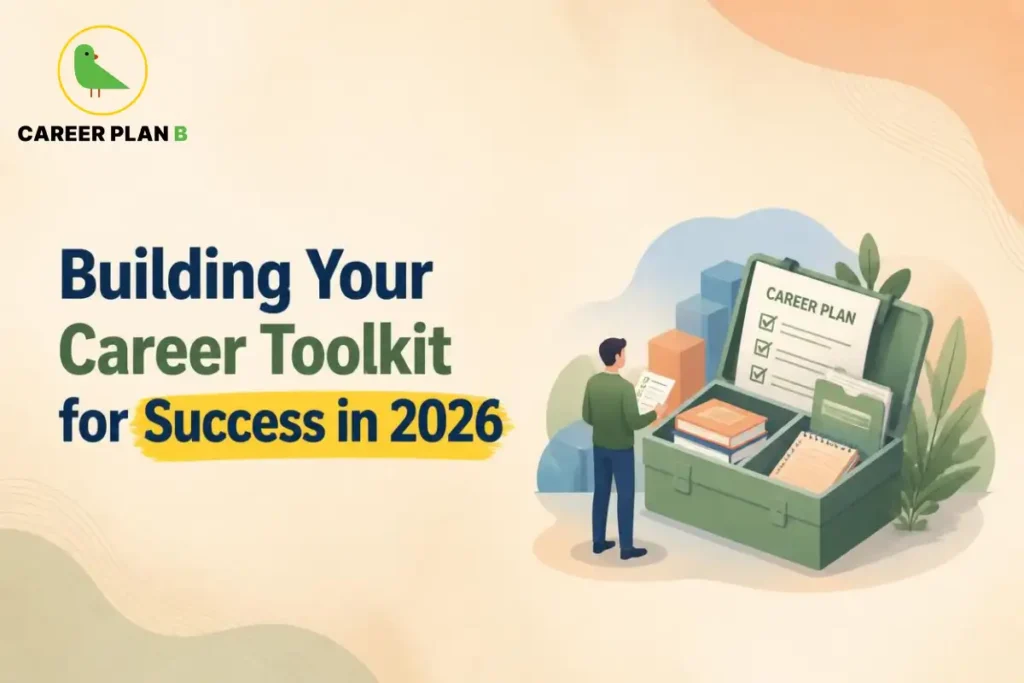
Introduction
A well-organised plan gets you clarity. It doesn’t get you opportunities on its own. That part depends on something different: whether people outside your own head actually know what you can do.
Most students focus their career effort inward, on grades, courses, and personal planning. Fewer build the outward-facing side: a visible portfolio, real professional relationships, and genuine readiness for the moment an opportunity appears. This is often the missing half of career success, and it’s the part templates and planners don’t cover.
This guide covers the career toolkit for success that builds visibility and readiness for 2026: a public portfolio that speaks for itself, a working network you build before you need it, and interview readiness you practise ahead of time, not the week before.
Why a Career Toolkit and Visibility Matters as Much as Skill
You can build genuine skill and still stay invisible to the people who could hire you, fund you, or mentor you. This gap explains why some equally capable students land opportunities faster than others.
Skill answers “can you do the work.” Visibility answers “does anyone know you can.” Both matter, but only one gets discussed in most career advice.
Opportunities rarely appear on a fixed schedule. A referral, a chance meeting, or a recommendation often shows up with little warning. If your visible presence, portfolio, or network isn’t ready beforehand, you lose time scrambling to prepare instead of simply responding.
Readiness compounds quietly. A portfolio you update consistently, or a network you maintain over months, becomes far more valuable the moment you actually need it, compared to one you build in a rush.
Tool 1: A Public Portfolio That Works Without You Present
Your portfolio should do work even when you’re not in the room to explain it. That means it needs to stand on its own.
Keep it simple and specific. Choose one platform that fits your field: GitHub for coding work, a basic personal website for design or writing, or a public document for research and analysis work. Include only your best three to five pieces, not everything you’ve ever made. Add a short note next to each piece explaining what problem it solved, not just what it is.
Update it every few months, even with small additions. A stale portfolio with one project from two years ago signals stalled progress, even if that’s not actually true.
Tool 2: A Real Network, Not a Contact List
A network isn’t a spreadsheet of names. It’s a set of real, if light, relationships with people who could plausibly help you or point you somewhere useful.
Start close to home. Seniors, alumni from your college, professors, and past internship supervisors are the easiest people to build genuine connections with, since you already share context. Reach out with a specific, small task, such as a fifteen-minute conversation about their field, rather than a vague “can you help me” message.
Keep the relationship alive with small, occasional check-ins, not just a message when you need something. A short note congratulating someone on a new role, or sharing something relevant to their work, keeps you visible without asking for anything in return.
The National Career Service portal, run by the Ministry of Labour and Employment, also lets you build a verified professional profile alongside your resume. This gives employers and government recruiters another verified touchpoint to find you, beyond your personal network.
Tool 3: Interview Readiness You Build Before You Need It
Most students prepare for interviews only after landing one. By then, there’s little time to build real readiness, only surface-level cramming.
Build this readiness continuously instead. Keep a running list of your best project stories, each one framed around a problem, your specific action, and the outcome. Practise explaining your technical work to someone outside your field, since many interviews include people who won’t share your specific background. Rehearse answering “tell me about a time you failed” honestly, since generic, safe answers are easy for interviewers to spot.
Revisit this list every few months and add new stories as you complete new projects. This turns interview prep into routine maintenance, not a last-minute scramble.
Have Any Doubts?
Tool 4: A Simple System for Tracking Opportunities and Relationships
Visibility and relationships only compound if you actually keep track of them. A simple table works better than memory alone.
Track three things: who you’ve connected with and when, what opportunities you’re aware of and their deadlines, and what portfolio updates are due. Check this monthly, alongside any academic planning you already do.
| What to Track | Example Entry | Why It Matters |
|---|---|---|
| Network contact | Senior from college, spoke about internship | Prevents relationships from going cold |
| Opportunity | Internship deadline in June, needs portfolio | Keeps deadlines visible and manageable |
| Portfolio update | Add a new project by end of quarter | Keeps your professional work current |
How These Tools Work Together
None of these tools work well in isolation. A strong portfolio with no network to see it goes unnoticed. A wide network with no portfolio to point them toward gives people nothing concrete to recommend you for. Interview readiness without either of the other two means you’re ready for a conversation that never gets scheduled.
Build all three together, even slowly. A small, consistent portfolio, a handful of real relationships, and a habit of interview practice will outperform a perfect version of just one.
How Career Plan B Helps
Building visibility and readiness on your own is possible, but it helps to know where to focus first. Career Plan B helps you build that clarity through:
- Personalised Career Counselling to help you identify which parts of your visibility toolkit need the most attention right now.
- Psycheintel Career Assessment Tests to clarify your strengths, so your portfolio and interview stories highlight the right things.
- Admission and Academic Profile Guidance to help you present your academic and project work effectively to the right audiences.
- Structured Career Roadmapping to build your portfolio, network, and readiness work into a clear, staged plan through 2026.
For Latest Information
Frequently Asked Questions
Q1. How is this different from just having a good resume?
A resume is a static document you send when asked. A visibility toolkit works continuously, in the background, so opportunities can find you even when you haven’t applied yet.
Q2. I feel awkward reaching out to seniors or professionals I don’t know well. How do I get past that?
Start with a specific, small task and be upfront about why you’re reaching out. Most people respond well to a clear, low-pressure request, much more than a vague one.
Q3. How many projects should be in my portfolio?
Three to five strong, well-explained projects work better than ten weak ones. Quality and clarity matter more than volume here.
Q4. Do I need a personal website, or is GitHub or a document enough?
It depends on your field. Coding work fits naturally on GitHub. Design, writing, or research work often benefits from a simple personal site or public document, since it’s easier to present visually.
Q5. How often should I update my network and portfolio tracker?
Monthly works well for most students. It’s frequent enough to catch stale relationships or missed deadlines, without becoming a task you dread doing.
Q6. Is this toolkit only useful for job hunting, or does it help with other opportunities too?
It helps broadly. The same portfolio, network, and readiness habits support internships, research opportunities, scholarships, and even entrepreneurial ventures, not just job applications.
Conclusion
Skill gets you capable. Visibility gets you noticed. Real career success in 2026 depends on both, and the second half is the part most students overlook which is a career toolkit for success .
Build a portfolio that speaks for itself, real relationships you maintain over time, and interview readiness you practise before you need it. None of these need to be perfect from day one. They just need to exist and grow steadily.
Not sure where to start building your visibility and readiness? Career counselling can help you focus your effort where it matters most.