Team6 · November 3, 2026
Introduction
If you’re choosing between engineering branches, chances are chemical engineering and biotechnology have both shown up on your shortlist. They sound related; both involve labs and both involve science, but the careers they lead to are quite different.
So the big question is, chemical vs biotechnology: which has a better future? The honest answer is it depends on what kind of work excites you and where you see the industry heading.
In this blog, we’ll look at what each field actually involves, compare job prospects and salaries, and explore where the future growth is happening in both. By the end, you’ll have a clearer picture of which path might suit you better.
What is chemical engineering? Quick Overview
Chemical engineering is about taking raw materials and turning them into useful products through chemical processes. Think of fuels, plastics, fertilizers, pharmaceuticals, and even food. Processing chemical engineers design and run the plants that make all of this happen.
The chemical engineering career scope is wide because almost every manufacturing industry needs process engineers. From oil refineries to FMCG companies, chemical engineers find roles across sectors.
What is biotechnology? Quick Overview
Biotechnology, on the other hand, uses living organisms, cells, and biological systems to create products and solve problems. This includes everything from developing vaccines and medicines to improving crop yields and creating biofuels.
The biotechnology career opportunities mostly lie in pharmaceutical companies, research institutions, agricultural biotech firms, and healthcare. It’s a field that’s deeply connected to research and innovation.
Chemical Engineering vs Biotechnology: Key Differences
Let’s break down how these two fields differ in practice.
| Aspect | Chemical Engineering | Biotechnology | 2026–2027 Comparative Strategic Analysis |
|---|---|---|---|
| Core Focus | Chemical processes, plant design | Biological systems, genetic research | Chemical engineering emphasizes macro-scale industrial thermodynamics and plant optimization, whereas biotechnology targets micro-scale cellular manipulation and molecular R&D. |
| Main Industries | Petrochemicals, manufacturing, energy | Pharma, agriculture, healthcare | Chemical engineering aligns closely with heavy manufacturing and energy sectors, while biotech drives growth in life sciences, biopharmaceuticals, and agricultural innovation. |
| Work Environment | Plants, refineries, process units | Labs, research centers, hospitals | Chemical engineers frequently operate in field-heavy, industrial site environments; biotechnologists spend significant time in sterile laboratory and clinical research settings. |
| Typical Roles | Process engineer, plant manager | Research associate, quality analyst, lab scientist | Career pathways diverge from asset-heavy operational leadership (chemical) to specialized laboratory analytics and R&D innovation tracks (biotech). |
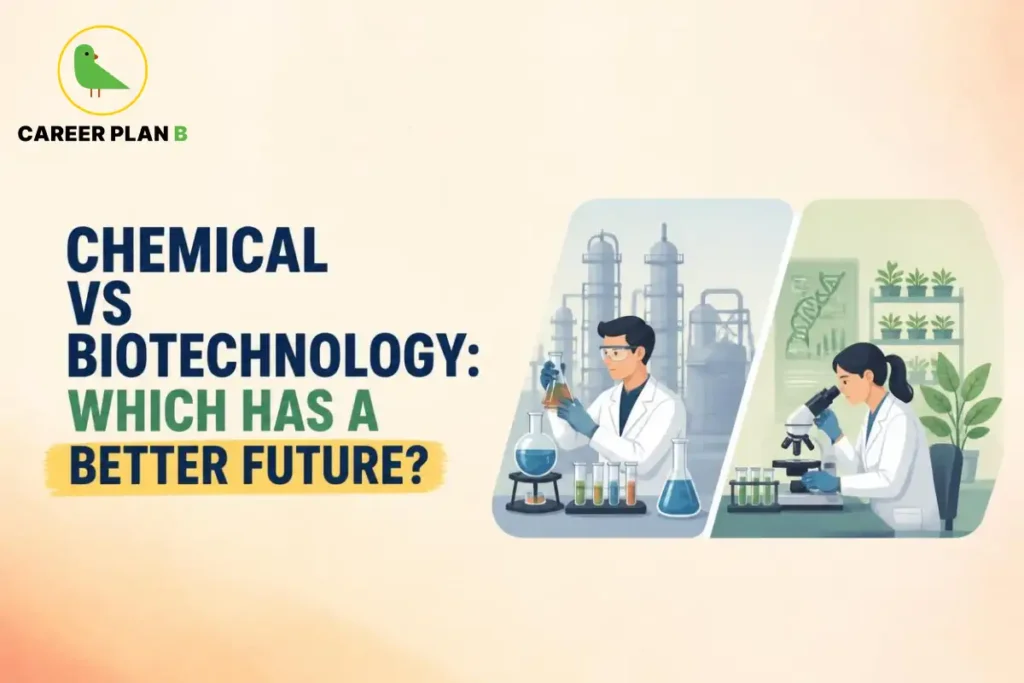
When you look at chemical engineering vs biotechnology, the biggest difference is the work environment. Chemical engineers often work closer to industrial production, while biotechnologists spend more time in research and lab-based settings.
Which Field Matches Your Interests Better?
Ask yourself this: do you enjoy working with machines, processes, and large-scale production systems? Or are you more drawn to biology, genetics, and the idea of developing new medicines or treatments? Your answer to this question often points toward the right field for you.
Job Prospects and Salary Comparison
Here’s how entry-level salaries typically compare in India:
| Field | Entry-Level Salary Range (INR per year) | 2026–2027 Core Industry & Market Alignment |
|---|---|---|
| Chemical Engineering | ₹3.5 – 6 lakh | Driven by capital expenditure in core sectors, specialty chemicals, energy transition projects, and public sector undertakings (PSUs). |
| Biotechnology | ₹2.5 – 5 lakh | Tied to R&D budgets in biopharmaceuticals, clinical research organizations (CROs), and specialized life-science hubs like Bangalore, Hyderabad, and Pune. |
The chemical engineer job prospects are generally stronger at the entry level, especially through PSUs (like IOCL and ONGC) and core manufacturing companies. Many roles also open up through GATE-based recruitment.
For biotechnology, the biotechnology career opportunities are often tied to higher education. A bachelor’s degree alone may lead to lab assistant or quality control roles, but salaries and responsibilities increase significantly with an MSc or PhD, especially in research or pharma R&D roles.
For authentic information on biotechnology programmes, funding, and opportunities, you can refer to the official Department of Biotechnology, Government of India, website. For engineering education standards and approvals, the AICTE website is the official source.
Future Scope: Where is the Growth Happening?
This is where things get interesting, because both fields have strong growth areas, just different ones.
The future scope of biotechnology in India looks promising, particularly in areas like genomics, biopharmaceuticals, vaccine development, and agricultural biotechnology. The Indian government has been actively supporting this through initiatives like BIRAC (Biotechnology Industry Research Assistance Council), which funds and supports biotech startups and research projects.
On the chemical engineering side, the emerging fields in chemical engineering include green chemistry, sustainable materials, battery and energy storage technology, and process industries focused on reducing carbon emissions. As India moves toward cleaner energy and sustainable manufacturing, chemical engineers with skills in these areas will be in demand.
Both fields are tied to long-term national priorities: biotechnology to healthcare and food security, and chemical engineering to energy transition and manufacturing growth.
Have Any Doubts?
Higher Education Pathways
If you’re considering further studies, here’s what each path typically looks like.
The biotechnology higher education options usually include an MSc in Biotechnology, an MTech in Biotechnology, or specialised programmes in genetic engineering, bioinformatics, or pharmaceutical biotechnology. Many of these lead toward research roles or PhD programmes.
For chemical engineering, an MTech (often through GATE) allows specialization in areas like process engineering, petrochemical technology, or environmental engineering. Free resources for both fields, including recorded lectures from top institutions, are available on the official NPTEL platform.
How Career Plan B Helps
Deciding between chemical engineering and biotechnology isn’t just about comparing salaries; it’s about understanding what suits your interests and long-term goals. Career Plan B offers personalised career counselling to help you think through this decision clearly. Through Psycheintel and Career Assessment Tests, you can discover whether you’re more inclined toward process-based work or research-based work. With Admission and Academic Profile Guidance and Career Roadmapping, Career Plan B helps you choose the right course and plan your path forward with confidence.
For Latest Information
Frequently Asked Questions
1. Which has better job security: chemical engineering or biotechnology?
Chemical engineering generally offers more immediate job opportunities at the entry level, especially through PSUs and manufacturing. Biotechnology often requires higher education for better job security and pay.
2. Is biotechnology a good career in India?
Yes, especially with growing government support for biotech research and startups through initiatives like BIRAC and increasing demand in pharma and healthcare sectors.
3. Do I need to do a master’s degree for a good career in biotechnology?
While a bachelor’s degree can get you started in lab or quality roles, an MSc, MTech, or PhD significantly improves your career prospects and salary in biotechnology.
4. Which field has higher starting salaries?
On average, chemical engineering tends to offer slightly higher entry-level salaries in India, mainly due to opportunities in core manufacturing and PSU sectors.
5. Can I switch from chemical engineering to biotechnology later, or vice versa?
While the core subjects differ, some overlapping areas like bioprocess engineering allow for crossover, especially through further specialization or higher studies.
Conclusion
When it comes to chemicals vs biotechnology, which has a better future? Both fields offer solid long-term prospects, just in different directions. Chemical engineering offers broader entry-level opportunities and ties into India’s energy and manufacturing growth, while biotechnology offers strong research-driven growth tied to healthcare and agriculture.
The right choice depends on your interests, willingness to pursue further studies, and the kind of work environment you see yourself thriving in. If you’re still unsure, Career Plan B can help you assess your strengths and map out a career path that fits you best whatever direction you choose.