Team6 · November 3, 2026
Introduction
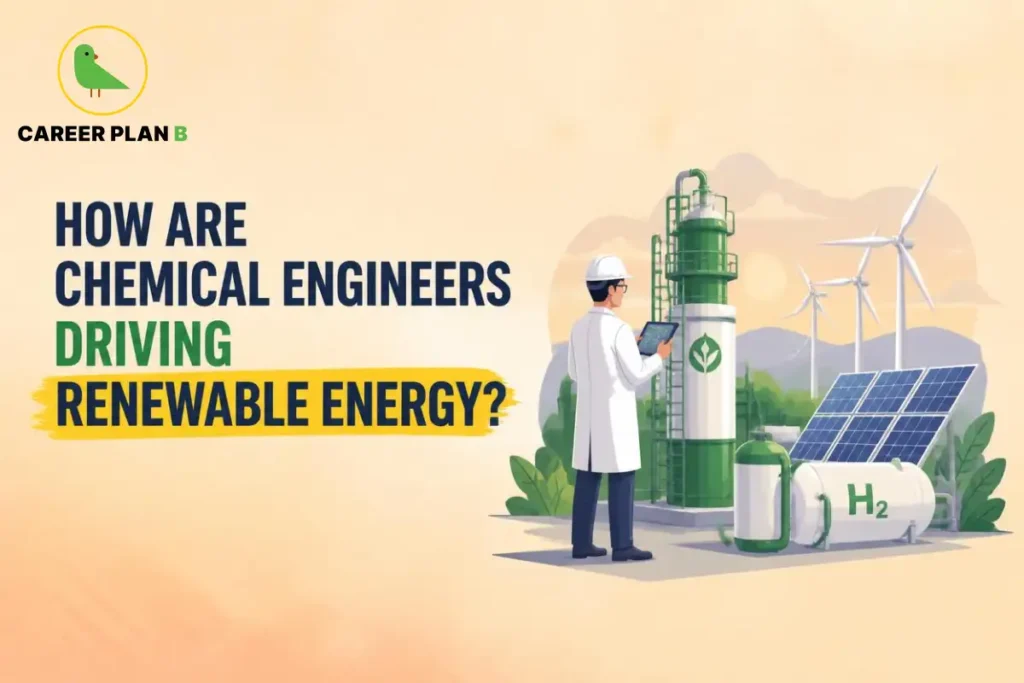
When people think about renewable energy, images of solar panels and wind turbines usually come to mind. What’s less visible is the chemistry and process engineering happening behind these technologies converting raw materials into solar cells, producing biofuels, and developing hydrogen as a clean energy source.
This is exactly how chemical engineers are driving renewable energy forward, often in ways that don’t make headlines but are essential to making clean energy technologies work at scale. In this blog, we’ll explore the key areas where chemical engineers contribute, the skills needed, career opportunities in India, and where this field is headed.
Why Chemical Engineers Matter in Renewable Energy
At their core, many renewable energy technologies are process-heavy. Producing solar-grade silicon, converting biomass into fuel, or generating hydrogen through electrolysis all involve chemical reactions, material processing, and large-scale production systems exactly the kind of work chemical engineers are trained for.
This is where chemical engineering in renewable energy becomes especially relevant. As renewable technologies move from research labs to commercial-scale production, the need for engineers who can design and optimize these processes grows significantly.
Key Areas Where Chemical Engineers Contribute
So where exactly do chemical engineers fit into the renewable energy picture? The role of chemical engineers in clean energy spans several technologies.
Solar energy: While solar panels are often associated with electrical engineering, the manufacturing of solar-grade materials involves significant chemical processing, purifying silicon, depositing thin films, and developing more efficient materials.
Biofuels: Converting agricultural waste, plant material, or algae into usable fuel involves chemical and biochemical processes, fermentation, distillation, and refining all areas where chemical engineers play a central role. This is a major part of solar and biofuel technology careers in the renewable space.
Hydrogen energy: Perhaps one of the fastest-growing areas, hydrogen energy and chemical engineering go hand in hand. Producing hydrogen through electrolysis, storing it safely, and developing fuel cell technology all require process engineering expertise.
Is Green Energy the Future of Chemical Engineering?
It’s a fair question to ask. While traditional sectors like petrochemicals and oil and gas will continue to need chemical engineers, the growth in renewable energy is creating entirely new opportunities ones that didn’t exist in this form even a decade ago. For students entering the field now, green energy represents a meaningful and growing part of the future job market.
Skills Needed to Work in This Space
Working at the intersection of chemical engineering and renewable energy requires a mix of traditional process engineering knowledge and newer, sustainability-focused skills.
The chemical engineering skills for energy sector roles typically include the following:
- Process design and optimization for new or emerging technologies
- Understanding of sustainability principles and lifecycle analysis
- Familiarity with emerging technologies like electrolysis, fuel cells, and biofuel conversion
- Ability to work with both established processes and experimental, still-developing technologies
Since many renewable technologies are still evolving, adaptability and a willingness to keep learning are particularly valuable in this space.
Career Scope and Job Opportunities in India
India’s renewable energy sector is expanding quickly, and this is creating new openings for chemical engineers.
The renewable energy jobs in India for chemical engineers can be found across PSUs that have renewable energy divisions, dedicated renewable energy companies, and research organizations working on biofuels, hydrogen, and solar technologies.
For students and professionals exploring this space, the Ministry of New and Renewable Energy (MNRE) is the official government body overseeing renewable energy policy and initiatives in India, including programmes related to solar, bioenergy, and hydrogen. Additionally, schemes like FAME II (Faster Adoption and Manufacturing of Electric Vehicles), administered through the Ministry of Heavy Industries, are creating demand for engineers working on battery and clean mobility technologies, which often overlaps with chemical engineering skill sets.
Have Any Doubts?
Certifications and Higher Studies
If you want to build deeper expertise in this area, there are several learning paths worth considering.
For foundational knowledge, the official NPTEL platform offers free courses on renewable energy technologies, sustainability, and related process engineering topics from top Indian institutions.
For those considering higher studies, MTech programmes with specializations in energy systems, sustainable process engineering, or renewable technologies can provide more focused training for roles in this growing sector.
Future Outlook: Where is This Headed?
Looking ahead, the future of green energy jobs in India looks strong, supported by significant government focus on clean energy.
Initiatives like the National Hydrogen Mission aim to position India as a hub for green hydrogen production, which will require process engineers to design and scale up production facilities.
Similarly, India’s broader renewable energy targets covering solar, wind, and bioenergy mean continued investment in infrastructure and technology development, creating sustained demand for engineers who understand both chemical processes and emerging energy technologies.
How Career Plan B Helps
If you’re a chemical engineering student or graduate interested in contributing to renewable energy, Career Plan B can help you explore this path with more clarity. Through personalised career counselling and PsycheIntel and career assessment tests, you can understand whether your interests align with emerging energy technologies like hydrogen, biofuels, or solar materials.
With admission and academic profile guidance and career roadmapping, Career Plan B helps you identify the right specializations and plan your career steps in this fast-growing field.
For Latest Information
Frequently Asked Questions
1. Do chemical engineers really have a role in renewable energy?
Yes, many renewable technologies, including biofuels, hydrogen production, and solar material manufacturing, rely heavily on chemical processes and process engineering expertise.
2. What is the salary range for chemical engineers in renewable energy roles in India?
Entry-level salaries typically range from ₹3.5-6 lakh per year, with growth potential as the renewable energy sector expands and specialized roles open up.
3. Is hydrogen energy a good area to specialize in?
Yes, with government initiatives like the National Hydrogen Mission, hydrogen energy is one of the fastest-growing areas within the renewable energy sector in India.
4. Do I need additional certifications to work in renewable energy?
While not always mandatory, courses in sustainability, energy systems, or specific technologies like biofuels or hydrogen can strengthen your profile for these roles.
Conclusion
How chemical engineers are driving renewable energy comes down to their ability to design and scale up the processes behind solar materials, biofuels, and hydrogen production technologies that are central to India’s clean energy future.
As government initiatives and private investment continue to grow in this sector, chemical engineers with the right skills are well-positioned to be part of this shift.
If you’re considering this path and want guidance on how to build a career in renewable energy as a chemical engineer, Career Plan B can help you assess your strengths and create a roadmap toward a rewarding career in this growing field.</p>