Team6 · November 3, 2026
Introduction
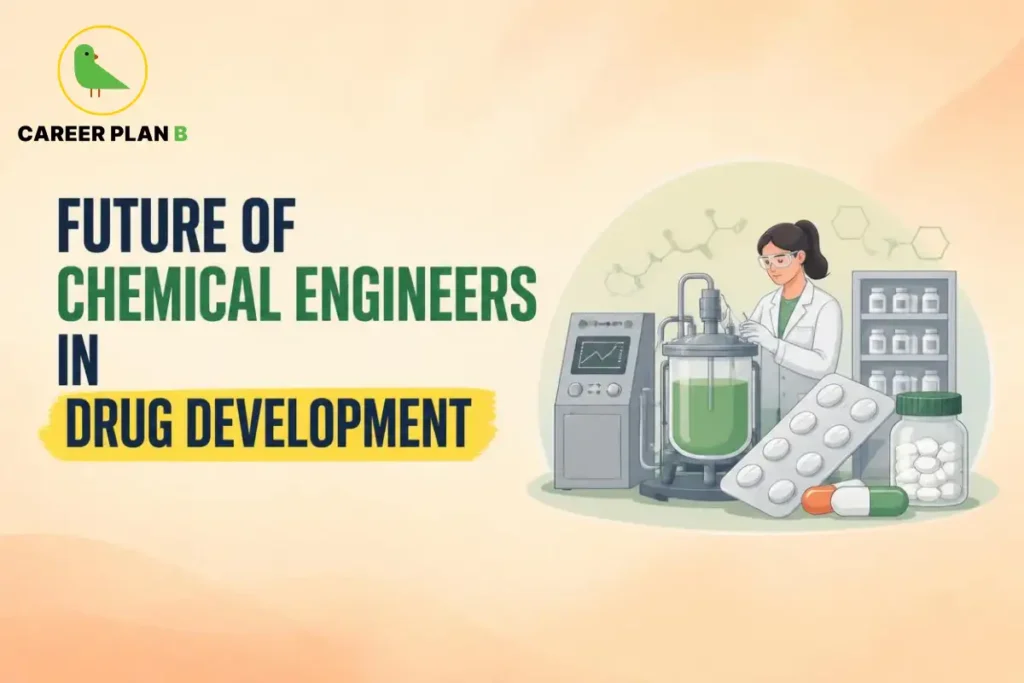
When most people think of drug development, they picture chemists in lab coats or biologists studying molecules. Chemical engineers don’t usually come to mind, but they should. From scaling up a lab discovery into a mass-produced medicine to designing the systems that manufacture it safely, chemical engineers play a critical role behind the scenes.
The future of chemical engineers in drug development looks more promising than ever, as India’s pharmaceutical industry continues to grow and modernize. In this blog, we’ll explore exactly where chemical engineers fit into this process, what roles they take on, the skills needed, and what the career path looks like going forward.
Where Chemical Engineers Fit in Drug Development
The drug development process typically moves through several stages: research and discovery, formulation, lab-scale testing, scale-up, and finally large-scale manufacturing. While chemists and biologists usually lead the discovery phase, chemical engineers become essential once a drug needs to move from a small lab batch to a process that can produce thousands or millions of doses consistently.
This is where chemical engineering in the pharmaceutical industry’s work really comes into play. Chemical engineers design the processes, equipment, and systems needed to manufacture drugs safely, efficiently, and at scale without compromising quality.
Key Roles Chemical Engineers Play in Pharma
So what does a chemical engineer actually do in a pharmaceutical company? The chemical engineer roles in pharma are more varied than many people expect.
Some common responsibilities include:
- Process scale-up: Taking a process that works in a small lab and redesigning it to work in large manufacturing equipment
- Formulation support: Working with formulation scientists to ensure a drug’s manufacturing process is practical and repeatable
- Manufacturing optimization: Improving existing processes to reduce waste, cost, or production time
One specific role worth knowing about is the process development scientist, a position that often sits at the intersection of chemistry and chemical engineering, focused on developing and refining the manufacturing process for a new drug before it goes into full-scale production.
Skills Needed for This Career Path
Building a career at this intersection of chemical engineering and pharma requires a specific mix of skills.
Key areas to focus on include:
- Process design and scale-up knowledge: understanding how lab processes translate to industrial scale
- Regulatory understanding: being aware of the documentation and compliance requirements in pharma manufacturing
Have Any Doubts?
Career Scope and Job Opportunities in India
India is one of the largest producers of generic medicines in the world, which means there’s a strong and growing demand for engineers who understand both process engineering and pharmaceutical manufacturing.
The pharmaceutical manufacturing careers in India span a wide range of employers: large pharmaceutical companies, CDMOs (Contract Development and Manufacturing Organisations), and biopharma firms that manufacture drugs for both domestic and export markets.
For students and professionals entering this space, it’s useful to understand the regulatory landscape. The Central Drugs Standard Control Organisation (CDSCO) is the official body responsible for drug approval and regulation in India, and understanding its role can help you appreciate the compliance side of pharma manufacturing. For information on engineering education standards, the AICTE website remains the official source.
Higher Studies and Specializations
If you want to deepen your expertise in this area, there are several paths worth considering.
The chemical engineering higher studies in the pharma route often includes an MTech in Pharmaceutical Technology or Process Engineering, which combines core chemical engineering concepts with pharma-specific manufacturing and regulatory knowledge. Some universities also offer specialized programs focused on biopharmaceutical manufacturing.
For those who want to explore foundational concepts before committing to a specialized program, the official NPTEL platform offers free courses covering process engineering, pharmaceutical technology, and related subjects from top Indian institutions.
The Road Ahead: Future Outlook
Looking ahead, the future of pharma jobs in India appears strong, and chemical engineers are well-positioned to benefit from this growth.
The government’s PLI (Production Linked Incentive) scheme for pharmaceuticals is encouraging companies to expand manufacturing capacity within India, particularly for active pharmaceutical ingredients (APIs) and key starting materials.
As India strengthens its position as a global pharmaceutical manufacturing hub, the demand for chemical engineers who can design, scale up, and optimize these manufacturing processes is expected to grow steadily.
How Career Plan B Helps
If you’re a chemical engineering student or graduate curious about how your skills could translate into a pharma career, Career Plan B can help you explore this path with more clarity. Through personalised career counselling and PsycheIntel and career assessment tests, you can understand whether a process-driven role in pharmaceutical manufacturing aligns with your strengths.
With admission and academic profile guidance and career roadmapping, Career Plan B helps you identify the right specializations and plan your career steps in this growing field.
For Latest Information
Frequently Asked Questions
1. Do chemical engineers really work in the pharmaceutical industry?
Yes, chemical engineers play key roles in scaling up manufacturing processes, optimizing production, and ensuring drugs can be made safely and consistently at large scale.
2. What is the starting salary for chemical engineers in pharma in India?
Entry-level salaries typically range from ₹3.5-6 lakh per year, with higher pay available in larger pharmaceutical companies and CDMOs as experience grows.
3. Is prior pharma knowledge required to enter this field?
Not necessarily. A strong foundation in process engineering is valuable, and pharma-specific knowledge like GMP and regulatory requirements can be learned on the job or through additional training.
4. How is a process development scientist different from a regular chemical engineer?
A process development scientist focuses specifically on developing and refining manufacturing processes for new drugs, often working closely with formulation scientists before a process moves to full-scale production.
Conclusion
The future of chemical engineers in drug development is closely tied to India’s growth as a global pharmaceutical manufacturing hub. From process scale-up to manufacturing optimization, chemical engineers bring skills that are essential to turning lab discoveries into medicines that reach millions of people.
If you’re considering this career path and want guidance on how to get there, Career Plan B can help you assess your strengths and build a roadmap toward a rewarding career at the intersection of chemical engineering and pharma.