Team6 · July 20, 2026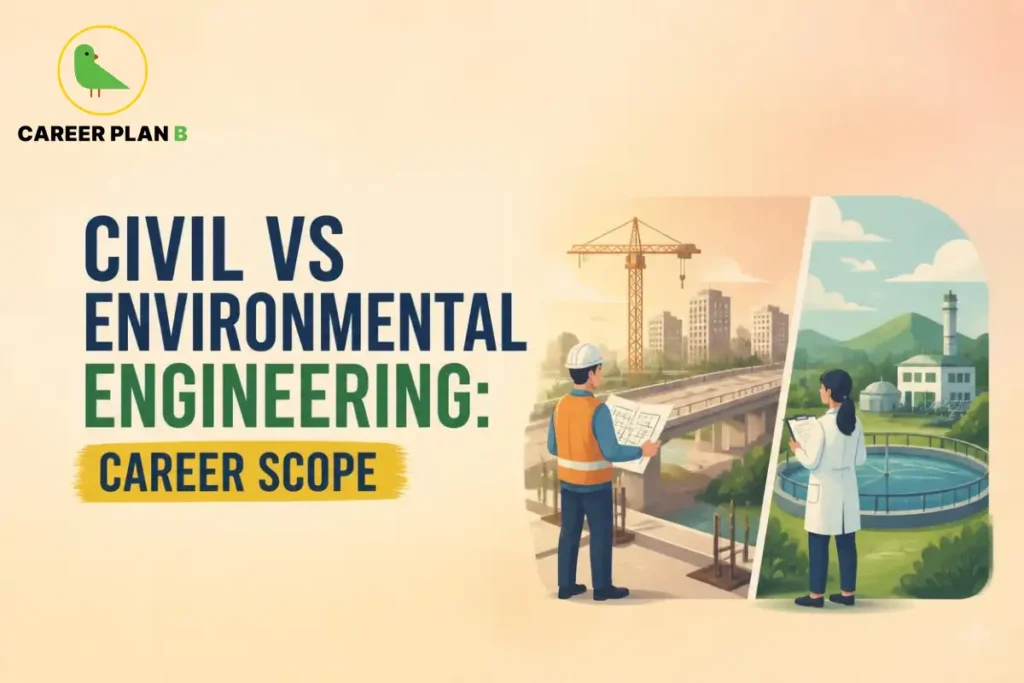
Introduction
Every year, thousands of Class 12 science students face the same dilemma while filling out their engineering entrance forms: civil vs environmental engineering career scope. Which one actually offers more? Both fields sound similar on paper, both deal with the physical world around us, and both show up as popular specializations at nearly every engineering college. But the day-to-day work, career paths, and long-term growth differ more than most students realize before they commit. This blog breaks down the real differences between these two fields, comparing roles, salaries, and skills, so you can make a more informed decision rather than picking one based on assumptions.
What’s the Core Difference Between These Two Fields?
At its core, civil engineering focuses on designing, constructing, and maintaining infrastructure buildings, bridges, highways, and transportation systems. Environmental engineering, on the other hand, centres on protecting the environment through pollution control, waste management, water treatment, and sustainability compliance. There’s meaningful overlap between the two, especially as environmental impact assessments, green building practices, and sustainable infrastructure jobs become a bigger part of large-scale construction projects. In fact, many civil engineers today need working knowledge of environmental regulations and sustainable materials, blurring the line between these fields more than it existed a decade ago.
Which One Actually Suits You Better?
So how do you actually decide? Ask yourself what excites you more: designing and building physical structures that shape cities, or solving pollution, waste, and sustainability challenges that protect ecosystems and public health. If you enjoy structural design, project management, and seeing large physical projects come to life, a civil engineering career might suit you better. If you’re more drawn to regulatory work, environmental impact assessments, and hands-on problem-solving around pollution or water systems, an environmental engineering career is likely a stronger fit. Neither path is objectively “better”; it really comes down to which kind of problem-solving genuinely interests you.
Career Scope: Where Each Field Leads
Civil engineering offers a wide and mature job market, with opportunities across construction firms, transportation projects, urban development, and government bodies like the National Highways Authority of India (NHAI), Central Public Works Department (CPWD), and various state public works departments. Environmental engineering, while a smaller field numerically, has strong government demand too, particularly through the Central Pollution Control Board, State Pollution Control Boards, and PSUs like ONGC, NTPC, and GAIL that need compliance-focused engineers. Both fields also benefit heavily from India’s infrastructure push, with initiatives like the National Infrastructure Pipeline and Smart Cities Mission creating overlapping demand for professionals in structural design, sustainable materials, and environmental compliance.
Have Any Doubts?
Salary Comparison: Civil vs Environmental Engineering
| Career Stage | Civil Engineering Salary (India) | Environmental Eng. Salary (India) |
|---|---|---|
| Entry-Level | INR 3 – 5 lakh | INR 4.5 – 7 lakh |
| Mid-Level | INR 8 – 14 lakh | INR 8 – 18 lakh |
| Senior-Level | INR 15 – 35+ lakh | INR 15 – 30+ lakh |
Interestingly, environmental engineering specializations often start slightly higher than general civil roles, largely because of rising sustainability compliance requirements on major infrastructure projects. That said, civil engineering has a much larger volume of openings and faster growth in specialized areas like construction management and BIM. For both fields, clearing the Graduate Aptitude Test in Engineering (GATE) remains one of the most reliable routes into stable, well-paying PSU roles. You can check official recruitment notifications and eligibility details through the GATE official website, maintained by the IIT hosting the exam that year.
Skills and Certifications That Boost Either Path
For a civil engineering career, certifications in Building Information Modelling (BIM), project management (PMP), and structural design software like STAAD Pro or ETABS tend to command noticeable salary premiums. For an environmental engineering career, credentials like LEED green building certification, GIS mapping proficiency, and sustainability reporting frameworks like GRI similarly boost earning potential and open doors to specialized consulting roles. Both fields increasingly reward professionals who blend their core engineering specialization comparison with digital or regulatory skills, rather than relying purely on their degree.
How Career Plan B Helps
Career Plan B helps students and professionals make informed career decisions through personalized guidance, assessments, and structured planning.
- Personalized Career Counselling: Provides expert guidance based on individual interests, skills, and career goals.
- Psychometric & Career Assessment Tests: Identify strengths, personality traits, and suitable career opportunities.
- Career Roadmapping: Creates a clear step-by-step plan to achieve academic and professional goals.
- Admission & Academic Profile Guidance: Helps in selecting the right courses and colleges and improving academic profiles.
Get In Touch With Us
Frequently Asked Questions
1. Which is better, civil or environmental engineering?
Neither is objectively better. Civil engineering offers broader job volume and infrastructure-focused work, while environmental engineering suits those drawn to sustainability and regulatory problem-solving.
2. Do civil engineers also work on environmental projects?
Yes, many civil engineers now handle environmental impact assessments and sustainable design as part of large infrastructure projects.
3. Which field has a higher starting salary?
Environmental engineering often starts slightly higher on average, though civil engineering offers more total job openings across sectors.
4. Is environmental engineering a subfield of civil engineering?
Not exactly. While related, environmental engineering is considered a distinct discipline with its own regulatory and scientific focus.
5. Which field has better government job opportunities?
Both offer strong government scope civil engineers through NHAI, CPWD, and PWDs and environmental engineers through pollution control boards and PSUs.
Conclusion
Deciding between civil vs environmental engineering: career scope really comes down to understanding what kind of problems you want to spend your career solving: building the physical world around us or protecting it through sustainability and compliance work. Both fields offer strong government and private sector opportunities in India, competitive salary growth, and increasing overlap as sustainable infrastructure jobs become more common across the industry. Rather than choosing based on which sounds more prestigious or which your friends are picking, it’s worth reflecting on the specific type of work each field actually involves day to day. If you’re still torn between the two, a conversation with a Career Plan B counsellor can help you weigh your genuine interests and aptitude before you lock in your entrance exam choices.